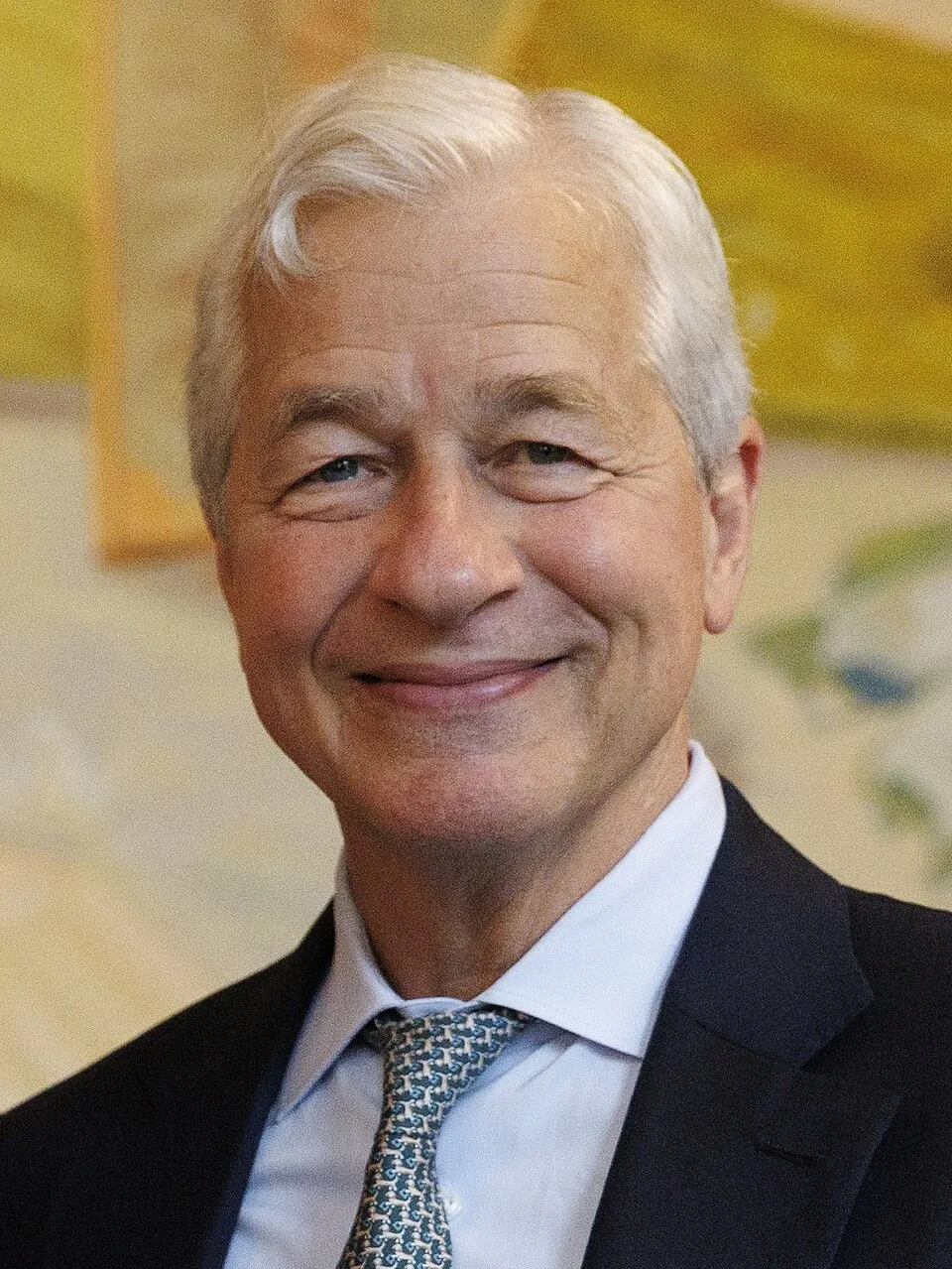
Jamie Dimon has been running JPMorgan Chase since 2006, survived two presidential administrations, one global financial meltdown, and roughly ten thousand predictions that he was about to leave. On Thursday, the bank finally blinked. JPMorgan named two co-presidents, shoved its leading female succession candidates out of the picture, and quietly announced that yes, eventually, this man will stop being in charge of the largest bank in America.
Two Men Enter, One CEO Leaves (Eventually, Probably, Who Knows)
The New York Post reports that Doug Petno and Troy Rohrbaugh, who have jointly run JPMorgan's Commercial & Investment Bank since early 2024, were named co-presidents of the firm effective immediately, according to a regulatory filing. Petno takes over as sole CEO of the Commercial & Investment Bank. Rohrbaugh steps into Consumer & Community Banking.
The bank described the moves as part of the board's ongoing succession planning process, which is corporate-speak for: we are finally, actually, for real this time, figuring out who comes after Dimon. The two men each pulled in a combined $27.5 million in total compensation last year, per JPMorgan's latest annual proxy statement. Dimon himself made $43 million. So we are watching a very expensive horse race between two extremely comfortable horses.
And the Women Are Out
Here is where it gets uncomfortable. Marianne Lake, who for years was widely considered the frontrunner to succeed Dimon, is retiring. No specific departure date was disclosed beyond the vague language of "leadership transition," which is the corporate equivalent of being walked to the door with your box of desk stuff.
Lake's exit is not the only one. According to the New York Post, Jennifer Piepszak, JPMorgan's chief operating officer, is also no longer considered a possible replacement for Dimon, per people inside the bank. Mary Erdoes, who runs the firm's asset management and wealth management operation, is out of the running too. So the three most prominent women in the succession conversation are all gone, and the two men who co-ran one division are now co-presidents of the entire company. Draw your own conclusions. JPMorgan certainly isn't drawing them for you.
What Dimon Leaving Actually Means for the Rest of Us
People outside of finance tend to glaze over when JPMorgan makes news, which is understandable. But Dimon is not a normal bank CEO, and JPMorgan is not a normal bank. Since he took over in 2006, he has steered the firm through the 2008 financial crisis, helped broker emergency acquisitions that kept the system from fully collapsing, and built JPMorgan into what regulators officially classify as a systemically important financial institution. That label is not a compliment. It means if JPMorgan goes sideways, everything goes sideways.
The bank does consumer lending, mergers and acquisitions, and trading in complex derivatives that are, as the New York Post puts it, "the plumbing of the global financial system." That is an apt metaphor. Nobody thinks about the plumbing until it backs up into the basement. Whoever takes Dimon's seat is inheriting enormous institutional power at a moment when financial regulation is being gutted, trade policy is chaos, and the global economy is doing whatever you would call what it is currently doing.
About That Departure Timeline
The New York Post reports that Dimon is expected to begin transitioning out of his CEO role as early as this year, though he has always been deliberately vague about timing and has kept open the possibility of remaining as chairman indefinitely. That last part is worth sitting with. He might leave the CEO job but stay as chairman. So whoever Petno or Rohrbaugh turns out to be when the music stops, they may be running day-to-day operations while Jamie Dimon still has a seat at the table, a voice in the room, and twenty years of institutional authority backing every opinion he offers.
That is not a retirement. That is a rebranding. Dimon stepping back from the CEO title while staying on as chairman would make him the world's most powerful backseat driver. The board calling this succession planning is technically accurate. It is also, potentially, a very long game of pretending to hand over the keys.
The Dingo Take
Look, this is not a political story, and we are not going to pretend it is one. But the quiet erasure of three senior women from the succession picture at America's largest bank, announced on a Thursday with no comment, deserves more than a shrug. Lake was the frontrunner for years. Piepszak ran operations. Erdoes ran an entire division. Now two men who shared a job title are co-presidents and on a glide path to the top. JPMorgan did not have to explain anything, and they didn't.
The Dimon succession saga has been the longest-running maybe in American business. He has been teasing an exit for the better part of a decade while continuing to show up and be the most quoted, most opinionated, most unmistakably present banker in the country. Naming co-presidents is the clearest signal yet that this is actually happening, but "as early as this year" has appeared in sentences about Dimon's departure before. We will believe it when the office is empty.
What nobody should be excited about, regardless of politics, is the idea that whoever succeeds Dimon will inherit this much concentrated financial power at this particular moment in history without a fraction of his experience navigating actual systemic crises. Petno and Rohrbaugh are, by all accounts, serious executives. But Dimon survived 2008. That is not a credential you manufacture. The next crisis will arrive on its own schedule, and we are about to find out whether JPMorgan built a successor or just picked the next person to sit in the chair.


Comments