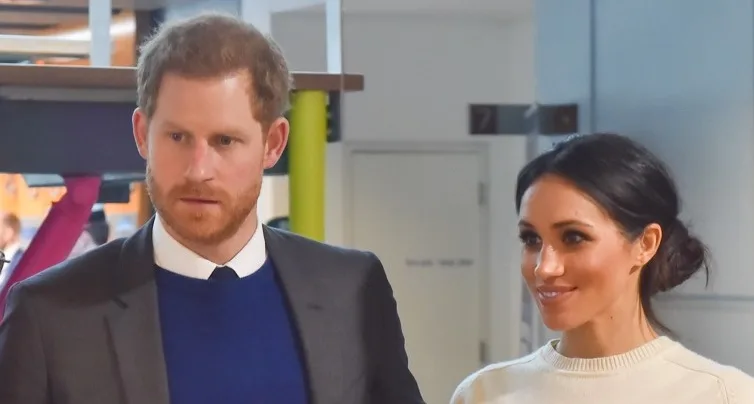
Prince Harry wants to bring his wife and kids to the United Kingdom next month. The British government's response, delivered with the full dignity of a centuries-old monarchy, is essentially: figure it out yourself. This is where we are now, nearly six years into the Sussex soap opera, and somehow it keeps getting more absurd.
The Summer Trip That May Never Happen
According to CBS News, representatives for Harry and Meghan confirmed Tuesday that the prince is "exploring every available option" to bring his family along for a UK visit expected in July. That statement, carefully worded and publicly released, is the kind of thing you put out when you want the world to know things are not going well behind the scenes.
BBC News reported Sunday that Harry was reconsidering the whole trip after British authorities denied his request for taxpayer-funded police protection. Not scaled back. Not modified. Denied. The man who was born into the institution, spent years serving it, and still carries the title Duke of Sussex, gets to submit a request form and wait for the committee to decide whether his kids deserve a security detail this particular Tuesday.
Meet RAVEC, the Committee That Decides Whether Your Children Are Worth Protecting
Here is how this works now. After Harry and Meghan stepped back from royal duties in 2020 and moved to California, their taxpayer-funded security was downgraded. It is no longer automatic. Instead, protection is assessed on a case-by-case basis by something called the Royal and VIP Executive Committee, which goes by the acronym RAVEC. Yes, RAVEC. It sounds like a low-budget villain from a Bond film, and it controls Prince Harry's ability to safely visit his home country.
Most senior working royals get blanket protection from a dedicated unit of London's Metropolitan Police. Harry, who gave up his working royal status, does not. That is the official position. The catch, as CBS News reports, is that private security in the UK cannot carry firearms or access government intelligence networks under British law. So it is not just that Harry has to pay for his own guards. It is that the guards he is legally permitted to hire in the UK are categorically less equipped to protect him than the ones the state provides everyone else in his family.
He Already Lost This Fight. Twice.
This is not a new battle. Harry took the UK government to court over the security downgrade in 2024 and lost. He appealed and lost again in 2025, when England's High Court upheld the original decision. After that second loss, Harry told BBC News he could not envision bringing Meghan and their children back to Britain under those conditions.
That was over a year ago. Now, according to CBS News, he appears to be facing exactly the decision he said he couldn't make. The legal options are gone. The courts have ruled. He exhausted the official channels. What remains is whatever he means by "every available option," which at this point presumably does not include a third lawsuit he has already lost twice.
What This Is Actually About
There is a temptation to frame this as celebrity drama, two famous people unhappy with the terms of the deal they chose. That framing lets the British establishment off very easy. The core issue is this: a man who served in the British Army, who deployed to Afghanistan twice, who spent decades representing the Crown, is now being told his children do not automatically merit the same protection afforded to every other senior royal, because he had the audacity to leave.
The message is not subtle. You can leave, but leaving has consequences, and those consequences include a security arrangement that Harry's own legal team argued in court was genuinely insufficient. Whether you think Harry brought this on himself or not, the underlying policy creates a situation where a former senior royal either submits to the institution's terms or accepts a reduced standard of safety for his family. That is a choice the UK government is very comfortable making.
The Dingo Take
The British monarchy has survived world wars, abdications, and decades of tabloid warfare. Its response to one prince wanting to live in California is to make his children's safety conditional on bureaucratic approval. Every time this story resurfaces, the institution's position is presented as a procedural matter, just rules, nothing personal. But the rules were changed specifically in response to Harry leaving. The timeline is not ambiguous.
Harry and Meghan have made enough choices over the past six years that it is easy to lose patience with their ongoing grievances. The Netflix deals, the memoir, the Oprah interview, the podcast, the steady drip of institutional complaints from a couple living in a Montecito mansion. Fair enough. That is a legitimate critique and they have earned some of it. But none of that changes the fact that the UK government has constructed a legal framework where the private security Harry is allowed to hire cannot do what the police protection does. That is not a neutral policy. That is leverage.
The saddest part of all of this is that nobody wins anything. Harry keeps losing in court and keeps making statements about "exploring every available option." The British government keeps looking punitive and small. The kids, who were two and newborn when all this started, are now old enough to understand that visiting their father's home country is complicated in ways that have nothing to do with weather or jet lag. Great outcome for everyone involved. Really something to be proud of.



Comments