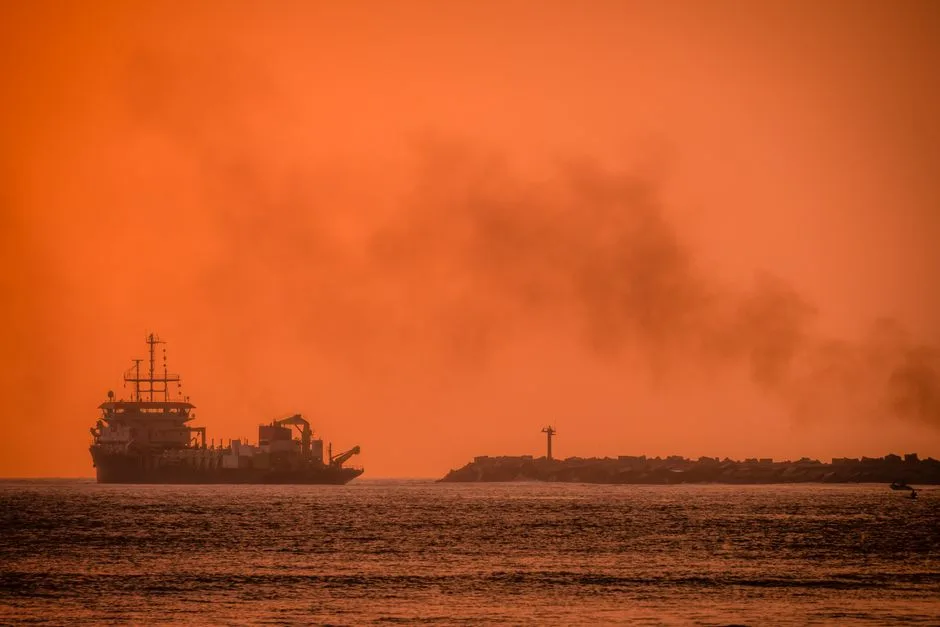
Iran's Islamic Revolutionary Guard Corps spent Tuesday firing missiles at ships and sending drones into a liquefied natural gas tanker, setting it on fire and reportedly pushing it to the edge of exploding. This was, to put it generously, a strange choice for a country that had just been handed the right to sell its oil on the global market less than three weeks earlier. The Trump administration revoked that license by end of day.
Three Ships, Missiles, Drones, and a Fire
Here's what actually happened in the Strait of Hormuz on Tuesday. The U.K.'s Maritime Trade Operations center confirmed reports of attacks on multiple vessels transiting the strait. One ship was struck by an uncrewed aerial vehicle. A second was hit by an unidentified projectile and suffered structural damage. A third caught fire off the coast of Oman.
A U.S. official confirmed the full picture to NBC News: Iran's IRGC fired missiles at two ships and struck a third with at least one drone. The U.S. military shot down additional drones that Iran had launched. Reuters, meanwhile, reported that the LNG tanker Al Rekayyat was at risk of exploding due to a fire in its engine room, though NBC News noted it had not independently verified that detail.
Three ships. Missiles. Drones. A burning gas tanker possibly on the verge of detonating. Just another Tuesday in the world's most important oil shipping corridor.
The Waiver That Lasted Less Than Three Weeks
Let's back up for a second, because the timing here is genuinely stunning. As part of the memorandum of understanding the Trump administration reached with Iran, the Treasury Department's Office of Foreign Assets Control had issued a general license authorizing the sale of Iranian oil. That waiver was issued less than three weeks ago.
On Tuesday, Axios and the New York Post both reported that Treasury pulled it. Gone. A U.S. official told the Post: "The MOU in effect with Iran is entirely performance-based. Iran will only reap benefits if they exhibit good behavior. Iran's actions in the Strait were wholly unacceptable to the United States and will be met with consequences."
So Iran got a sanctions carve-out, held it for roughly 18 days, and then set it on fire along with a gas tanker. This is the geopolitical equivalent of getting out of prison, immediately robbing the courthouse, and being surprised when they lock you back up.
Markets Took One Look and Panicked
Oil traders, who are paid to be paranoid about exactly this kind of thing, reacted immediately. NBC News reports that U.S. crude jumped more than 3% to above $70 per barrel, its highest level since July 1. International Brent crude also rose 3%, crossing $74 per barrel. When a significant chunk of the world's oil supply moves through a chokepoint and someone starts shooting at the ships using it, the price of oil goes up. This is not complicated.
Stocks were less dramatic but still took a hit. The S&P 500 fell nearly 1% before partially recovering to sit down about 0.3%. The Nasdaq 100 dropped as much as 2%, though a big chunk of that pain came from a separate and unrelated catastrophe in chip stocks. Treasury yields also climbed, with the 20- and 30-year yields breaking above 5%, and the 10-year yield hitting its highest level since early June. Rising yields mean rising borrowing costs, which means the Strait of Hormuz situation sent a ripple through your mortgage rate. Wonderful.
The Chip Stock Pile-On Nobody Needed Today
Because markets apparently needed more chaos, Tuesday also delivered a brutal session for semiconductor stocks, though that story has nothing to do with Iran. Samsung reported better-than-expected earnings overnight, then watched its shares plunge 7% anyway because the beat wasn't big enough to satisfy investors who had priced in something closer to miraculous. As Joe Mazzola at Charles Schwab put it, the stock "crumbled in a wave of profit taking."
Jim Reid at Deutsche Bank noted, with the resigned tone of a man who has seen everything, that Samsung's results were "only" 6% ahead of estimates. In other words, Samsung beat expectations by 6% and got punished for it. This is the current state of the AI-inflated tech market: good news is only good enough if it's great, and great news is only great if it's historic.
South Korea's Kospi Index briefly touched bear market territory. Intel and Sandisk were both down around 9% on the Nasdaq by early afternoon. SpaceX made its Nasdaq 100 debut on Tuesday and slid 5%, which is the kind of welcome you'd expect if you walked into a party right as a fight broke out. Reuters also reported that Chinese AI startup DeepSeek is developing its own AI chip, which added fresh anxiety to a sector already having a very bad day.
The Deal Isn't Dead, Apparently
Here's the part that should make your head spin. Even after revoking the oil license and calling Iran's behavior "wholly unacceptable," the U.S. official who spoke to the Post added that American negotiators "continue to work in good faith towards a final deal."
So the administration is simultaneously revoking sanctions relief, absorbing drone and missile attacks on commercial shipping, shooting down Iranian drones with U.S. military assets, and telling the press they're still working toward a nuclear agreement. All of this happening at the same time. Completely normal diplomacy.
The Dingo Take
Let's be honest about what Iran did here. They took the sanctions relief, held it for less than three weeks, and then attacked three ships in one of the world's most critical shipping lanes. Whether this was a deliberate provocation, a faction within the IRGC freelancing while diplomats negotiated, or some kind of internal Iranian power struggle spilling into the strait, the result is the same: a burning gas tanker, revoked oil waivers, and global markets rattled before lunch.
The Trump administration's response was fast and the framing was clear. Performance-based deals mean you lose the benefits when you stop performing. That logic is hard to argue with. What's harder to explain is how a deal with a country that still has the IRGC doing whatever it wants in the Strait of Hormuz was supposed to hold in the first place. The MOU was less than three weeks old when it fell apart. That is not a strong endorsement of the underlying diplomatic architecture.
The part nobody should let slide is the line about negotiators continuing to work "in good faith towards a final deal." Which means this whole episode, three ships attacked, drones shot down, oil waivers pulled, markets rattled, might just be a bump in a negotiation that keeps going anyway. Iran fires missiles at shipping, the U.S. pulls a license, everyone returns to the table. Rinse and repeat until someone decides the Strait of Hormuz is not an acceptable venue for leverage games, or until one of those tankers actually blows up. We are watching diplomacy conducted at gunpoint, with ships on fire in the background, and both sides are calling it a process.


Comments