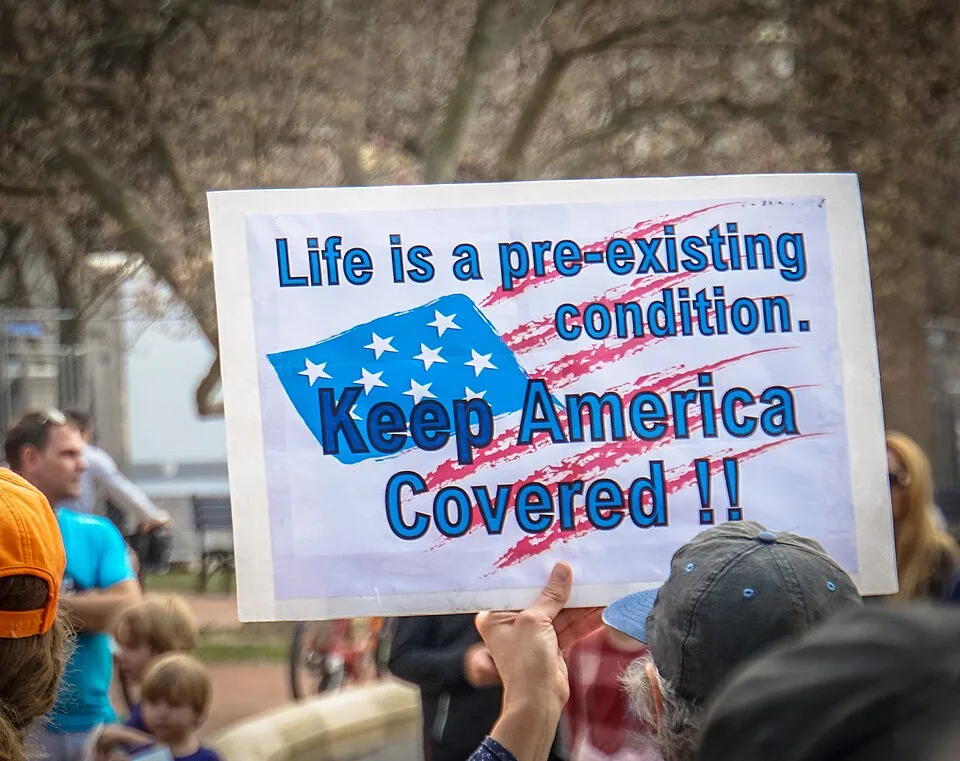
Congress let enhanced Obamacare subsidies expire, and the bill is coming due in the most literal sense possible: people are losing their health coverage at a staggering rate. Ohio and Oklahoma have each shed nearly a third of their entire ACA enrollment since last year. This is not a rounding error. This is a policy choice with a body count.
The Numbers Are Ugly and They're Real
According to state-by-state federal data reported by Axios, Ohio and Oklahoma each lost close to a third of their Obamacare enrollment in the period following the expiration of beefed-up federal subsidies. Arizona, South Carolina, and Minnesota also took serious hits, with coverage dropping more than a quarter in those states.
Let that sink in. One in three people who had health insurance through the ACA marketplace in Ohio last year no longer has it. Same story in Oklahoma. These aren't marginal dips or seasonal fluctuations. This is what happens when you yank the financial floor out from under people who were already spending a significant chunk of their income to stay covered.
The subsidies that expired were the enhanced premium tax credits first passed under the American Rescue Plan in 2021 and extended through the Inflation Reduction Act. They made ACA plans dramatically more affordable for millions of Americans, including people well into the middle class. When Congress failed to extend them again, premiums spiked. People dropped coverage. The data is now telling us exactly how many.
Red States Got Hit Too, Which Changes Nothing About Who Did This
Axios points out that the coverage losses are hitting deep-red states as well as blue ones. This detail is being reported as if it's surprising. It isn't. Healthcare costs don't care about your county's voting record. Unaffordable premiums drop both the guy with a MAGA hat and the guy without one.
Oklahoma and South Carolina are not exactly Democratic strongholds. These are states whose congressional delegations largely voted against the subsidies that were keeping their own constituents insured. The voters who sent those representatives to Washington are now the ones losing coverage. There is a terrible, straight-line logic to it.
Ohio is at least more politically competitive, but that doesn't matter much to someone in Dayton or Youngstown who just opened their renewal notice and couldn't make the math work. Ohio lost nearly a third of its enrollees. That is an enormous number of people who are now one bad diagnosis away from financial catastrophe.
What Expiring Subsidies Actually Means in Practice
Here's what the subsidy expiration looks like at the kitchen table level. Under the enhanced credits, a family of four earning around $60,000 a year could get a benchmark plan for a few hundred dollars a month. Without those credits, that same plan might cost twice as much or more, depending on the state. For millions of people, that difference is the entire margin between affording coverage and going without.
The people who drop coverage don't just disappear. They skip preventive care. They delay treating conditions that are cheapest to treat early. They show up in emergency rooms when things get bad enough they can't ignore them anymore, at which point treatment costs multiples of what it would have cost earlier. They go bankrupt. Some of them die from things that were treatable.
This is not speculation. This is the documented, peer-reviewed, decades-long track record of what happens when Americans lose health insurance. We have run this experiment before. We know how it ends.
Congress Had a Choice and Made It
The subsidies didn't vanish because of some act of God or a bureaucratic oversight. Congress made a decision not to extend them. That decision had a constituency: it was cheaper in the short-term budget math that legislators use to sell tax cuts and score bills, and a significant portion of the Republican caucus has ideologically opposed the ACA in any form since it passed in 2010.
The argument against the subsidies was never really about fiscal responsibility. The same Congress that let healthcare subsidies expire has been perfectly comfortable with other forms of federal spending that benefit other constituencies. This was a choice about whose problems matter and whose don't.
Arizona is an interesting case because it's a genuine swing state with competitive Senate seats. Whether the coverage losses there translate into any political consequences remains to be seen. History suggests probably not enough to matter, which is the most depressing sentence in this entire article.
The Dingo Take
The thing about letting subsidies expire is that it lets politicians pretend they didn't actually do anything. Nobody voted to take health insurance away from a third of Ohio's ACA enrollees. They just voted not to keep it affordable. The outcome is identical but the fingerprints are harder to find, which is the whole point.
The coverage map Axios is showing us right now is a direct readout of a policy decision made in Washington. Ohio down 30 percent. Oklahoma down 30 percent. Arizona, South Carolina, Minnesota all cratering. These aren't abstractions. These are people who had coverage in January who don't have it now, gambling every day that nothing goes seriously wrong with their bodies while their elected representatives debate other priorities.
Somebody is going to get very sick in the next twelve months who would have caught it early under the old subsidy structure and won't catch it at all now. That's not cynicism. That's statistics applied to human beings. Congress let the subsidies die, the enrollment numbers are confirming exactly what every health policy expert predicted would happen, and the people paying the price voted for the people who made it happen. This country is something else.





Comments