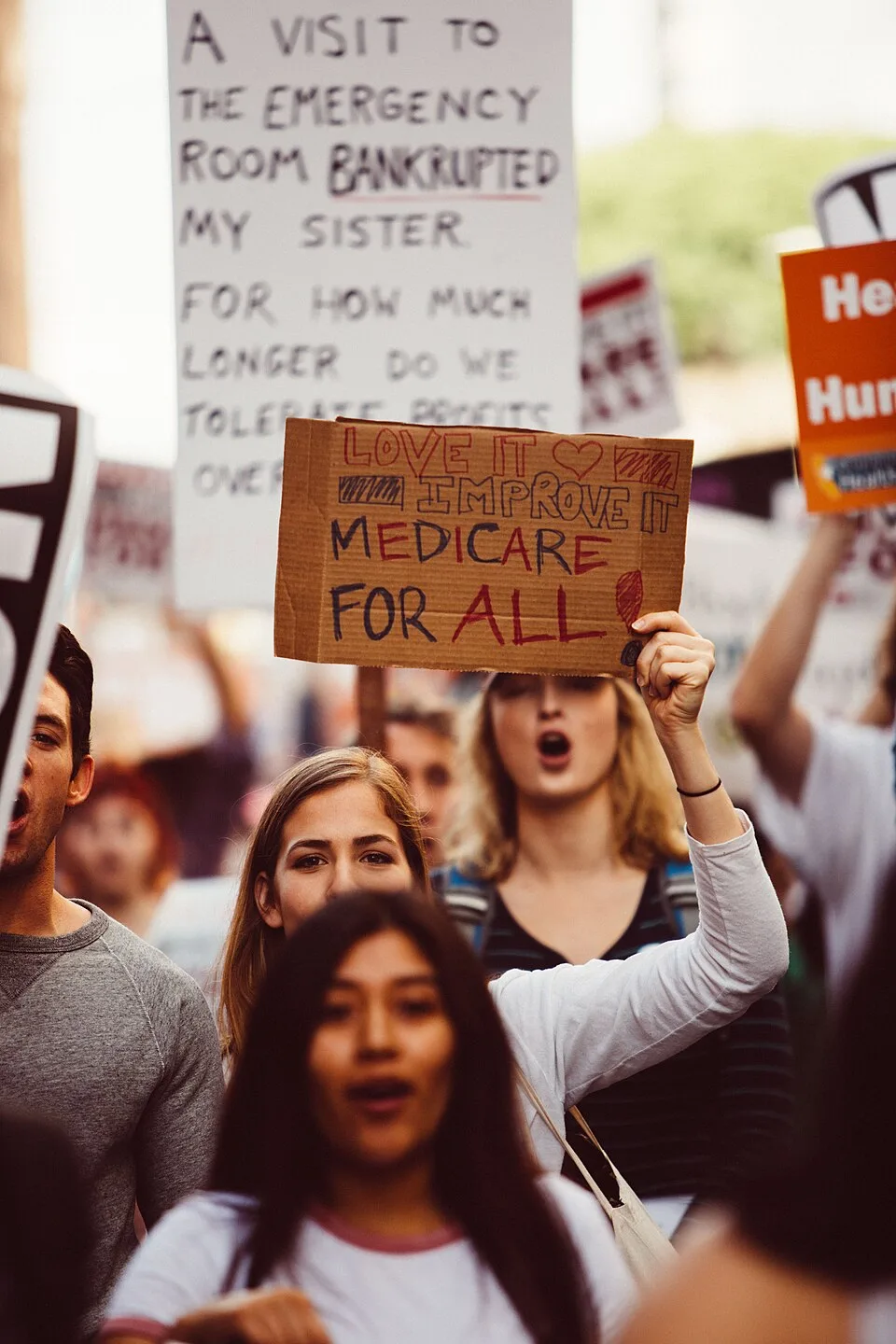
The centrists spent years telling you Medicare for All was a fantasy cooked up by people who don't understand how anything works. Then the 2026 primaries happened. Democratic socialists and progressives came out swinging in race after race, and suddenly the pipe dream has a pulse again.
What Actually Happened in the Primaries
According to Axios, democratic socialists and progressives racked up enough primary wins this cycle to qualify as a genuine trend, not a fluke. The kind of wins that make party strategists stare at spreadsheets at two in the morning wondering where they went wrong.
This isn't a handful of safe deep-blue districts sending the occasional Bernie-adjacent candidate to Congress. There's a pattern here. Voters in Democratic primaries are actively choosing candidates who are running on a platform that the party establishment has spent the better part of a decade trying to sand down and make disappear.
The establishment bet that if they just kept offering slightly-better-than-nothing on healthcare, the base would eventually get tired and accept it. The base did not get tired. The base got angrier.
Why Healthcare Is the Match That Lit This
Here's the thing about the American healthcare system in 2026: it is, by any measurable standard, a catastrophe that primarily serves the people who profit from it. Premiums keep climbing. Drug prices remain a global embarrassment. Long-term care costs can drain a family's entire savings in under two years. People know this. They live it.
Axios reports that the health affordability crisis and widespread frustration with the medical system are the core engines driving new appetite for big-government solutions. Which, yes, obviously. When the current system is visibly failing millions of people on a daily basis, it turns out those people start wanting something different.
Larry Levitt, executive vice president of policy at KFF, told Axios: "This does feel like a moment where the Democratic base is looking for bigger ideas that go beyond incremental policies." That is a polite, policy-professional way of saying the base is done being told to be grateful for table scraps.
The Centrist Case Against Medicare for All Has a Durability Problem
The standard centrist argument against Medicare for All has always had two main pillars. One: it costs too much. Two: it'll never pass anyway, so why bother?
The first argument is technically true if you look only at the government outlay and ignore what Americans currently spend in aggregate on premiums, deductibles, copays, and medical debt. Once you count all of that, the math gets considerably less favorable to the status quo. Economists have been fighting about this for years, but the raw sticker shock of "this bill is large" has always done a lot of political work for the opposition.
The second argument is circular in a way that should embarrass anyone who makes it. Policies don't pass because they lack political support. Political support builds when politicians run on policies and win. When progressives win primaries on Medicare for All platforms, they are actively dismantling the premise that it can't be done. The centrists are essentially arguing that nothing can change because nothing has changed yet.
This Is Not 2018 Anymore
It's worth putting this moment in some context. Medicare for All had a big cultural moment around 2018 and 2019, when it became shorthand for the progressive energy that was routing establishment Democrats in primaries. Then came the 2020 primary, where the party coalesced around Joe Biden with almost frightening speed, and the conversation largely got shelved in favor of beating Trump.
What's different now is the accumulated weight of years of doing it the other way. The Affordable Care Act was a genuine achievement that also left tens of millions uninsured and did essentially nothing about the underlying cost structure. The Biden administration passed significant legislation but healthcare costs kept going. People are not confused about what incremental progress looks like anymore. They've seen it. They're not satisfied.
Axios is framing these primary results as evidence of "new enthusiasm" for Medicare for All. It might be more accurate to call it old frustration that finally found a political vehicle.
What the Party Does Next Is the Whole Question
Democratic leadership now faces the same choice it has been putting off for the better part of a decade: get ahead of the base's actual appetite, or keep trying to manage it down.
The manage-it-down strategy has a track record at this point. It produced a 2020 primary where the progressive lane got crowded out by a wave of consolidation. It produced a general election message on healthcare that was almost entirely defensive. It produced a Democratic Party that spent years being primarily defined by what it opposed rather than what it stood for.
If the 2026 primaries are telling us anything, it's that the base isn't particularly interested in giving that strategy another run. The question is whether the people running the party are paying attention or have their fingers jammed in their ears hoping this passes.
The Dingo Take
Look, no one is pretending that passing Medicare for All through a functional Congress is simple. The insurance industry alone spends enough on lobbying every year to fund a small country. Pharmaceutical companies will run the most expensive scare campaign in the history of American television the moment any serious bill moves forward. The Senate filibuster exists specifically to let a minority of senators kill things the majority wants. These are real obstacles.
But here's what the centrists keep refusing to accept: the obstacles to passing a thing are not the same as the thing being wrong. Lots of correct ideas face enormous political resistance. That's not an argument against the idea. It's an argument for building enough political power to overcome the resistance. And weirdly, that process starts with running on the idea and winning, which is exactly what progressive candidates are doing.
The medical-industrial complex has had thirty years to fix American healthcare and has spent that time fixing its own profit margins instead. The case for giving it more time to sort things out on its own is not compelling. The 2026 primaries suggest that a significant chunk of the Democratic base has done the math on this and reached that conclusion on their own. Whether the party apparatus catches up before the next election, or spends another cycle trying to explain why the base's priorities are impractical, is basically the whole story of the Democratic Party right now.



Comments