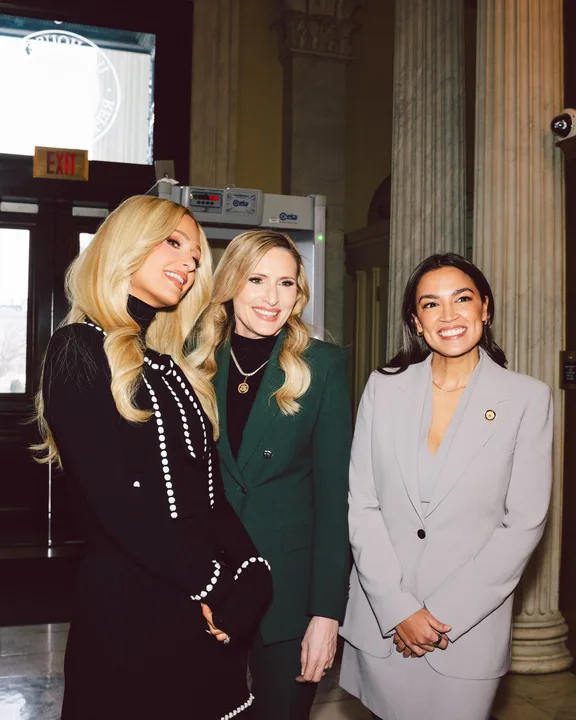
It only took fifty years of abuse allegations, a celebrity survivor testifying before Congress, and multiple active lawsuits, but Utah has finally revoked the license of Provo Canyon School, the boarding facility where Paris Hilton says staff beat her, watched her shower, fed her unidentified pills, and locked her naked in solitary confinement. The state's action took effect Monday. The school has until August 6th to shut down entirely. Half a century. That's how long it took.
What Utah Actually Found
The license revocation, which the Guardian first reported, cites a stack of noncompliance violations going back to 2025. According to the state's findings, Provo Canyon School failed to maintain adequate staff-to-client ratios, engaged in unnecessary physical restraint and aggressive contact with a student, neglected client care, and couldn't even be bothered to properly verify employee backgrounds or run timely background checks on applicants.
That last one is worth sitting with. A facility housing children with behavioral and psychiatric needs, operated by people whose backgrounds hadn't been properly checked. Let that breathe for a second.
The Guardian reports that Utah health officials had already imposed temporary restrictions on the school back in May, after staff failed to seek immediate medical care for a student with serious injuries. So the state knew. The violations were stacking up. Monday's revocation was the end of a process that had been building for months, not a sudden act of institutional courage.
What Paris Hilton Says Happened to Her
Hilton spent almost a year at the Springville, Utah campus in the late 1990s, when she was a teenager. What she alleges is not subtle. According to the Guardian, she says staff members beat her, watched her shower, fed her unknown pills, and held her in solitary confinement without clothing.
She was a kid. Someone's child. And she has been saying this publicly for years, testifying before Congress and state legislatures across the country. The Guardian reports she helped get protective legislation passed in Utah and 15 other states. Fifteen. She had to go state by state, law by law, to force accountability onto an industry that built its business model around kids who couldn't fight back.
"For more than fifty years, children came forward with stories of abuse, neglect, and trauma," Hilton said in a statement Tuesday. "Today, the state confirmed what survivors have known all along: Provo Canyon School failed the children in its care. I was one of those children."
The Troubled Teen Industry Is a Real Thing and It's Been Running Wild in Utah
If you've never heard the phrase "troubled teen industry" before, buckle up. As both the Guardian and Page Six note, Utah has long played an outsized role in this network of private, for-profit residential centers for kids with behavioral issues. These are facilities that charge families significant sums, operate with varying levels of oversight, and have generated abuse allegations for decades.
Provo Canyon School describes itself on its own website as a psychiatric residential treatment facility for youth ages 12 to 18. That framing, "treatment facility," does a lot of heavy lifting when what you're actually running is a place where staff apparently couldn't clear basic background checks and were physically restraining children in ways the state had to step in and call unnecessary.
In June, Hilton returned to the school to speak in support of two families who filed lawsuits alleging their children were mistreated there, according to the Guardian. This is not ancient history. This was happening to kids last year.
The New Owners Aren't Talking, But They Don't Get to Walk Away From This
Here is the escape hatch the current administration is trying to use. Provo Canyon School is under new ownership, and the school's management has said it cannot comment on anything that happened before the ownership change, including Hilton's time there. The Associated Press reached out for comment and got nothing.
This is a classic move. Buy the building, flush the liability, keep the operation running. The new owners want the benefit of an ongoing facility without the inconvenience of answering for its history. The problem is, the violations the state cited aren't from the 1990s. They go back to 2025. The state slapped temporary restrictions on the school in May over a staff failure to get a seriously injured student medical care. That's not old management's problem. That's your watch.
The school has 15 days to request a hearing before Utah's Department of Health and Human Services. After that, all services at the campus must be terminated by August 6th, according to Page Six. We'll see if they try to fight it.
What Comes Next for the Kids Still Inside
There are children currently enrolled at Provo Canyon School. That's not an abstraction. The state has ordered the facility to shut down by early August, which means those kids need to be placed somewhere else, quickly, by families who were already struggling enough to put them in residential care in the first place.
Hilton addressed them directly in her statement. "Today, children still inside that facility know someone is finally coming to protect them," she said. It's a powerful line. It's also a little heartbreaking that "someone finally coming" arrives after fifty years and the specific celebrity-powered advocacy of a woman who had the platform and the money to keep showing up when other survivors couldn't.
The question nobody is really answering yet is where those kids go. Utah's troubled teen industry doesn't stop existing because one school loses its license. There are other facilities. The oversight record of the industry broadly is not inspiring.
The Dingo Take
Let's be clear about what this story actually is. A for-profit institution allegedly abused children for fifty years. It kept operating because the kids inside had no power, many parents were desperate, the state of Utah was slow to act, and the industry had built enough legal and regulatory cushion to absorb complaints without consequence. The only reason this particular school is closing in 2026 is that one of its survivors became famous enough that ignoring her became politically untenable. Paris Hilton had to testify before Congress. She had to go to sixteen state legislatures. She had to go back to the school in June to stand next to families suing the place. That is what accountability required.
The new ownership dodge is especially galling. You cannot buy a facility with a fifty-year abuse rap sheet, keep it running, rack up fresh violations within a year, fail to get a seriously injured kid immediate medical care, and then claim the past is somebody else's problem. That's not a clean break. That's the same machine with a new face on the brochure.
What's actually needed here isn't just one school closing. It's a serious national reckoning with the entire troubled teen industry, which has spent decades monetizing parental desperation and child vulnerability with minimal federal oversight. One license revocation in Springville, Utah is not that reckoning. It's a start. A very, very late start.


Comments