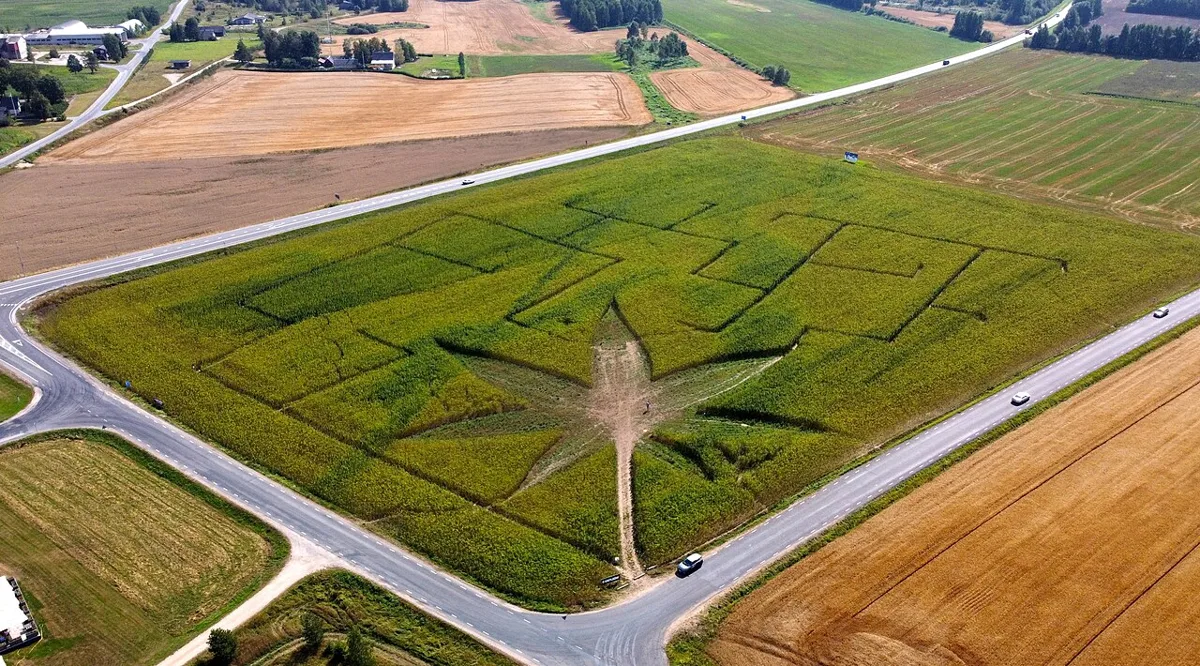
Here is a sentence you did not expect to read today: according to the White House's own 2026 National Drug Control Strategy, Chinese criminal organizations now control more than 80% of Oklahoma's marijuana and hemp farms. Former acting Homeland Security Secretary Chad Wolf wants Congress to know about it, and honestly, so should you.
The Letter Nobody In DC Wants to Talk About
Chad Wolf sent a letter Tuesday to the House Select Committee on the Chinese Communist Party, addressed to chairman Rep. John Moolenaar, R-Mich., and ranking member Rep. Ro Khanna, D-Calif. The subject line, essentially: Chinese transnational criminal organizations have quietly taken over a massive chunk of America's cannabis market, and Congress needs to stop pretending this isn't happening.
Wolf's letter, as Fox News reports, urges the committee to investigate the "growing role that Chinese-linked actors and foreign criminal organizations are playing in the proliferation of hemp-derived THC products and illegal marijuana operations" across the country. He is not talking about a fringe problem. He is describing what the White House itself has characterized as an industrial-scale criminal takeover of a legal American market.
Oklahoma Is the Case Study, and It Is Alarming
The 2026 National Drug Control Strategy document Wolf cited in his letter puts the Oklahoma situation in stark terms. Law enforcement estimates that Chinese criminal groups operate more than 80% of the state's thousands of marijuana and hemp farms. Read that again. Not a meaningful minority. Not a troubling percentage. Eighty percent.
And these are not mom-and-pop grow operations. According to the White House's own strategy document, these farms function as what it calls "hubs of poly-crime" involving human trafficking of exploited laborers, sophisticated money laundering schemes, and the use of dangerous unregistered pesticides that pose direct threats to public health and the local environment. This is an organized criminal infrastructure operating in broad daylight inside American agriculture.
The strategy document frames it plainly: "The marijuana trade in the United States is no longer a scattered, low-level problem; it has been co-opted and industrialized by sophisticated, transnational criminal organizations, particularly those with ties to China." That is the Biden-to-Trump era federal government describing what amounts to a hostile foreign takeover of a domestic industry, and it has barely registered as news.
How a Hemp Loophole Became a National Security Problem
The 2018 Farm Bill legalized industrial hemp and low-THC CBD products. It was a relatively uncontroversial piece of agricultural policy. What nobody fully anticipated was that the legal definition of hemp would become a backdoor for high-potency THC products to flood the market with almost no regulatory guardrails in place.
As Wolf wrote in his letter, "What began as a narrowly tailored effort to legalize industrial hemp and non-intoxicating cannabidiol products has evolved into a dangerous and unregulated market for high-potency THC hemp products that are being sold across the country with little to no oversight." These products, he notes, are packaged as gummies, candies, beverages, and vapes, frequently designed in ways that appeal to children. There are no consistent age restrictions. There are no meaningful federal labeling requirements. There is essentially no safety floor.
Wolf argues in the letter that the same supply chains and regulatory blind spots that allowed fentanyl precursors to flow from China into American communities are now being exploited for the THC market. Given what we know about fentanyl, treating that comparison as hyperbole would be a mistake.
Congress Moved, Then Somebody Started Pumping the Brakes
Wolf's letter references legislation passed last year with bipartisan support and signed by Trump that was supposed to close the hemp-derived THC loophole and restore the original intent of federal hemp law. So far so good. Except Wolf is now warning that "efforts are now underway to weaken, delay or roll back those protections before they fully take effect."
He does not name names in the letter, at least in what Fox News has published. But the implication is clear enough. There are people with money and lobbying power who benefit from keeping the regulatory status quo murky, and they are using that money and power to slow down the one congressional fix that actually passed. This is how American regulatory capture works: you get the law, then you spend years strangling its implementation.
Wolf is asking the CCP Select Committee specifically to investigate China's involvement in the THC hemp supply chain, including financing, chemical manufacturing, illegal cultivation, money laundering, and the web of criminal organizations that have built themselves inside the American market. Whether the committee acts on it is a different question entirely.
The DOJ Has Already Charged People for This
This is not speculative territory. The Department of Justice has already brought charges against seven Chinese nationals in connection with a multi-million dollar marijuana trafficking ring, as Fox News notes in its reporting. The indictments exist. The arrests happened. The evidence is in the public record.
That context matters because it means Wolf is not writing a letter about a hypothetical threat. He is writing about something that federal prosecutors have already substantiated in court. The criminal infrastructure is documented. The question now is whether Congress will treat this as the serious national security and public health issue it appears to be, or whether it will get quietly filed somewhere between the other things everyone agrees are urgent and nobody actually addresses.
The Dingo Take
Let's be honest about the awkward politics here. This story is being pushed by a Trump-era DHS official and reported by Fox News, which means a certain segment of the left will reflexively tune it out, and a certain segment of the right will use it to demand a border wall made of drug-sniffing dogs. Both of those reactions would be stupid. The underlying facts, drawn from the White House's own drug control strategy and backed by actual DOJ indictments, describe a genuine problem that does not care what your priors are.
The hemp regulatory loophole is real. The presence of Chinese-linked criminal organizations in Oklahoma's agricultural sector is documented by law enforcement, not invented by a cable news chyron. Human trafficking tied to these farms is real. If this exact story were about, say, a Russian oligarch network running 80% of Iowa's corn processing facilities, we would be having wall-to-wall congressional hearings by Thursday. Because it involves weed and it's complicated and the politics are messy, it will probably get one news cycle and then disappear.
What Chad Wolf is asking for is an investigation. That is not a radical request. Congress has a committee specifically designed to look at Chinese criminal and geopolitical interference in American institutions. Using it for this seems like exactly what it's for. Whether Moolenaar and Khanna actually move on it, or whether the letter ends up as a footnote in a think tank white paper three years from now, tells you everything about whether Washington is capable of responding to problems that don't fit neatly on a bumper sticker.



Comments