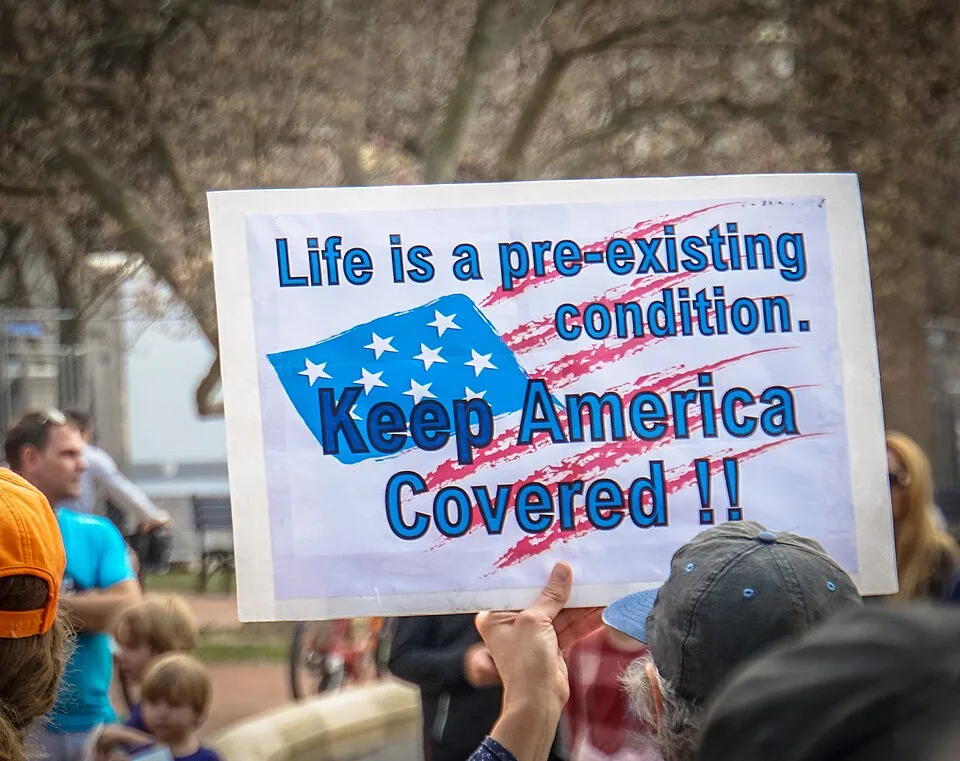
Obamacare premiums are about to take a 14% bite out of American wallets next year, and we're not talking about a one-time fluke. According to a new KFF analysis of preliminary rate filings from 77 health plans across 16 states, this would be the second consecutive year of double-digit premium increases in the individual market — a streak that should be making a lot of powerful people extremely uncomfortable, but probably won't.
The Numbers, Because They're Bad
Axios is reporting that the median premium increase across those 77 plans comes in at 14%. That is not a rounding error. That is not the kind of number you absorb by skipping a few lattes. For people already stretched thin by years of compounding inflation, a 14% jump in health insurance costs is the kind of thing that forces real, awful choices.
To put that in household terms: if you're currently paying $500 a month for individual coverage, you're looking at roughly $70 more per month, $840 more per year, landing on top of whatever your deductibles and out-of-pocket costs are already doing to you. And that's the median. Some plans are filing for increases well above that number.
So Who Killed the Subsidies?
Insurers, to their credit, are being unusually direct about what's driving this. According to the KFF analysis that Axios cites, the two culprits are rising costs of health care services and the expiration of enhanced ACA subsidies. That second one deserves a lot more attention than it's getting.
The enhanced subsidies were a lifeline extended through the Inflation Reduction Act, the law Democrats passed in 2022. They significantly reduced what millions of Americans paid for marketplace coverage. Republicans spent years calling those subsidies government overreach, a budget buster, a handout. Congress let them expire. The subsidies are gone. And now premiums are going up. You don't have to be a health policy scholar to connect those two dots.
This is not some invisible market force acting on the ACA from the outside. This is a policy choice, made by specific people, producing a predictable outcome that real Americans are now going to pay for.
Two Years in a Row of Double-Digit Hikes
The 14% figure is alarming on its own, but the streak is what should really be setting off alarms. Two consecutive years of double-digit increases in the individual market means this isn't turbulence. This is a trajectory.
Health insurance markets run on something close to panic math. When insurers expect costs to keep rising, and when the policy environment signals that subsidies won't be coming back, they price for the worst. Each year's rate filings become a kind of actuarial self-fulfilling prophecy. Healthy people decide the premiums aren't worth it and drop coverage, which makes the remaining pool sicker and more expensive, which drives premiums higher the following year. Healthcare economists have a name for this cycle. It's not a fun name.
What This Means for Real People
The ACA marketplaces exist specifically to cover people who don't get insurance through an employer and don't qualify for Medicaid. That's a population that skews toward small business owners, gig workers, early retirees, part-time employees, and people in the gaps between other programs. In other words, exactly the people who can least afford to absorb a 14% annual price hike and just shrug it off.
Thousands of dollars in additional costs, as Axios frames it, is not an abstraction. That's a car payment. That's groceries for two months. That's the difference between getting that weird thing on your arm checked out and deciding it's probably nothing. The healthcare affordability crisis has been a slow-rolling disaster for years, and rate hikes like this don't just worsen it — they accelerate it.
The Rate Filings Are Just Preliminary
Worth being precise here: the KFF analysis is based on preliminary rate filings. Insurers submit initial numbers, regulators review them, and final rates can sometimes come in lower after that process plays out. So 14% is the ask, not necessarily the final bill.
But preliminary filings tend to be anchored close to where final rates land. Insurers don't file 14% increases expecting to settle for 5%. They're not leaving enormous room on the table. And with 77 plans across 16 states already in that range, there's no reason to expect the national picture to look dramatically different when the remaining states finish their filings.
The Dingo Take
Here is the thing about letting insurance subsidies expire: everyone who studies health policy knew exactly what would happen. Not feared. Not projected. Knew. Enhanced subsidies hold down premiums. Remove the subsidies. Premiums go up. This is not complicated. The people who made this decision made it anyway, and they will not be the ones digging through their budgets trying to figure out how to cover the new monthly cost.
The cruelty of this particular policy failure is that it's invisible enough to be deniable. Nobody voted to raise your premiums. Republicans just declined to extend a program that was keeping them down, and then watched the market do the rest. It's a masterclass in plausible deniability. 'We didn't raise your rates. The insurers did.' Yes. After you took away the thing that was preventing them from doing exactly this.
Two straight years of double-digit increases means millions of Americans are about to make the calculation that healthy people always eventually make when insurance gets expensive enough: they're going to drop it and hope for the best. When they end up in an emergency room, that cost doesn't disappear. It spreads across every other insured person's premiums. And next year's rate filings will look even worse. The only question is how many cycles of this it takes before someone in a position of power decides it's worth stopping.




Comments