California public universities are sitting on stockpiles of AR-15s, stun grenades, and sonic weapons so loud the military calls them the 'Voice of God' -- and a lot of them have been quietly ignoring the law that's supposed to tell you about it. A CalMatters investigation into all 148 public campuses across three university systems found a pattern of incomplete reports, skipped public forums, and governing boards that simply stopped doing their jobs. Sleep tight, students.
What They Have Would Make a Small Army Jealous
Let's start with the inventory, because it is something. According to CalMatters, California's public higher education institutions collectively own hundreds of semi-automatic rifles, hundreds of thousands of rifle munitions, thousands of canisters of pepper-based chemical munitions, stun grenades designed to cause temporary blindness, and acoustic weapons that can cause physical pain from a distance. These are not campus safety tools in any conventional sense of the phrase. These are tools of war sitting in university police armories.
The weapons are legal under a 2021 California state law that permits campus police to acquire military equipment, but only if the college can demonstrate there is no other way to ensure civilian safety. The law also requires extensive public transparency: annual reports, use logs, equipment inventories, and public forums where students and community members can actually ask questions. The Guardian covered CalMatters' findings, and what they found was that the weapons exist but the transparency largely does not.
The Law Exists. Complying With It Is Apparently Optional.
Here is where this goes from unsettling to genuinely maddening. The 2021 transparency law is not vague. It requires campus police departments to post annual reports online, submit those reports to their governing boards, and hold a 'well-publicized' public forum within 30 days of their board's approval. CalMatters attempted to compile those 2025 reports from every qualifying public campus in the state. What they got back was a mess.
Several campus police departments, according to CalMatters, only created their required reports after the outlet started asking questions. UC Berkeley's annual report was approved by the UC Board of Regents last September. The actual equipment list didn't appear online until April 7th of this year -- after four separate CalMatters inquiries. The law requires these documents to be posted as long as the equipment is usable. UC Berkeley just... didn't do that. For months.
At Cal State Dominguez Hills, the situation is even more basic. Klarissa Garcia, executive assistant to the chief of police there, told CalMatters her department does not submit its annual report to any governing body at all. Not the chancellor's office. Not the board of trustees. Nobody. The report just sits there, presumably very comfortable and entirely unreviewed.
AR-15s That Technically Don't Exist, If You Define Things Carefully
San Jose State University and San Francisco State University both own AR-15s, according to their own reports. There is one problem with this: the Cal State systemwide policy does not authorize AR-15s. Cal State spokesperson Amy Bentley-Smith told CalMatters these rifles are 'standard issue,' which would exempt them from reporting requirements. San Jose's own report, however, classifies them as specialized firearms. San Francisco State is now saying their semi-automatic rifles are standard issue and won't be listed in future annual reports.
So to summarize: the rifles exist, the policy says they shouldn't, and the solution some campuses have landed on is to reclassify them in a way that removes the reporting requirement. The rifles do not disappear. The paperwork does. This is less a transparency system and more a word game played with assault weapons.
The Cal State board of trustees, for what it's worth, has not reviewed the systemwide equipment policy at a public meeting since 2022, despite that policy requiring at least annual renewal. Bentley-Smith told CalMatters the board only needs to revisit the policy if the system wants to authorize new equipment types. The board has interpreted its own oversight role so narrowly it has essentially stopped performing it.
Public Forums: Held, Probably, Somewhere, Maybe
The public forum requirement is where the law gets the most creative interpretation. Campus police must hold a conveniently located, well-publicized meeting within 30 days of their governing board approving the annual report. CalMatters found that Cal Poly Humboldt and Cal State Sonoma did not hold a campus forum in 2025 and did not respond to questions about when any previous required meeting occurred. Multiple other departments said they held meetings but could not or would not explain how those meetings were publicized.
Some departments said they posted announcements on social media. When CalMatters looked for evidence of these posts, they were not there. Several campuses did not track whether community colleges in their system followed the transparency law at all. The community college system's chancellor's office communications specialist Melissa Villarin told CalMatters the office simply does not monitor compliance. More than 40 community colleges told CalMatters they did not file a report at all.
Military equipment forums that do happen are 'sparsely attended,' multiple police departments told CalMatters. Shocking, given how invisible they apparently are.
Students Are Paying Attention, Even If the Boards Aren't
The context here matters enormously. This investigation comes after years of campus protests -- over Gaza, over tuition, over a dozen other things -- where university administrators have called in police. Students watching their campuses quietly build up military arsenals while simultaneously failing to hold the required public meetings about those arsenals have reason to be worried about what this equipment is actually for.
The 2021 law was written precisely because of those concerns. Former Assembly member David Chiu, now the city attorney of San Francisco, authored it as a check on campus militarization. The law's entire premise is that if you're going to let campus cops have weapons of war, the public at least deserves to know about it and have a say. What CalMatters found is that many institutions built the arsenal and skipped the accountability part entirely.
Following the investigation's inquiries, CalMatters reports that several campuses and the Cal State system said they would commit to full compliance going forward. Some are also downsizing their inventories. Better late than never, technically. But 'we'll follow the law now that a journalist asked' is not exactly the governance posture you want from institutions of higher learning.
The Dingo Take
Let's be clear about what CalMatters actually found here. California passed a law in 2021 saying: you can have military weapons on campus, but you have to be completely open about what you have and why. Campuses responded by acquiring the weapons and then treating the openness part as a strongly-worded suggestion. Reports filed late or not at all. Public forums not held. Governing boards that stopped reviewing their own policies years ago. AR-15s reclassified on paper to dodge reporting requirements. This is not a compliance problem. This is a culture that decided the accountability half of the deal wasn't binding.
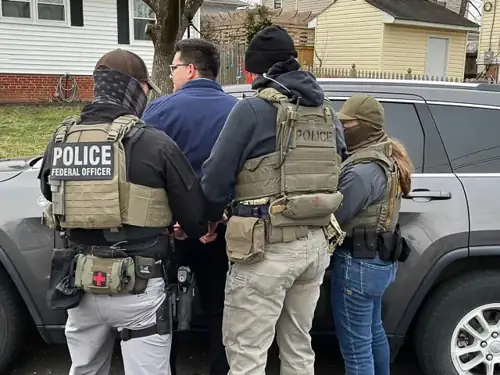
The timing makes this worse, not better. We are living through an era where the federal government is using law enforcement as a political tool, where ICE is conducting raids on campuses, where the line between protest suppression and public safety has been deliberately blurred by people in power. A California campus sitting on stun grenades and a 'Voice of God' acoustic cannon while quietly not holding the required public meeting about it is not just a bureaucratic failure. It is exactly the kind of low-visibility institutional drift that ends badly.
The universities that got caught will now file their paperwork. Some will get rid of a few things they probably shouldn't have had. The Cal State board will presumably hold a meeting. And then everyone will move on, and in three years CalMatters or someone like them will do this again and find the same pattern. That is how institutional accountability failures work when the consequences for ignoring the law are basically nothing. The Voice of God, it turns out, is a lot quieter when it's pointed at campus administrators.




Comments