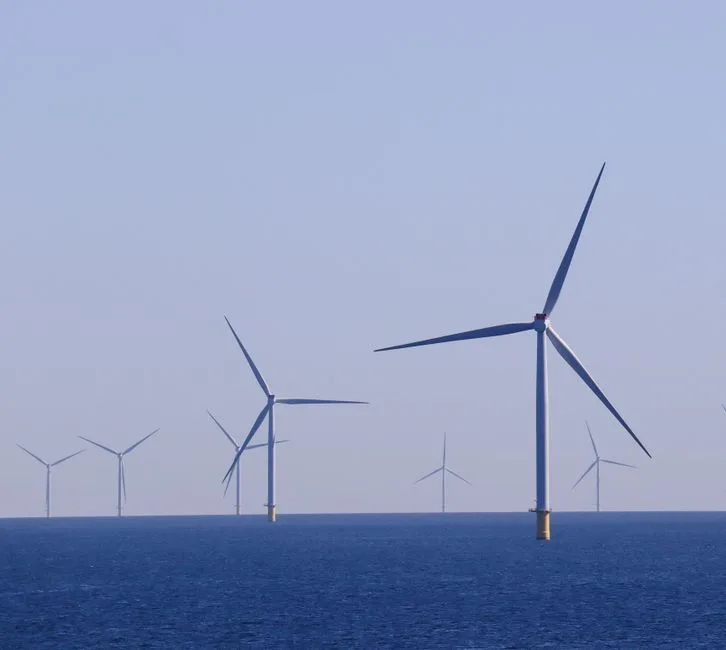
The Trump administration has spent $2.7 billion in taxpayer money to kill offshore wind projects and another $1.125 billion to keep coal on life support, and the kicker is that the people footing the bill will pay again when their electricity rates go up. This is not an accident. This is the plan.
The Price Tag on 'Cheap Energy'
Let's put some numbers on the table before we do anything else. According to The Guardian, the Department of the Interior has, since March, cut four separate deals with energy companies, paying them to cancel eight offshore wind projects entirely and redirect toward fossil fuels instead. The first deal was with French energy giant TotalEnergies. The most recent one landed late last month with Duke Energy. Combined with over a billion dollars being funneled into coal, the total public spend on this two-front war against clean power is pushing $3.8 billion.
That's $3.8 billion of your money spent to make your energy more expensive. Read that sentence again as many times as you need to.
What They're Doing to Wind
There is genuinely no precedent for this. Previous administrations have killed energy projects through permitting delays, litigation, regulatory headaches. The standard tools of bureaucratic obstruction. But as Jenny Rowland-Shea, senior director for conservation policy at the Center for American Progress, told The Guardian, no federal government has ever directly paid developers to hand back legally acquired offshore wind leases. This is new territory.
The White House insists it isn't "spending" taxpayer money on these deals. Spokesperson Taylor Rogers told The Guardian the administration is simply "returning" bid money to companies for projects that can't be built due to "national security concerns," and those companies are voluntarily redirecting the funds. That framing is creative, to put it charitably. Money from energy leases on public lands and waters flows into public accounts. Rowland-Shea put it plainly: "They can use the word return, but they are paying the companies not to produce this energy or to give taxpayers what was promised."
Trump has called wind energy "ugly" and "disgusting" in public. He has labeled climate action a "scam." The policy outcome happens to perfectly mirror those personal opinions and also happens to perfectly mirror the financial interests of fossil fuel donors who poured record sums into his campaign. Make of that what you will.
The Coal Revival Nobody Asked For
Meanwhile, on the other side of the ledger, the Department of Energy announced in September that it would spend $625 million to "expand and extend the life of" coal-fired power plants. That breaks down to $350 million to "modernize" coal plants, $175 million for coal projects powering rural communities, and $50 million to upgrade wastewater systems so the plants can keep running longer. Then last month, the agency pulled another $500 million from the Defense Production Act to expand the capacity of 13 coal plants and help build a coal export terminal in Oakland, California. A week after that, an additional $3.6 million went to refurbish nine more existing coal plants.
Coal. The dirtiest fossil fuel we have. A 2023 study estimated that particles from coal plant air pollution contributed to as many as 460,000 deaths in the United States between 1999 and 2020. Coal plants are also, according to experts, more expensive to build and run than renewable alternatives. The market already figured this out. "Coal has largely died because of economics," Rowland-Shea told The Guardian, "and so forcing it to stay afloat is not a good energy decision, and not a good economic decision for taxpayers."
The Energy Department spokesperson Ben Dietderich told The Guardian the administration is "proud" of its coal efforts, and blamed the Biden era for "premature shutdowns" of fossil fuel plants and higher energy costs. There is, as The Guardian noted, actual evidence that renewables lower energy costs. But why let that get in the way of a good talking point.
Paying Twice: How This Works
Here is the mechanism critics are describing, and it is worth understanding clearly. Americans pay once through direct federal spending, the billions already allocated to kill wind and prop up coal. Then they pay again through their monthly utility bills, as power companies keep running expensive coal plants instead of switching to cheaper renewable generation.
A 2025 analysis from research firm Grid Strategies, cited by The Guardian, found that if all 35,000 megawatts of large fossil fuel plants scheduled to retire by 2028 were kept running instead, ratepayers would face at least $3.12 billion in additional costs by the end of 2028. That number sits on top of the billions already spent. Former Washington Governor Jay Inslee summarized the situation to The Guardian with the kind of directness that politicians rarely manage: "Trump is getting Americans coming and going. He's forcing higher power bills on them by blocking clean energy, then he's fattening the wallets of his cronies, all with billions of our tax dollars."
Seven Democratic-controlled states have already filed a lawsuit alleging that the TotalEnergies deal was an illegal use of taxpayer money. That case is working its way through the courts. In the meantime, the deals keep coming.
The Energy Gap Nobody Wants to Talk About
There's a timing problem here that the administration's cheerful coal press releases refuse to acknowledge. The United States is experiencing a massive surge in electricity demand, driven largely by data centers and AI infrastructure. Rowland-Shea told The Guardian that this is happening precisely as "people's rates are going up for electricity" and "datacenters are gobbling up more energy."
Offshore wind was supposed to be part of the answer to that problem. It is a scalable, cost-effective way to add significant generation capacity without the carbon output or the public health damage. Killing it while shoveling money into the most expensive and deadliest fuel source we have is not an energy policy. It is a subsidy program with a press release stapled to it.
The Dingo Take
The Trump administration has a story it tells about energy: that clean energy was a globalist scam that drove up your bills, and that fossil fuels are the honest American choice that will make everything affordable again. It is a good story. It is also the opposite of what is actually happening. The administration is spending billions to suppress cheaper energy sources and billions more to keep expensive ones on government assistance, and the working-class Americans who were promised relief will receive the bill for both.
The fossil fuel industry donated record amounts to Trump's campaign. The Trump administration is now spending record amounts of public money to serve the fossil fuel industry. You do not need a conspiracy theory to explain this. You just need to read the receipts, which The Guardian has helpfully obtained and which the administration has not seriously disputed, only rebranded.
At some point, the electricity bill arrives. For millions of Americans it already has, and it is higher than it was before the man who promised to lower it took office. The administration's response is to spend more public money on coal, cancel more clean energy, and send out another spokesperson to explain that what you are seeing is not what you are seeing. It's a hell of a hustle.




Comments