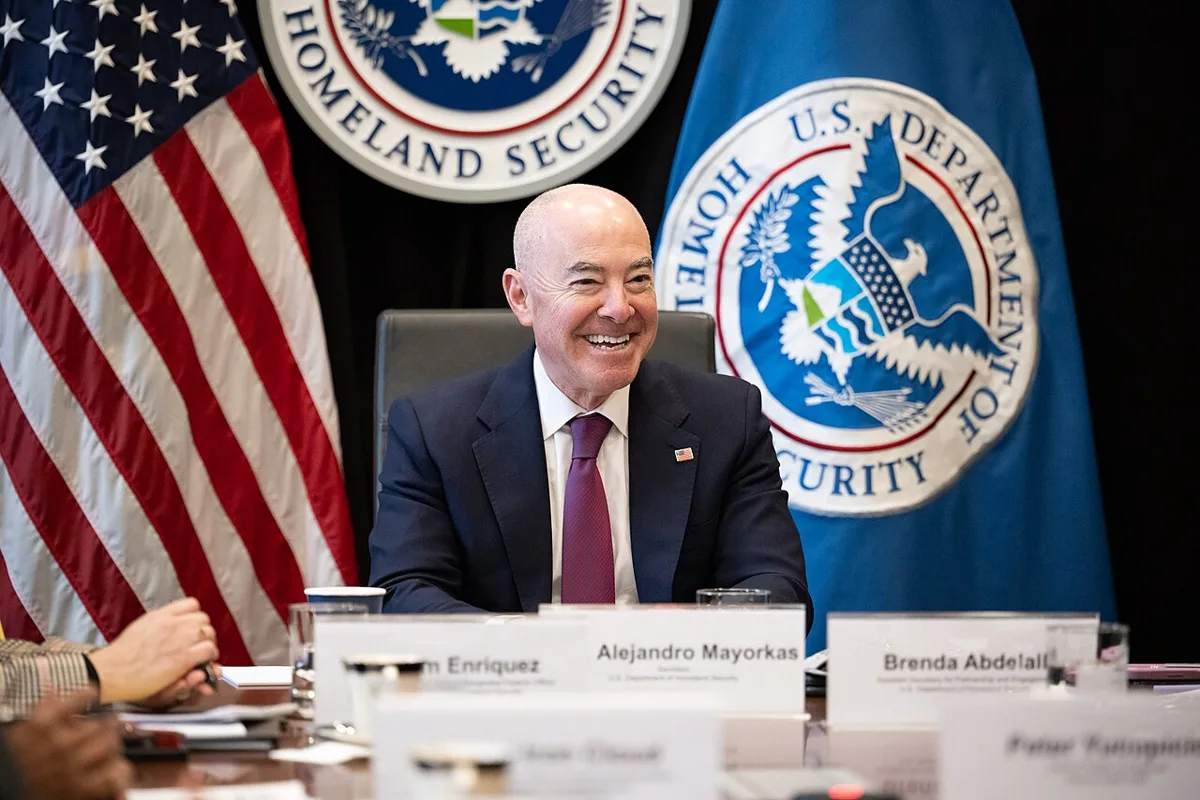
The Department of Homeland Security has figured out a creative new way to bully states into compliance with Trump's election security agenda: hold disaster preparedness money hostage until they play along. According to Fox News, which first reported the plan, DHS will withhold more than a billion dollars in FEMA preparedness grant funding from any state that refuses to adopt a package of new election measures, including voter citizenship verification and post-election audits. Your emergency management infrastructure or your voter rolls. Pick one.
What DHS Is Actually Demanding
Here's the thing about the new requirements: they're not subtle. Fox News Digital reports that to qualify for funding under FEMA's Homeland Security Grant Program, states must submit plans to ditch what DHS is calling "unsecure electronic voting systems" that use QR codes or barcodes, and transition to hand-marked paper ballots instead. The logic being that paper provides a trail for investigating irregularities. Fine. Paper ballots are not a crazy idea. Many election security experts across the ideological spectrum actually support them.
But that's just the appetizer. States also have to conduct a manual audit of at least 5% of all ballots cast after every federal election, match voter participation numbers against ballots cast, and within 120 days of receiving any grant money, run every voter on their rolls through the SAVE database, the Systematic Alien Verification for Entitlements system, to verify citizenship. Every. Single. Voter. In. The. State. The SAVE database, by the way, is the same system that gained notoriety when it was used in connection with verifying truckers who turned out to be undocumented immigrants involved in fatal crashes. That's the tool we're staking the integrity of American elections on.
The Court Already Said No to This
The timing here is not subtle either. DHS is rolling out this grant-funding pressure play almost immediately after the Trump administration lost a significant court fight on the same basic issue. Fox News reports that a federal judge in Pittsburgh, appointed by Barack Obama, sided with Pennsylvania after the Justice Department sued more than 25 states demanding voter records that included Social Security numbers.
Judge Cathy Bissoon ruled that the federal government simply does not have the authority to demand that kind of sensitive state data. Al Schmidt, Pennsylvania's Secretary of the Commonwealth and, worth mentioning, a Philadelphia Republican appointed by Democratic Governor Josh Shapiro, had already told the DOJ the request was a "concerning attempt to expand the federal government's role in our country's election process." He offered a redacted version of the state voter file without the sensitive information, according to the Philadelphia Inquirer. The DOJ said no thanks and sued. The court told the DOJ to kick rocks. So now DHS is trying the financial leverage angle instead.
The SAVE Database Problem Nobody Wants to Talk About
Democratic governors have raised concerns about the SAVE database itself, arguing it is not reliably maintained well enough to use as a definitive check on voter citizenship. DHS has denied that characterization. But here is the uncomfortable reality sitting under this whole thing: using an imperfect federal database to audit every voter in a state, and tying the results to whether those voters stay on the rolls, is not a neutral administrative exercise. Errors in that database do not fall evenly across the population.
The administration is framing all of this as protecting elections from foreign interference, insider threats, and cyberattacks. That's the language DHS spokesperson used in its statement to Fox News, under the banner of Secretary Markwayne Mullin making critical infrastructure protection a top priority. Which is a completely legitimate goal. Nobody is arguing elections should be vulnerable to foreign cyberattacks. The question is whether any of these specific requirements actually address that threat, or whether they're mostly a mechanism to pressure states into adopting measures that the administration couldn't get courts to mandate directly.
The Hostage Is FEMA Money
Let's be very clear about what is actually being leveraged here. FEMA preparedness grants are not election administration funds. They are emergency management funds. They help states prepare for hurricanes, wildfires, floods, mass casualty events. The Homeland Security Grant Program exists because the federal government decided after September 11 that states needed help building out emergency response capacity. That is the money DHS is now conditioning on election compliance.
Fox News reports the program has more than $1 billion in taxpayer funding available this cycle. States that refuse to submit election security plans as DHS has now defined them simply won't see it. Whether this ends up in court as fast as the DOJ's voter record demands did is, as Fox News diplomatically put it, something that "may or may not be tested in a similar fashion." That is one way to say "lawyers are already warming up." The Pittsburgh ruling suggests federal courts are not broadly sympathetic to the administration's theory that it can muscle states on election administration, whatever the mechanism.
The Dingo Take
The pattern here is not complicated to read. The Trump administration tried to get voter roll data through direct legal demands. Courts said no. So now it's trying to use federal grant money as a lever to get states to do voluntarily what judges said the feds couldn't force. This is not a new playbook. Threatening to withhold federal funds to compel state behavior has a long history in American politics, and the Supreme Court has actually placed limits on how coercive that can get. The Affordable Care Act Medicaid fight in 2012 is the landmark case. Whether tying FEMA disaster preparedness money to election administration requirements crosses that line is going to be a very interesting legal question.
What makes this particularly rich is that the administration keeps insisting this is all about protecting elections from foreign interference and cyberattacks, which is a real concern that real security professionals take seriously. But the specific measures being required, chasing down the citizenship of every registered voter through a database Democrats say is poorly maintained, have very little to do with Chinese hackers or Russian disinformation campaigns. They have everything to do with the longstanding and evidence-free premise that American voter rolls are stuffed with non-citizens who are secretly deciding elections. Courts have not found evidence supporting that premise. The 2020 and 2022 election audits didn't find it either.
So what we have is the federal government dangling hurricane preparedness money in front of states and saying: validate our conspiracy theory about your voter rolls, or your emergency managers go without. Sleep tight.


Comments