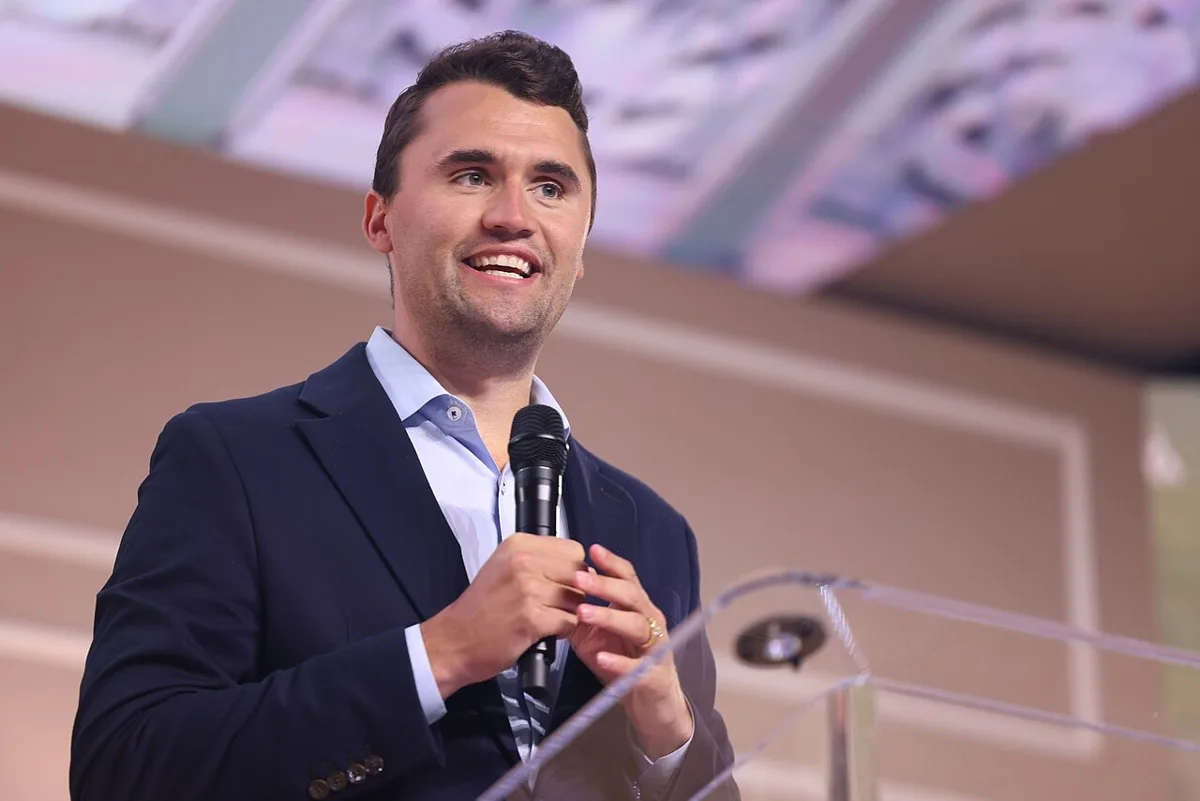
The man accused of assassinating Charlie Kirk told his roommate the day after the shooting that he wished he hadn't done it, according to recordings played Thursday in a Utah courtroom. That same roommate was also his romantic partner. And prosecutors say Robinson had already left the man a note explaining exactly what he was about to do before pulling the trigger.
What Happened in Court Thursday
This was day four of a five-day preliminary hearing in the case against Tyler Robinson, 23, charged with aggravated murder in the September 10 killing of Kirk at Utah Valley University. State District Judge Tony F. Graf Jr. is deciding whether enough evidence exists to send this to trial. Spoiler: prosecutors spent the week making sure the answer is yes.
According to NBC News, prosecutors played video and audio recordings of an April 20 interview with Lance Twiggs, Robinson's roommate and romantic partner. In the footage, Twiggs describes Robinson nervously pacing their apartment after the shooting and saying he planned to either confess to his parents or turn himself in to law enforcement. Twiggs also said he had never once heard Robinson mention Kirk's name before the killing.
The Note, the Texts, and the Engraved Bullets
Here is where the evidence gets heavy. NBC News reports that prosecutors allege Robinson left Twiggs a note before heading to the Kirk event that read: "I had the opportunity to take out Charlie Kirk and I'm going to take it." He then followed that up with text messages after the shooting. "I had enough of his hatred. Some hate can't be negotiated out," Robinson allegedly wrote.
Then there's the bullet detail, which is the kind of thing that makes defense attorneys earn their money. According to the Utah County Attorney's Office indictment, Robinson texted Twiggs about engraving messages on bullets. Twiggs confirmed in his law enforcement interview that Robinson had told him he wanted to engrave text on the ammunition, describing the upcoming trip as a family hunting outing. The text messages were read aloud in court by an investigator on the witness stand.
Robinson has not entered a plea. His attorneys fought to keep Twiggs' statements out of public view, arguing prosecutors would frame them as a confession and poison his chances at a fair trial. The judge hasn't ruled on that yet.
Who Charlie Kirk Was and Why This Case Matters
Kirk was 31 years old. He was the co-founder of Turning Point USA, the influential conservative campus organization that became a major institutional force inside the MAGA movement, and he was a prominent ally of President Donald Trump. He was shot in front of a crowd of hundreds at Utah Valley University on September 10. His wife, Erika Kirk, attended Thursday's proceedings, though NBC News noted it was unclear whether she was in the courtroom when the Twiggs recordings were played.
Kirk's family released a statement before the hearing began. "Charlie was a beloved husband, son, brother, friend, and father," the statement read. "Every court proceeding serves as a painful reminder of his death and the loss that has irrevocably impacted our lives and the lives of his children." Whatever you thought of Kirk's politics, a man is dead, children lost their father, and a widow is sitting in a courtroom watching evidence of his murder play on a screen.
The Transparency Fight
Defense attorneys weren't the only ones asking the judge to make decisions about what the public gets to see. Kirk family attorney Jeffrey Neiman actually joined with media representatives in pushing for more openness, not less. "To not be transparent, to not be open and let the world see what happened will create doubt and distrust in the judicial system," Neiman told the judge, according to NBC News.
That is a notable position for a victim's family to take, and it reflects the political gravity of this case. A high-profile conservative figure killed at a public university event, in a state like Utah, with texts and notes that lay out apparent premeditation in stark detail. The public pressure to air everything is enormous, and the Kirk family seems to understand that a transparent process is the only thing that keeps this from becoming a years-long conspiracy swamp.
The Dingo Take
Let's be absolutely clear about what we are looking at here. If the prosecution's evidence holds up, Tyler Robinson did not snap. He wrote a note. He engraved bullets. He left a paper trail of intent so detailed that it reads like someone who wanted to be caught, or at minimum, wanted to be understood. And then the morning after, he paced around his apartment and told the man he loved that he wished he hadn't done it. That is not the behavior of someone who had a plan and felt righteous about it. That is the behavior of a person who crossed a line he couldn't walk back across.
Political violence is a catastrophe regardless of who is on the receiving end of it. Charlie Kirk was a genuinely polarizing figure who built a career on stoking division and feeding grievance into the American bloodstream. None of that makes him a legitimate target. None of it means a 23-year-old gets to decide who lives and who doesn't based on whose politics he found intolerable. "Some hate can't be negotiated out" is not a defense. It is a confession dressed up as a manifesto.
The preliminary hearing wraps up Friday, and Judge Graf will decide whether this goes to trial. Given what prosecutors have laid out this week, that seems less like a question and more like a formality. The real question is what this country does with the fact that political figures are now being shot at podiums, and we seem to have collectively decided to process it as just another news cycle to scroll past before dinner.


Comments