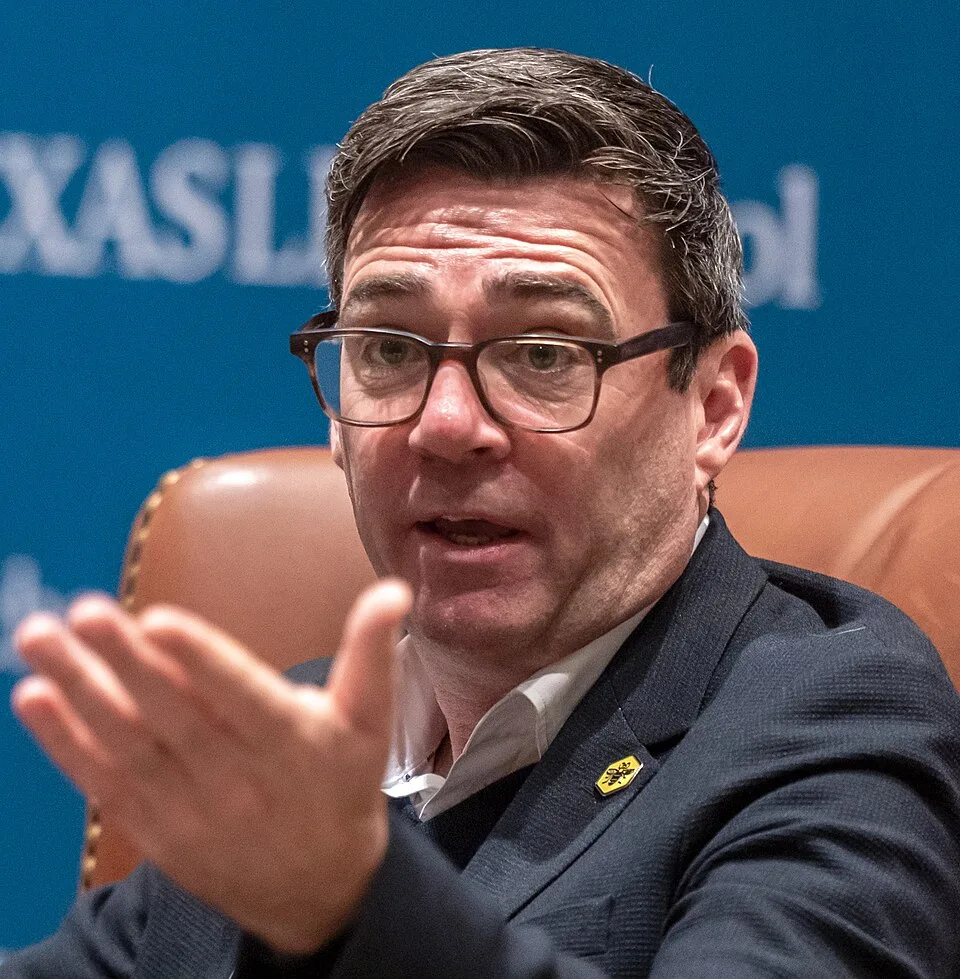
Donald Trump once dismissed Andy Burnham as 'the mayor of a town.' Now that mayor is about to become Prime Minister of the United Kingdom, and his first truly impossible job is figuring out how to deal with the man who said it. No pressure, Andy. The world is only slightly on fire.
The Curtain Hasn't Even Fallen on Starmer Yet
Keir Starmer is still technically in the building. His name is still on the door. And Labour is already talking about him like he's a cautionary tale at a dinner party.
According to The Guardian, Burnham wasted no time making his first brutal break with his predecessor. On Friday, he apologised over Starmer's head for Labour's handling of the war in Gaza, saying the government should have called for a ceasefire sooner and should now be increasing pressure on Israel. That's not a subtle pivot. That's a new prime minister putting his boot through the old one's legacy before the body is cold.
The Foreign Office is already considering further sanctions on Israel, so Burnham's comments may be more about tone than a dramatic policy overhaul. But tone matters enormously in politics, particularly when you're trying to win back the left-wing voters who bled to the Greens under Starmer. The question is whether this new tone is going to cause immediate, spectacular problems with the White House. Spoiler: probably yes.
Trump Called Him a Small-Town Mayor. Now What?
Here's the thing about inheriting a relationship with Donald Trump. It's less a diplomatic challenge and more a hostage negotiation where the hostage is the entire rules-based international order, and the hostage-taker keeps wandering off to tweet about Greenland.
The Guardian reports that at this week's NATO summit in Ankara, Trump threatened to ban trade with Spain over defence spending, once again confirmed his desire to own Greenland, and tore up a fragile Gulf ceasefire by resuming bombing of Iran. That's a Tuesday for this administration. This is the man Burnham now has to call. And smile at. And occasionally praise.
Starmer's approach was to grovel and buy time, and The Guardian is fair enough to note he wasn't entirely wrong. Those trips to Washington, humbling as they were, helped buy Ukraine critical breathing room. But Starmer never really made the public case at home for what any of it cost, and now Burnham inherits a defence spending commitment of 3.5% of GDP with no public explanation of how Britain is supposed to pay for it. Great. Wonderful. Nothing like starting a new job by immediately owing money you can't account for.
Even Meloni Got Fed Up. That Should Tell You Something.
When you have lost Giorgia Meloni, the woman who was basically Trump's favourite European pen pal, you have lost the room. The Guardian notes she appears to have run out of patience with the president, which puts her in the same camp as, apparently, most of the continent.
Canada's Mark Carney has been delivering the same message to anyone who will listen, including people close to Burnham: the old America is not coming back. Carney is well connected to the Burnham camp through adviser Andy Haldane, his former deputy at the Bank of England, and the message he's carrying is stark. This is not a temporary aberration. This is the new normal, and western leaders need to stop waiting for it to fix itself.
That assessment lines up uncomfortably well with what former Foreign Office minister Tobias Ellwood lays out in his new book, Ten Steps to Prevent World War Three, which The Guardian covers in some detail. Ellwood imagines 2040, looking back on the mid-2020s as the period when every off-ramp got missed. By 2040 in his scenario, NATO has collapsed, Greenland is gone, China has filled the vacuum with a coercion-based world order built alongside Russia, and battlefield taboos around tactical nuclear weapons are being routinely broken. He calls it one possible scenario, not a prediction. It is, as The Guardian puts it, a little too plausible for comfort.
What Burnham Actually Brings to This Catastrophe
Here is the case for cautious optimism, offered with all the confidence of someone looking at a very large fire from a very safe distance.
Burnham's skill as Greater Manchester's mayor was coalition-building. Getting unlike-minded institutions, councils, and interest groups into the same room and keeping them there until something got agreed. That is, in miniature, exactly what the foreign policy moment demands. Ellwood's prescription for avoiding Armageddon involves building a new stability alliance of middle-ranking powers, from Europe to Canada to India to Brazil, focused on de-escalation before conflicts go full shooting war. That is a job description that actually fits someone who spent years convening the ungovernable North of England.
The question, as The Guardian frames it, is how far to push against Trump while doing it. Ukraine still needs US military supply, even if less desperately than a year ago, having built up its own defence manufacturing in the interim. And Britain's nuclear deterrent and intelligence-sharing arrangements remain deeply entangled with Washington in ways that make playing hardball genuinely costly. Burnham doesn't have the luxury of simply telling Trump to get lost. Nobody does. But he may have more room than Starmer did, and a different instinct for how to use it.
The Bill Starmer Left on the Table
Let's be clear about what Burnham is actually walking into. The Guardian is somewhat generous to Starmer in arguing he helped buy time for Ukraine, and that's probably fair. But it also lands a damning conclusion: the country that wasted that grace period was Britain itself.
Starmer never made the public argument for defence spending. Never levelled with voters about what it costs, why it matters, or where the money was coming from. He just committed to numbers and hoped the details would sort themselves out. They did not sort themselves out. Burnham now owns those numbers and that silence, along with a public that has not been prepared for any of it.
That is the inheritance. A defence commitment nobody has been asked to fund, a Trump relationship that requires a completely different playbook, a Gaza apology that will satisfy nobody on either end of the debate, and a former president-turned-constant-crisis-generator who called the new British Prime Minister the mayor of a town. Good luck, Andy. The world is watching, and it is extremely tired.
The Dingo Take
Burnham is not a foreign policy heavyweight. He was a mayor. A very good mayor, by most accounts, one who understood how to build coalitions and get things done in difficult bureaucratic terrain. But there is a meaningful gap between brokering a Greater Manchester transport deal and managing a relationship with a US president who bombed Iran and announced territorial ambitions over a Danish island in the same week.
What Starmer's tenure proved, whatever else you want to say about it, is that there is no formula. Grovelling didn't produce gratitude. Cooperation didn't produce reciprocity. Trump praised Ukraine's drone strikes inside Russia while being the man who spent years refusing to help Ukraine effectively. He is not a rational actor responding to rational incentives, and any British foreign policy built on the assumption that he is will keep running into walls.
Burnham's instinct toward coalition-building and early intervention is probably the right one for this moment. Getting like-minded countries coordinated, reducing exposure to US unpredictability, building the kind of European security architecture that doesn't collapse every time Washington changes its mind. But none of that works if he can't first convince the British public why any of it matters and what it is going to cost them. Starmer couldn't do that part. That's the job now.



Comments