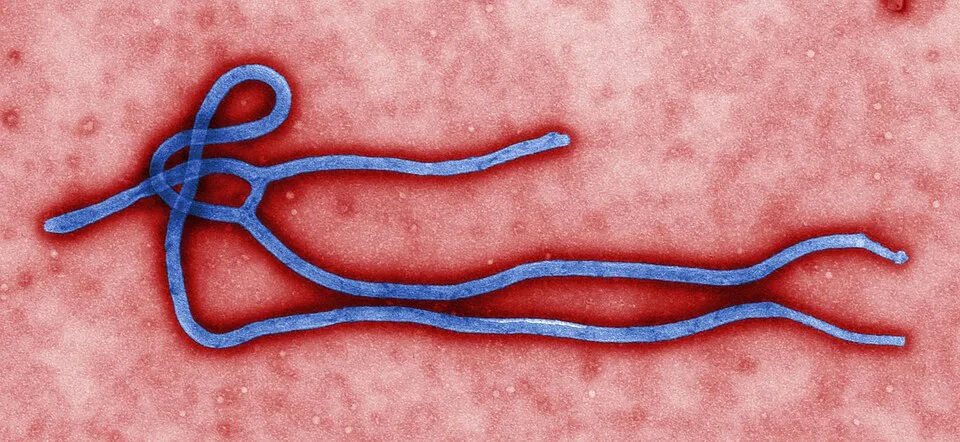
Six hundred people are dead, 1,759 confirmed cases are on the books, and a strain of Ebola with no approved vaccine and no approved treatment is now showing up in parts of Congo that had been untouched until this week. The Africa Centre for Disease Control has called this the fastest-growing Ebola outbreak on the African continent. This is not a drill, and the world is barely paying attention.
A virus with nowhere to go but outward
The Congolese health ministry confirmed Thursday that suspected Ebola cases have now appeared in the provinces of Tshopo and Haut-Uele, both previously unaffected. The outbreak's epicenter is in Ituri province, where the first cases surfaced. Now the disease is moving.
According to NPR, one of two suspected cases in Tshopo's capital Kisangani is linked to the Nia-Nia health zone in Ituri, which tracks. The other case has, in the government's own words, 'no apparent geographical connection to known outbreaks.' Authorities say they are investigating. That phrase, in the context of a fast-moving hemorrhagic fever, should make you put down your coffee.
Haut-Uele is further north and east. The ministry did not disclose how many cases are suspected there. That missing number is doing a lot of work in this story.
The virus nobody has a shot for
Here is the thing that separates this outbreak from the ones that dominated international headlines a decade ago. The 2014-2016 West Africa crisis involved the Zaire strain of Ebola, which now has approved vaccines. This outbreak is caused by the Bundibugyo virus, a rarer strain, and as of right now there is no approved vaccine and no approved treatment for it.
The Congolese authorities declared this outbreak on May 15, but NPR reports the disease had already been transmitting for weeks before anyone officially acknowledged it. That head start matters enormously when you are dealing with a pathogen this lethal and this mobile.
Clinical trials for a potential treatment did launch last week at the Evangelical Medical Center in Bunia. That is genuinely good news. It is also the kind of good news that arrives after 600 people have already died, which puts a ceiling on how good it can feel.
The part where everything is also on fire
Congo is not fighting this outbreak in ideal conditions. That would be an understatement on the level of calling the Titanic a rough crossing. Eastern Congo has been in the grip of ongoing armed conflict, and health workers are operating in zones where they are not safe.
According to NPR's reporting, efforts to contain the virus have been hammered by three compounding problems: a funding gap, direct attacks on health centers, and the broader military conflict. Attackers targeting the people trying to stop an Ebola outbreak is a sentence that deserves its own moment of silence.
The WHO noted that by the time the official declaration came on May 15, the virus had already been spreading undetected for weeks. In outbreak response, that kind of delay is the ballgame. The slower the detection, the wider the net the virus casts before anyone starts pulling it back.
Why 'fastest-growing outbreak on the continent' should be front page news
The Africa CDC's characterization here is not bureaucratic throat-clearing. They are the continental body charged with tracking exactly this kind of thing, and they are saying this is moving faster than any Ebola outbreak Africa has seen. That is a specific, alarming claim.
For context, the 2018-2020 Kivu outbreak in eastern Congo killed more than 2,200 people and was the second-largest Ebola outbreak in history. We are at 600 deaths and 1,759 confirmed cases right now, with active spread into new geographic areas, and no licensed tools to stop this specific strain.
The global health funding environment is not helping. International health emergency capacity has been under sustained political and financial pressure, particularly from the United States, which gutted USAID and rolled back global health commitments earlier this year. The timing is, to put it gently, not great.
The Dingo Take
Look, Ebola is a word that still carries enough weight to stop a room. It should. The Bundibugyo strain is rare, deadly, and currently burning through eastern Congo with no vaccine to stop it, no treatment to blunt it, and a conflict zone around it that makes containment feel almost theoretical. Six hundred dead. New provinces. A case with no known connection to the outbreak's origin. These are the data points that precede the moment when a regional crisis becomes something else entirely.
The world has proven it can respond to Ebola when it chooses to. The 2014 crisis eventually mobilized an enormous international effort, and the tools developed from that response have saved lives in every outbreak since. But those tools were built for a different strain. Right now, the researchers running clinical trials in Bunia are essentially inventing the playbook in real time, mid-game, while health workers are getting attacked and funding is running short.
Somebody in a position of power needs to look at 'fastest-growing Ebola outbreak on the continent, no vaccine, no treatment, spreading to new regions' and treat it with the urgency those words demand. The clinical trial news is a thread of hope. Threads of hope are not a containment strategy. The question is whether the international community gets serious about this before the case count forces their hand.



Comments