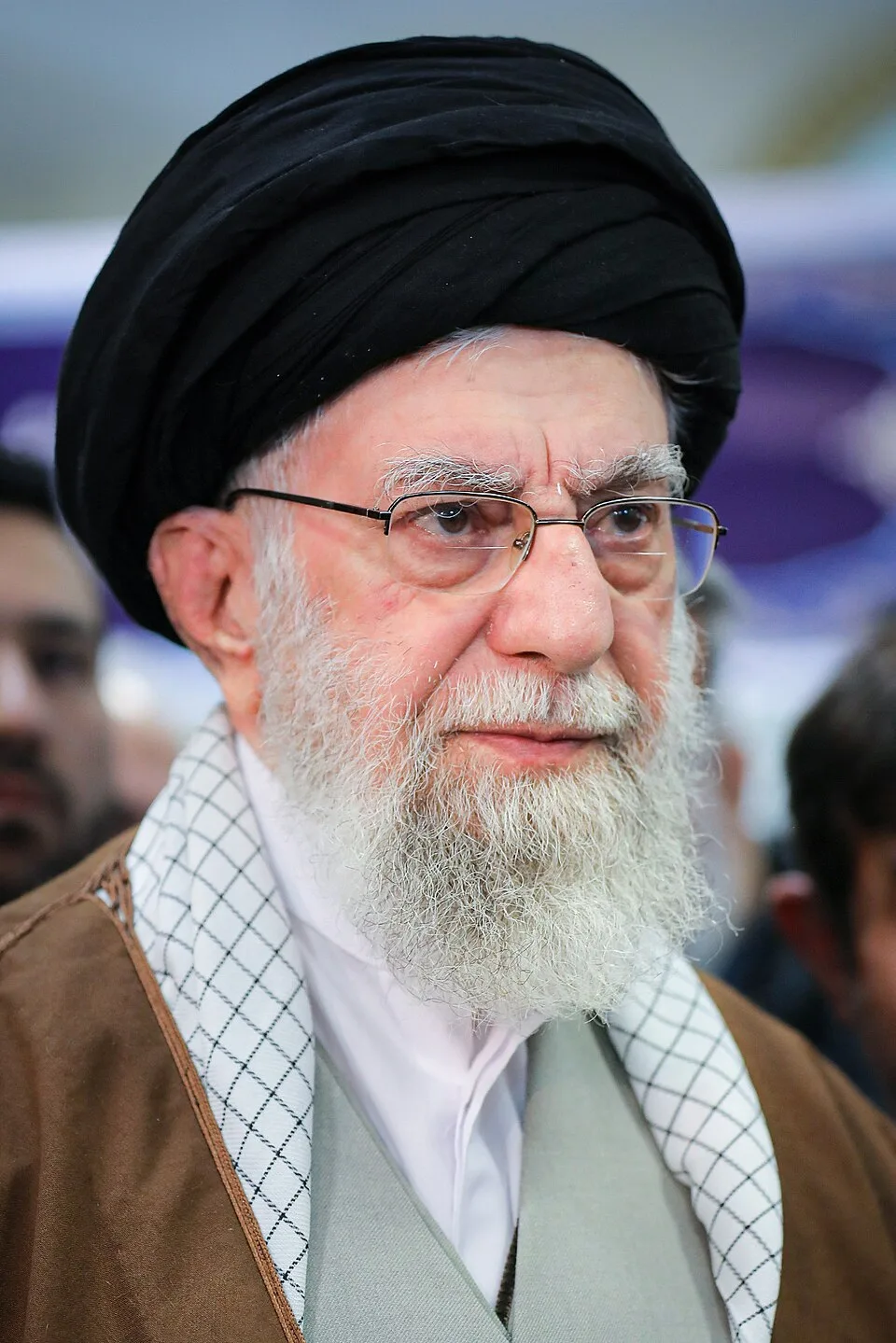
The United States launched airstrikes on 90 targets inside Iran on Thursday, including, per the Revolutionary Guard, two bridges on the route to Mashhad where tens of thousands of mourners were actively attending Ayatollah Khamenei's funeral. Iran responded by firing missiles at Kuwait, Bahrain, Qatar, and Jordan. This is the world right now.
Ninety Targets, One Very Bad Day to Be in the Strait of Hormuz
The Associated Press is reporting that U.S. Central Command announced strikes on 90 separate targets across Iran on Thursday, releasing footage of what appeared to be hits on airport runways and missile launchers. The stated rationale was to, quote, "further degrade" Iran's ability to threaten shipping through the Strait of Hormuz, the waterway through which, before this war started on February 28th, roughly a fifth of the world's traded oil and natural gas flowed every single day.
Iran's Health Ministry said the two days of American strikes killed at least 14 people and wounded 78 more, most of them reportedly military. Iranian state media reported explosions in multiple locations, including the port city of Bushehr, which is also home to Iran's only nuclear power plant. A local official in Bushehr told the state-run IRNA news agency that American bombs struck near the plant around noon. Central Command, when asked, pointed reporters to a press release listing its targets. The press release did not mention the nuclear power plant.
Iran Fires Back at Basically Everyone in the Region
Tehran did not take any of this quietly. The Associated Press reports that sirens sounded at least three times in Bahrain, home to the U.S. Navy's Fifth Fleet headquarters. Missiles targeted Kuwait and Qatar. Sirens went off in Jordan, where the U.S. has stationed troops and aircraft. The Iranian Revolutionary Guard said it fired missiles at a U.S. base in Jordan specifically.
Kuwait's military said it shot down three ballistic missiles, a cruise missile, and ten drones, with falling debris wounding one person. Bahrain said it intercepted incoming fire. Jordan's government spokesperson said all Iranian projectiles were shot down before impact. Qatar had not reported any damage as of press time. So that is four countries that woke up Thursday to air raid sirens because the United States and Iran cannot stop shooting at each other for 48 consecutive hours.
The Part Where Bombs Fell Near a Funeral Procession
Here is the detail that should make your stomach drop. The Revolutionary Guard said U.S. strikes hit two bridges on the route to Mashhad in northeastern Iran on Thursday, the same city where hundreds of thousands of mourners had packed the streets for Khamenei's final funeral procession. State media also reported a strike on a railway bridge in Golestan province in the northeast.
Khamenei's coffin was being carried through those streets. People were pressing forward to touch the vehicle. They were holding Iranian flags and images of the man who ruled the country for 37 years before being killed in the opening strikes of this war back in February. Some were holding signs calling for the deaths of Donald Trump and Benjamin Netanyahu. And the U.S. was, at minimum, striking bridges on the roads leading into that city on that day. The Associated Press noted this was the first time since April that American strikes appeared to target Iranian bridges.
The Ceasefire That Keeps Almost Existing
There was, technically, a deal. A fragile interim arrangement that included reopening the Strait of Hormuz to shipping. And it appeared, briefly, to be doing something: maritime data company Lloyd's List Intelligence told the Associated Press that at least 576 ships passed through the strait in June, compared to just 233 in May. That sounds like progress until you note that more than 3,100 ships transited the strait in June of last year, before all of this started.
Trump, leaving a NATO summit in Turkey, declared the ceasefire effectively over after Iran attacked three tankers in the strait earlier this week. He posted videos on his social media site of what he said were Iranian explosions and wrote, "This is in retribution for yesterday's bombing of ships by Iran. If it happens again, it will get much worse!" He also renewed threats to bomb Iranian civilian infrastructure, including electrical grids and desalination plants, and to seize Kharg Island, Iran's primary oil export terminal. So the diplomatic off-ramp is looking crowded with debris at the moment.
How We Got Here
The United States and Israel launched coordinated strikes on Iran on February 28th. Khamenei was killed in those opening attacks. What followed has been months of back-and-forth exchanges that have repeatedly threatened to collapse any attempt at a negotiated pause, with the region's smaller nations stuck in the middle watching missiles arc overhead and hoping their interceptors work.
The Associated Press notes that this week's escalation is one of the larger single-day exchanges since the war began. The pattern is consistent: a fragile deal gets reached, Iran or Iran-aligned forces attack shipping or U.S. assets, the U.S. retaliates massively, Iran responds by targeting U.S.-allied states in the region, everyone announces they shot down the incoming missiles, and the ceasefire framework survives for another few days until the cycle restarts. Thursday felt like it broke that cycle. Whether it did is a question for Friday morning.
The Dingo Take
Let's be clear about what happened on Thursday. The United States bombed a country while that country was burying its head of state. The strikes hit bridges near a funeral procession attended by hundreds of thousands of civilians. There is no version of that sentence that isn't extraordinary. You can make the legal and strategic case for the broader operation if you want to, but someone should at least be required to say that sentence out loud before approving the target list.
And the Bushehr situation deserves more attention than it is getting. A local official said U.S. bombs landed near Iran's only nuclear power plant. Central Command responded by gesturing at a press release that didn't address the question. Striking near an operating nuclear reactor during an active military conflict is either a catastrophic mistake or a deliberate escalation, and the American military's response so far has been to not answer the question. That is not a satisfying posture when the answer matters this much.
Trump is threatening to bomb civilian water and electrical infrastructure and to seize an island that functions as Iran's economic jugular. The ceasefire, such as it was, has been declared dead. Bahrain is setting off air raid sirens three times in a single afternoon. Somewhere right now, a shipping executive at Lloyd's List Intelligence is updating a spreadsheet tracking how many tankers made it through a strait that used to be routine, and the number is not going up. Whatever happens next in this war, Thursday was not a de-escalation. Not even close.





Comments