Federal immigration agents in Houston pulled over the wrong van, shot the driver in the abdomen, and watched him die at a hospital hours later. The two people they were actually looking for were not in the vehicle. Lorenzo Salgado Araujo had lived in this country for 35 years and was on his way to work.
What Actually Happened on Tuesday Morning
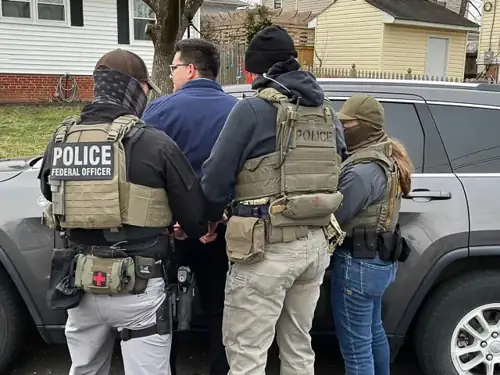
According to the New York Times, ICE agents were hunting for two Guatemalan immigrants as part of an ongoing investigation. They had previously surveilled an address connected to one of the targets and spotted two white vans parked there. When they returned on Tuesday, a Department of Homeland Security spokeswoman said agents "observed a white van with an individual who resembled the target" and moved to stop it.
The individual was Lorenzo Salgado Araujo, a Mexican immigrant. He was not one of their targets. He was not Guatemalan. He had been living in the United States without legal status for three and a half decades and was heading to work with three other men when federal agents decided he looked close enough.
Agents initiated the traffic stop. The encounter escalated fast. An agent shot Araujo in the abdomen. He was taken to a hospital and died there. The two people ICE was actually looking for were somewhere else entirely.
The Government's Explanation Is Not Going Great
Homeland Security officials have claimed that Araujo tried to use his vehicle as a weapon, which is the standard justification offered whenever federal agents need a reason to have shot somebody during a chaotic stop. The New York Times reports that as of its publication, no video or other evidence supporting that claim has emerged.
Let that sit for a second. The government killed a man, says he was the aggressor, and has produced zero corroborating evidence. The agents who pulled the trigger are the only ones telling that part of the story.
A DHS spokeswoman confirmed the basic facts of the mistaken identity in a statement, which is at least something. But confirming you killed the wrong person is a fairly low bar for accountability, and the current administration has shown no particular interest in clearing even that one.
Thirty-Five Years Is Not Nothing
Here is a number worth sitting with: 35. That is how many years Lorenzo Salgado Araujo had been in the United States when ICE agents stopped his van. He arrived, built a life, worked, stayed. He was on his way to a job when he was killed.
The Times reports he was accompanied by three other men in the vehicle. They were not shot. They watched their coworker get killed during a traffic stop targeting people he had no connection to.
This is the operational reality of mass deportation as a policy priority. When you flood the zone with enforcement actions, pressure agents to move fast and hit numbers, and treat entire communities as suspect by default, you get exactly this. Wrong vans. Wrong people. Right body count.
How the Mistaken Stop Happened
The Times, citing two people with knowledge of the matter who were not authorized to discuss the case, reports that agents had previously surveilled the target address and seen white vans there. White vans are, famously, not a rare vehicle type in any American city, let alone Houston.
When agents returned and spotted another white van with a driver they thought resembled the target, they moved. No additional confirmation. No pause to verify. According to the DHS spokeswoman's own statement, the entire basis for the stop was a white van and a resemblance.
The target they thought was in the vehicle was not there. Neither was the second Guatemalan immigrant they were investigating. Two people with knowledge of the matter confirmed to the Times that agents had simply gotten it wrong from the start.
Nobody in Charge Seems Particularly Troubled
The Trump administration has spent the better part of 2025 and 2026 framing every immigration enforcement action as a triumphant blow against criminals and chaos. Agents are cast as heroes. Arrests are announced with the energy of sports scores. The machinery of enforcement has been given enormous latitude and very little oversight.
When that machinery kills the wrong person, there is no equivalent announcement. There is a spokeswoman's statement, a claim about a vehicle used as a weapon, and a request that you trust the process.
As of the Times' reporting, no charges have been announced, no independent investigation has been confirmed, and there has been no public accounting from the top of the department about how a 35-year resident of the United States ended up shot in the stomach on his way to work because he happened to be driving a white van.
The Dingo Take
The administration will call this a tragedy and move on. Someone in a communications shop will note that agents believed they saw a target, that the situation escalated, that these things happen in high-pressure enforcement environments. And technically, some of that is true. High-pressure enforcement environments where agents are moving fast on thin identification, hunting for numbers, and operating with minimal accountability do produce exactly these outcomes. That is not a defense. That is an indictment.
Lorenzo Salgado Araujo lived here for 35 years. He was going to work. He died because ICE agents decided a white van and a rough resemblance were sufficient grounds to stop him, and because whatever happened next ended with a bullet in his abdomen and no camera footage the government is willing to share. If that evidence existed and helped their case, you would have seen it already.
The cruelty that gets the most attention from this administration is the loud kind: the rallies, the rhetoric, the viral arrest videos. But this is what the quiet cruelty looks like. A man on his way to a job, three coworkers who saw it happen, and a government spokesperson confirming they had the wrong van. Case closed. Next.


Comments