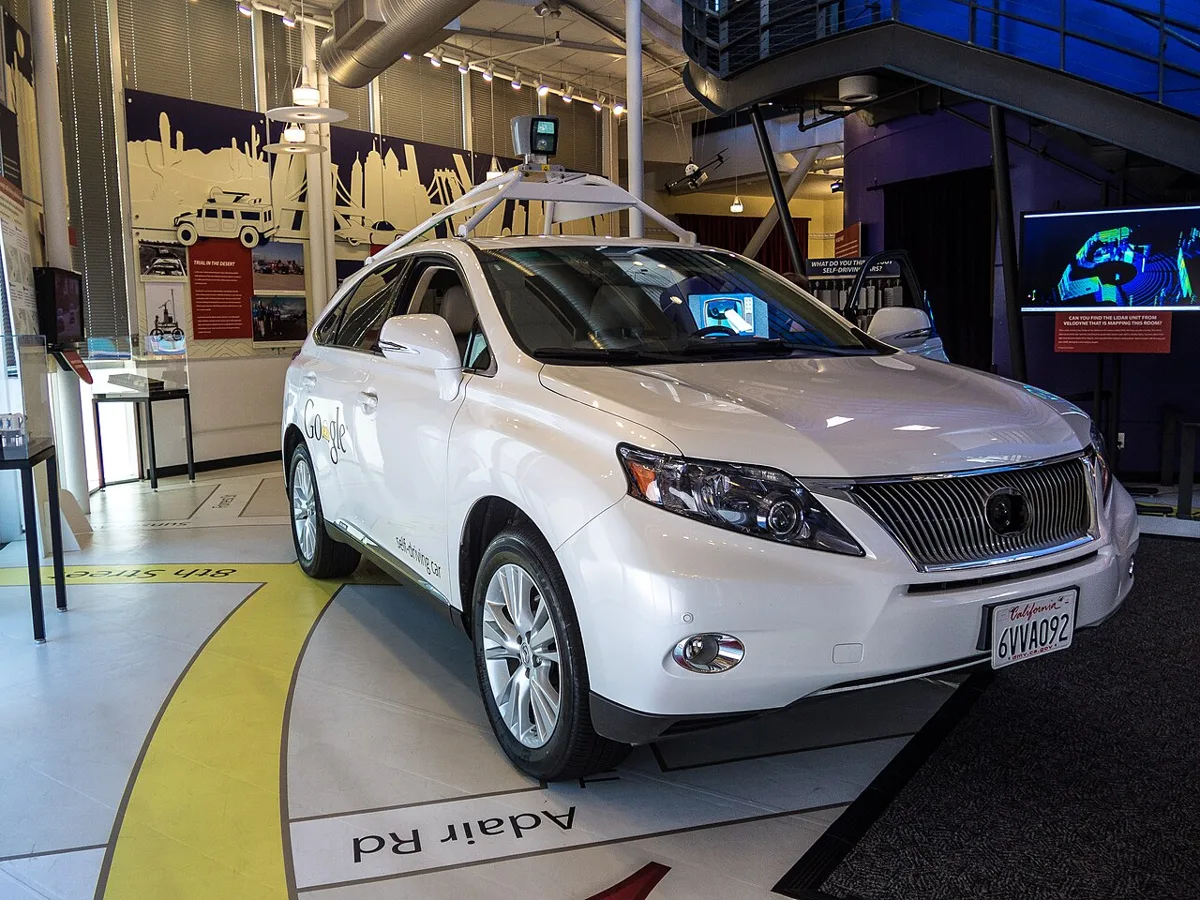
A driverless car called the cops on its own passengers. That sentence is real, it happened in San Mateo, California this week, and it is either completely reasonable or the opening scene of a dystopian thriller depending on how much you trust a Google subsidiary to decide when your behavior warrants a police response.
What Actually Happened in San Mateo
Here's the setup. Two 15-year-olds got into a Waymo robotaxi. According to NPR's reporting, they were allegedly drinking alcohol and shooting toy guns from the vehicle. Waymo's onboard systems detected the behavior, flagged it as a safety concern, disabled the car so it couldn't move, and called the police.
The San Mateo County Police Department then responded as if the call involved a real firearm being discharged from a moving vehicle, because that is, in fact, what they were told. They conducted what spokesperson Jeanine Luna described as a "high-risk traffic stop." The teens were not arrested and were released to their parents, though Luna told NPR that potential charges are still pending depending on what the interior video shows.
And then, because apparently someone thought this was a branding opportunity, the San Mateo County Police posted on Facebook with the line: "Parents do you know where your teens are? @waymo does!" which is either the funniest or most chilling thing a police department has posted this year, and possibly both.
The Surveillance Inside the Car You Forgot Was There
Let's talk about what is actually riding with you in a Waymo. Per the company's own website, its autonomous vehicles can carry up to 29 cameras. These are not modest little dashcams. They are built, Waymo says, with "high dynamic range and thermal stability" to see in both daylight and low-light conditions. There are also microphones. And a battery of other sensors. All of it, running the entire time you are in the vehicle.
Irina Raicu, director of the Internet Ethics program at Santa Clara University, told NPR she has actually used Waymo's taxis and acknowledges the ethical ambiguity firsthand. "There's something about being in a car without another person that makes you think it's private," she said. The cameras and microphones are not shoved in your face. They blend in. You stop thinking about them, if you ever thought about them at all.
That is precisely the problem. Alessandro Acquisti, a professor of information technology at the MIT Sloan School of Management, told NPR that it is not clear passengers are ever fully informed "how the data will be used." You tap the app, you get in the car, you assume the ride is yours. It is not.
Google Got Nearly 290,000 Government Data Requests in Six Months
Here is a number worth sitting with. According to NPR's reporting on Google's own transparency report, the company received nearly 290,000 requests from governments worldwide for user data in just the first six months of 2025, across all its platforms, Waymo included. In more than 80% of those cases, some information was disclosed.
Google says it reviews every request to ensure it "satisfies applicable laws" and pushes back when requests are too broad. That is reassuring in the way that a landlord saying they only enter your apartment when necessary is reassuring. Good to hear. Still the landlord. Still has a key.
Waymo is owned by Alphabet, which is Google's parent company. So when you ride in a Waymo, you are inside a product made by the same corporate entity that knows your search history, your location history, your email, and now, apparently, whether you are shooting a toy gun in the backseat of a car in San Mateo.
When Is a Robotaxi a Surveillance Platform?
The San Mateo incident is not the first time this question has come up. NPR notes that during a hit-and-run investigation in Los Angeles last year, police used footage captured by a passing Waymo taxi that had a clear view of the crime. Useful, sure. Also, a private company's fleet of camera-equipped vehicles casually functioning as mobile police infrastructure.
During 2025 protests in Los Angeles against ICE crackdowns, demonstrators vandalized Waymos specifically because they feared the vehicles' footage could be handed over to law enforcement. NPR notes there is no evidence that actually happened. But the fear was real enough that people were smashing cars over it, which tells you something about how much goodwill the surveillance economy has burned through.
Acquisti put the core tension plainly to NPR: laws around duty to report or duty to protect may legitimately apply to carriers like Waymo. The danger is when those obligations become "a pretext for blanket, indiscriminate accumulation of identifiable data for unspecified future purposes." Which is a very polite academic way of saying: once the data exists, you have no idea where it goes.
The Defenders Have a Point, and It Doesn't Fully Help
To be fair, the argument for some level of monitoring is not crazy. Bruce Schneier, a cybersecurity and privacy expert at the University of Toronto's Munk School, told NPR that Waymo has a legitimate interest in protecting its own vehicles. He draws a comparison to a human cab driver keeping an eye on passengers in the rearview mirror. If a robotaxi comes back with the seats slashed, somebody needs to be able to check the tape.
And the teens in San Mateo were not exactly innocent bystanders getting caught up in a police state overreach. They were apparently drinking in a car and waving what appeared to be guns out the window. From the outside, that looks like the kind of situation where a response is warranted.
But here is the thing. The logic of "someone did something bad so the cameras are fine" is exactly how you get to a world where every ride, by every person, is archived indefinitely because any given passenger could, theoretically, be doing something bad. The edge case becomes the justification for the general rule. That is how this always works.
The Dingo Take
The two teenagers in San Mateo will probably be fine. They will get grounded, maybe face some charges, definitely become a cautionary tale at some family dinners. The actual story here is not about them. It's about the fact that we have built a transportation product that is also a rolling surveillance node, equipped with 29 cameras and microphones, operated by a Google subsidiary, generating footage that can be handed over to law enforcement at a company's discretion based on criteria that no passenger has ever been clearly told.
Waymo did not respond to NPR's request for comment on the San Mateo incident. That tracks. There is nothing to say that sounds good. "Yes, we monitor everything inside our vehicles and will call the police when our systems decide something is wrong" is accurate but not exactly a marketing win. The alternative, "No, we don't actually do that," is demonstrably false. So: silence.
Robotics and AI companies have spent years promising that the technology is just a tool, neutral and helpful, and that concerns about surveillance are overblown. And then a police department posts "@waymo does!" on Facebook like it's a joke. It is not a joke. It is a preview. The norms around this technology are, as the experts quoted by NPR agree, not yet settled. The companies building these systems are settling them for us, one incident at a time, and mostly without asking.




Comments