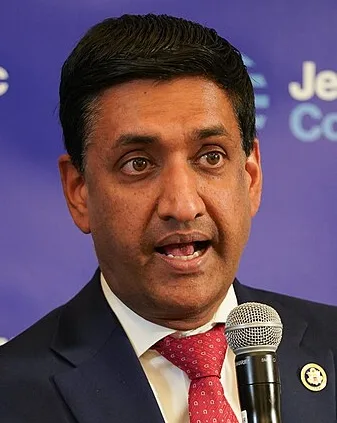
A sitting United States congressman was surrounded and detained by armed Israeli settlers in the occupied West Bank last week, and when the Israeli Defense Forces showed up, they sided with the settlers. Not the American congressman. The settlers. Let that sink in for a second.
What Actually Happened Out There
Rep. Ro Khanna, Democrat from California, was visiting Khirbet Zanuta on July 8 as part of a congressional delegation trip to the region. Khirbet Zanuta is a Palestinian hamlet whose residents were forced out by violent settler raids following the October 7, 2023 Hamas attacks. Khanna and his group were there looking at the wreckage of a village that settlers had destroyed, including a school, when things got very ugly very fast.
According to Reuters, a group of armed settlers surrounded the delegation's van and blocked the road. The settlers were carrying American-made M4 rifles. When IDF soldiers arrived on the scene, Khanna says they stood with the settlers, not with the Americans being detained. The situation only resolved after the group managed to contact the U.S. embassy and Israeli police eventually arrived to disperse the settlers and unblock the road. The whole ordeal lasted roughly 90 minutes.
Khanna's Words, Which You Should Read Slowly
Khanna described the experience to Reuters in terms that are difficult to dismiss as partisan spin, because he is describing something that happened to him personally in front of cameras. "These hoodlums come in with machine guns, an M4, an American-made machine gun, and they detain us," he said. "They block off the road, and then they call the IDF and the IDF is on their side, not on the side of the Americans."
He went further. Khanna told Reuters he saw "the arrogance in the eyes of those settlers, 21- and 22-year-olds with guns, laughing that they had detained us" and described IDF soldiers funded by U.S. military aid showing "no respect for the fact that they were detaining Americans, no respect that there was an American congressperson in that bus, and laughing when our translator told them that there are Americans there and the American embassy is concerned."
To the New York Times, which first reported the account Saturday morning, Khanna said something that ought to land harder than it probably will in Washington: "I felt powerless in that situation, which is not an easy thing, as I have a lot of privilege in life. Imagine how people feel every day, Palestinians under the occupation, if they could make an American congressperson feel powerless for 90 minutes."
Khanna also told Fox News Digital, which confirmed the details with his office: "If they will do this to an American congressman, imagine what is happening to Palestinian families who are just trying to live." Not exactly the kind of quote a politician generates when they're exaggerating.
The IDF's Response Was Peak Non-Answer
The Israeli military told Reuters that troops and police responded after receiving a report of settlers blocking vehicles near Khirbet Zanuta, and that "upon their arrival, the troops dispersed the Israeli civilians and allowed the vehicles to continue on their way." Cool story. Conspicuously absent from that statement: any acknowledgment that the troops initially sided with the people doing the blocking, any expression of concern that a U.S. congressman was among those detained, or anything resembling an apology.
Khanna told Fox News Digital he expects Israel to prosecute the settlers and the IDF soldiers involved. He is, presumably, a person who also still believes in Santa Claus and functional American foreign policy, because according to human rights organization Yesh Din, not a single Israeli has been indicted for the killing of a Palestinian since October 2023. The bar for prosecuting settlers who merely detained an American congressman, as opposed to killing a Palestinian civilian, is presumably even lower. So far, no charges have been announced.
The Bigger Picture Behind This Particular Roadblock
This did not happen in a vacuum. The Guardian notes that more than 700,000 Israelis now live in settlements across the occupied West Bank and East Jerusalem, settlements the United Nations considers illegal under international law. Settler violence has surged since October 7, 2023, and the territory Khanna visited has seen repeated attacks. Nearly 300,000 Palestinians have lost employment in the West Bank and Israel during that period.
A June report from a UN independent international commission of inquiry concluded that Israeli authorities and security forces have "deliberately targeted Palestinian children resulting in genocide, crimes against humanity, and war crimes in the Gaza Strip and war crimes in the West Bank." That is not fringe activist language. That is a formal UN finding. And the U.S. government has continued funding the military apparatus operating in that territory throughout.
The 2028 Angle, Because of Course
Khanna has been among the most vocal critics of U.S. policy toward Israel in the entire Congress, frequently clashing with Democratic Party leadership over what he and others call a blank check to the Netanyahu government. When Reuters asked him point-blank whether he intends to run for president, Khanna said: "I'm strongly considering it. And I'm more resolved to consider it after this trip. We need a new moral direction in our party."
In May, Khanna publicly criticized the Democratic National Committee's post-election postmortem report on the 2024 loss to Trump, which somehow managed to leave out any mention of Gaza despite the party's catastrophic performance in Arab-American and Muslim-American communities in swing states like Michigan and Wisconsin. Khanna said flatly that the blank check to Netanyahu "while they committed genocide in Gaza" was one of the reasons Democrats lost. The DNC's official position, apparently, was that this was not worth mentioning.
So now Khanna returns from the West Bank having been personally detained by settlers with American guns while American-funded soldiers watched, and he is more interested in running for president than he was before he left. Whatever you think of his politics, that is a hell of a campaign story.
The Dingo Take
Here is the part that keeps getting buried under the political noise: American taxpayers funded the weapons in those settlers' hands. American taxpayers fund the IDF soldiers who showed up and decided the guys with guns blocking a van were the good guys in that situation. And the sitting U.S. congressman who got detained for 90 minutes had to call the embassy to get out, while 21-year-old settlers with M4s laughed at him. This is not a hypothetical about U.S. foreign policy. This is what U.S. foreign policy looks like on the ground, in practice, on a Wednesday afternoon.
The Trump administration, which has spent the better part of two years removing any friction whatsoever from U.S.-Israeli military cooperation, has said nothing publicly about an American congressman being detained by armed settlers in occupied territory. Let that register. A member of Congress was physically detained by armed civilians in a foreign country and the administration charged with protecting American citizens abroad has produced silence. If this had happened to any American in any other country on earth, the response would have been very different and very loud.
Khanna said the incident illustrated "the arrogance of power, of a power that has had no accountability, total impunity, and it's created a toxic culture of oppression." He was talking about what he witnessed in the West Bank. But the phrase applies just as cleanly to a foreign policy apparatus in Washington that writes the checks, ships the guns, and then acts baffled when someone asks what any of it is producing. Ninety minutes in a blocked van, it turns out, can clarify a lot.

Comments