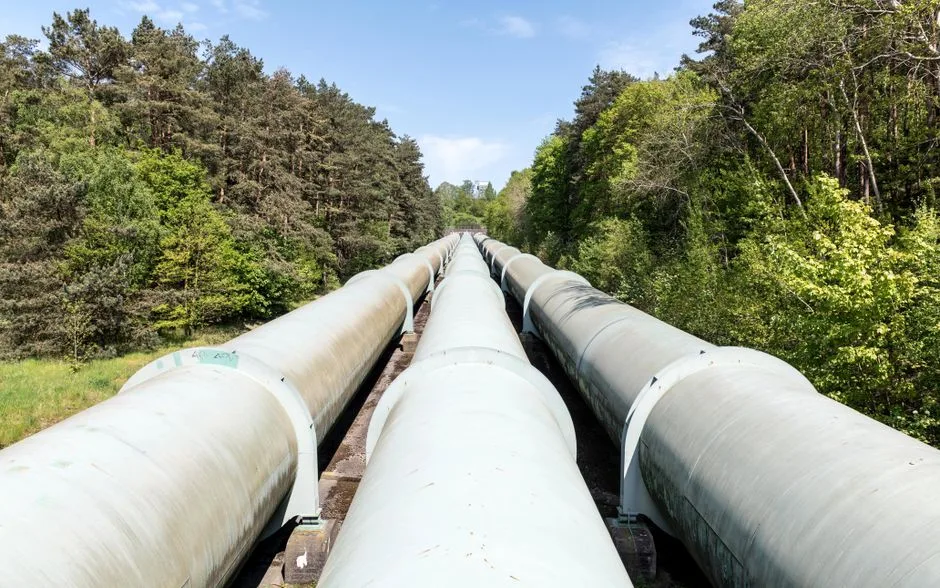
A Canadian pipeline company dumped nearly half a million gallons of crude oil into a Kansas creek, killed or harmed over 2,700 animals, and rendered an entire waterway "lifeless and useless." Three and a half years later, they've agreed to pay a fine that works out to roughly the cost of a mid-size Manhattan condo development. Oh, and Donald Trump just approved a new pipeline from the same system.
What Actually Happened in That Kansas Creek
In December 2022, the Keystone Pipeline ruptured in Washington County, Kansas, about 150 miles northwest of Kansas City. According to CBS News, the rupture dumped nearly 13,000 barrels of heavy crude oil into a creek running through a rural pasture. That's close to 500,000 gallons. The EPA says it would have nearly filled an Olympic-sized swimming pool.
This wasn't just a bad spill. It was the largest onshore crude pipeline spill in the United States in nine years, and it surpassed all 22 previous spills on the entire Keystone system combined, according to a U.S. Government Accountability Office report. Let that sink in. One rupture. Worse than everything that came before it on that pipeline, added together.
No humans were injured, and public water supplies weren't affected. The local wildlife was not so lucky. A complaint filed Friday by the U.S. government alongside the proposed settlement says more than 2,700 animals were harmed or killed. The area is also home to the long-eared bat, a federally listed endangered species.
How the Pipe Was Already Broken Before It Broke
Here's where it gets genuinely infuriating. A May 2023 engineering report commissioned by the U.S. government found that the section of pipe where the spill occurred had been "overstressed" since its installation back in December 2010. Twelve years before the spill. The theory is that construction activity itself altered the surrounding land in a way that put undue stress on the pipe from day one.
The court complaint filed Friday goes further. CBS News reports it states the soil under the pipe had been "improperly compacted." And when the company re-excavated the site back in 2013, nine years before the disaster, it did not replace that section of pipe. They dug it up, looked at it, and put the dirt back.
So to be clear about the timeline: a pipe was installed wrong in 2010, flagged as a problem in 2013, left in the ground anyway, and then it catastrophically failed in 2022. This is not a freak accident. This is deferred maintenance with consequences measured in dead animals and poisoned waterways.
The Settlement: $26.9 Million and a Shrug
The EPA, the Department of Justice, and the state of Kansas filed a proposed settlement Friday in U.S. District Court accusing South Bow, the Canada-based company that now operates the pipeline, of violating U.S. and state clean water laws. The deal would require South Bow to pay $26.9 million in civil penalties to the federal government, plus more than $3 million to Kansas for environmental restoration projects. The company also agreed to spend an estimated $40 million on safety improvements to prevent future incidents.
Jeffrey Hall, the EPA's assistant administrator for enforcement, said in a statement that "the substantial penalty reflects the seriousness of the environmental harm." He described the spill as blanketing "land and water, rendering the waterway lifeless and useless."
The settlement still requires a judge's approval after a 30-day public comment period. South Bow did not respond to CBS News's requests for comment, though the company told The Canadian Press that it "proactively" began cleanup before receiving directives from U.S. officials. The cleanup was completed in early 2024. South Bow itself didn't exist when the spill happened or when the cleanup was done. TC Energy, the company that built the pipeline, spun South Bow off as a separate entity in 2024, conveniently after the mess was dealt with.
And Now, a New Pipeline
You might assume that a disaster of this scale, with documented engineering negligence dating back over a decade, would give the current administration pause about expanding the Keystone system. You would be wrong.
In April, CBS News reports, President Trump gave the green light for South Bow and another company to build a second pipeline from Canada to Wyoming. This is a smaller version of the massive $8 billion Keystone XL project that President Biden blocked in 2021 over environmental concerns. The same pipeline brand. The same operator. A brand new pipe.
Trump approved this roughly three months before the federal government publicly accused South Bow of violating clean water laws in connection with the 2022 disaster. The timing is, let's say, awkward.
The Dingo Take
Let's do the math on what this settlement actually means. South Bow will pay $26.9 million for poisoning a waterway, wiping out 2,700 animals, and operating a pipe they knew was compromised since 2013. The Keystone system carries Canadian tar sands oil to refineries in Illinois, Oklahoma, and Texas. The 2,689-mile pipeline generates enormous revenue. Twenty-seven million dollars to these people is a parking ticket. The $40 million in required safety upgrades is closer to meaningful, but it took a federal lawsuit to get there, and the company had years to act on its own.
The corporate restructuring angle deserves more attention than it's getting. TC Energy built the pipeline. TC Energy knew about the overstressed pipe. TC Energy failed to replace it. Then TC Energy spun off South Bow in 2024, right after the cleanup wrapped up, leaving a new corporate entity to absorb whatever legal liability remained. Whether that was intentional insulation or just convenient timing is a question worth asking loudly in a courtroom.
Meanwhile, the Trump administration looked at all of this and decided the answer was more Keystone. More pipe from the same operator, same system, approved while federal lawyers were apparently drafting the lawsuit over the last disaster. If a pipe installed wrong in 2010, flagged in 2013, and ignored until 2022 is the track record that earns you a new federal contract, then the phrase "environmental protection" has officially lost all meaning.




Comments