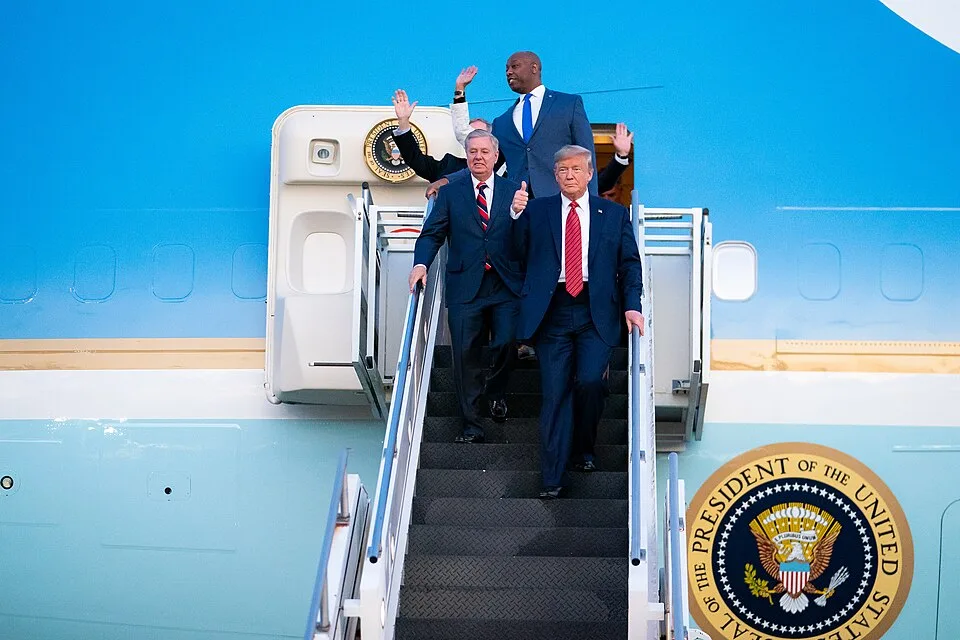
Lindsey Graham died on Saturday. By Sunday morning, Donald Trump was on national television explaining how inconvenient that was for his voting bill. The president of the United States used back-to-back Sunday show interviews to turn a sitting senator's death into a legislative pitch, and somehow that's not even the most cynical part of the story.
The Condolence Call That Wasn't
Trump told NBC's Meet the Press that he spoke to Graham by phone just hours before the senator died. Most people, hearing that, might reflect on what was said. Trump reflected on the legislation they discussed.
"He literally called me about the SAVE America Act," Trump said on air. "He thought we were going to get it passed. This is a big blow to the SAVE America Act, let me tell you."
That's the quote. That's the real, actual quote a sitting president chose to deliver in the context of a colleague's death. Not 'he was a dear friend.' Not 'South Carolina lost a giant.' The SAVE America Act lost a vote. That's what Donald Trump wanted America to know.
Graham was a co-sponsor of the bill, which according to Salon would tighten voter identification requirements for federal elections. The legislation has been stalling in the Senate for want of enough Republican support, which apparently made Graham's sudden passing not a personal tragedy but a political setback worth announcing on cable news.
The Filibuster Conversion Nobody Can Verify
Trump didn't stop at invoking Graham's name for the voter ID bill. He also used the dead man to advance the cause of killing the Senate filibuster, a procedural rule Graham spent years publicly defending.
Speaking to CNN's Jake Tapper, Trump claimed Graham had been softening on the issue before his death. "He was against terminating the filibuster," Trump admitted, then immediately added: "He was coming aboard, I think, for the filibuster, terminating the filibuster."
Notice the careful wording there. Not 'he told me he supported it.' Not 'he committed to voting for it.' Just 'I think' and 'coming aboard,' which is a convenient thing to claim about a man who is no longer in a position to confirm or deny it. Graham famously called ending the filibuster a terrible idea for years, publicly and repeatedly, so Trump is asking us to take his word that a massive reversal was quietly underway just before Graham died.
This is a rhetorical trick so old it has a name. You don't put words in dead men's mouths. Or at least you're not supposed to.
Iran? Never Heard of It
Woven through both interviews, according to Salon's reporting, was something else worth paying attention to: Trump used Graham's death to dodge every question about U.S. strikes on Iran and the potential closure of the Strait of Hormuz, which would send global oil markets into immediate chaos.
"Out of respect for Lindsey, I'm not talking about that," Trump said. He then pivoted directly into talking about Lindsey Graham. At length. In the service of his own legislation.
So the respect was real enough to shut down questions about a potential military and economic crisis, but not quite real enough to stop him from treating the man's death as a campaign event. That's a very specific, very selective kind of respect. The kind that works out great for Donald Trump.
What Graham's Death Actually Means for the Bill
Setting aside the ghoulishness of it all, the political reality is that the SAVE America Act was already in trouble. Salon reports the bill has stalled in the Senate for lack of sufficient Republican support, meaning it wasn't just Democrats blocking it. Graham's death removes a co-sponsor and, depending on how South Carolina fills the seat, could complicate the math further.
Trump is right that it's a setback for the legislation. He's just wrong to say so out loud, on television, while expressing condolences, before the man's family has had a full day to grieve. That part wasn't required. He chose that.
The Dingo Take
There's a version of this story where a president calls into Sunday shows to share a genuine memory about a colleague and the conversation naturally drifts toward the work they did together. That's not what this was. Trump didn't arrive at the SAVE America Act reluctantly, pulled there by sentiment. He arrived there first and stayed there longest. The grief was the container. The bill was the point.
Graham spent years being one of Trump's most loyal and most mocked supporters, a man who transformed himself almost completely in the service of this president's approval. In the end, what he got was a eulogy that treated him primarily as a lost vote. If you were writing a dark comedy about Washington, you'd probably cut that detail for being too on the nose.
The Iran dodge deserves its own moment of attention because the Strait of Hormuz is not a small story. A potential closure would affect global energy supply and hit American consumers at the pump almost immediately. The president of the United States declined to address that because, he said, a senator had died. Then he spent fifteen minutes talking about the senator's impact on Senate procedural rules. The press should not let that particular sleight of hand disappear into the background noise of the week.


Comments