A board game company tried to prove you could manufacture Monopoly entirely in the United States to escape Trump's seven-figure tariff bill. It took more than a year, cost at least double what China would have charged, and they still had to import the damn dice. This is the story of American manufacturing in 2026, and it is not going great.
The Tariff Bill That Started a Quest
Jonathan Silva runs the WS Game Company, which makes high-end board games. Like virtually every other toy maker in America, he makes them in China. Then Trump's tariffs arrived, and Silva got hit with a seven-figure bill. Not a rounding error. Seven figures.
So he did what you do when the government slaps a massive tax on your business model: he looked for a way around it. He decided to try manufacturing a special-edition Monopoly game, themed to the country's 250th birthday, entirely inside the United States. According to NPR, the experiment "almost didn't pass go." Which is the nicest possible way to describe what happened next.
Nobody in America Makes 10,000 Dice
Here is a sentence that should be printed on a banner and hung in every congressional hearing room where someone talks about bringing manufacturing back to America: the WS Game Company could not find a single domestic supplier willing to make 10,000 dice on a reasonable timeline.
"We turned over every single leaf trying to find someone who would make 10,000 dice for us in the U.S.," Silva told NPR. "It requires special machinery. It requires investment. And that type of stuff just can't happen on a random Tuesday and be ready in a couple of months." Ten thousand dice. The kind kids throw across kitchen tables. Nobody in America makes them. Silva had to import them anyway.
He did eventually source most other components domestically. A former Hasbro factory in Massachusetts printed the board. A company called Pioneer Packaging made the money tray. A small business in Indiana made custom metal tokens shaped like cowboy hats, covered wagons, and apple pies, which is extremely on-brand for a game about ruthless property acquisition. Pulling all of that together, though, took over a year.
A Year of Work, Double the Cost, Half the Sales Season
Because it took so long to assemble this domestic supply chain, Silva missed the first half of the 250th anniversary selling season. The game retails for $80. Manufacturing it in the United States cost at least twice what it would have cost in China. You can do that math yourself.
"When I place a purchase order in China, they have all those capabilities under one roof," Silva told NPR. "For one item, it took up way too much of our resources and time to bring it to market." One item. One game. One experiment that consumed a year of a company's time and still required imported components.
This is not a story about a company that failed because it didn't try hard enough. Silva clearly tried extremely hard. This is a story about what decades of offshoring actually looks like when you try to reverse it with a trade policy that was announced with about as much industrial planning as a tweet.
Why China Makes 80% of Your Toys
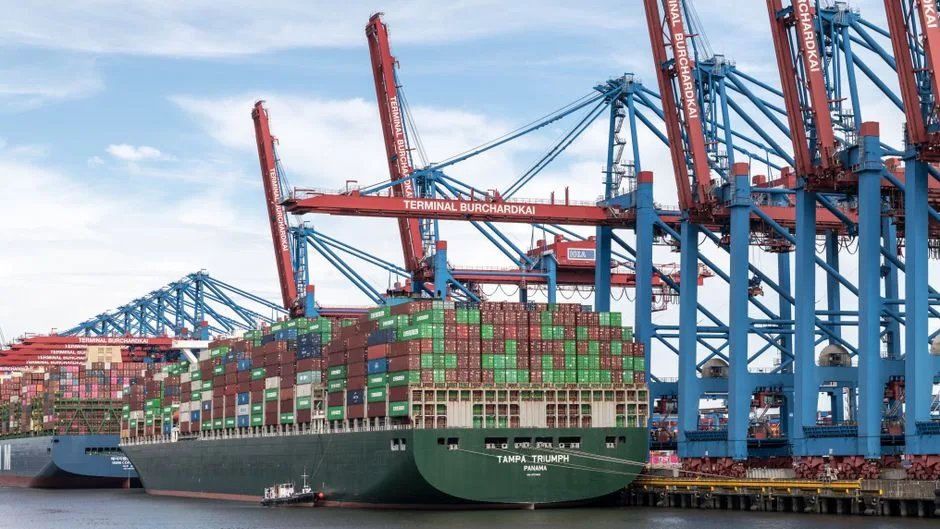
NPR reports that roughly 80% of all toys and games sold in the United States are made in China. That number exists because China spent decades building an entire manufacturing ecosystem, not just factories for finished products but suppliers for every specialized component those factories need. Dice machinery. Circuit boards. Injection molds. The whole stack.
Greg Ahearn, president and CEO of the Toy Association, put it plainly to NPR. "Even if you could, who in their right mind would take their capital and invest it into creating a toy manufacturing plant?" he said. "Of all the things you could pick, we'd probably be pretty low on that list." He wasn't being cynical. He was being accurate. Toys have thin margins and low prices. They are not the product category that attracts the kind of capital investment required to rebuild a domestic supply chain from scratch.
The toy industry is now lobbying for a tariff carve-out. NPR reports that the new U.S.-China Board of Trade is considering allowing up to $30 billion worth of Chinese goods to enter tariff-free, but toys are competing for that slot against shoes, apparel, and plenty of other industries that are also getting crushed.
Meanwhile, the Holiday Shipment Is Already En Route
Silva is still making all of his other games in China. He is not planning to change that. And he currently has about $6 million worth of games on a ship headed from China to the United States for the holiday season, with no idea what the tariff bill will be when it arrives.
"We're really good at a lot of great things here in America," he told NPR. "But we're not really great at making certain items that are consumable goods. And that's OK." That's a remarkably gracious thing to say for a man who just spent a year and twice his normal manufacturing budget proving that point the hard way.
The Dingo Take
Let's be clear about what this story is and isn't. It is not evidence that American workers are lazy or incapable. It is evidence that you cannot undo fifty years of industrial policy decisions with a tariff announcement. You cannot threaten your way into a domestic dice manufacturing sector that doesn't exist. The factories aren't there. The machinery isn't there. The supplier networks aren't there. You can't build them in a couple of months, and apparently you can't build them with a year of trying either, at least not at any price that makes a product viable.
The Trump administration sold tariffs as a simple lever. Pull it, and manufacturing comes home. What Jonathan Silva's Monopoly experiment actually demonstrates is that the lever is attached to nothing. The supply chain infrastructure that would need to exist before American manufacturing could absorb this work took China thirty years to build. Screaming at importers and slapping taxes on shipping containers does not compress that timeline. It just makes the products more expensive while the work stays exactly where it was.
Silva is rolling the dice, literally and figuratively, on a $6 million holiday shipment with no idea what it's going to cost him when it lands. That is the daily reality for American businesses right now: uncertainty so complete they can't model their own costs. The Monopoly game that took a year to make and still needed imported dice is sitting on shelves for $80 as a novelty. The rest of the games are coming from China. Nothing has changed except that everyone involved is significantly more stressed and significantly poorer.





Comments