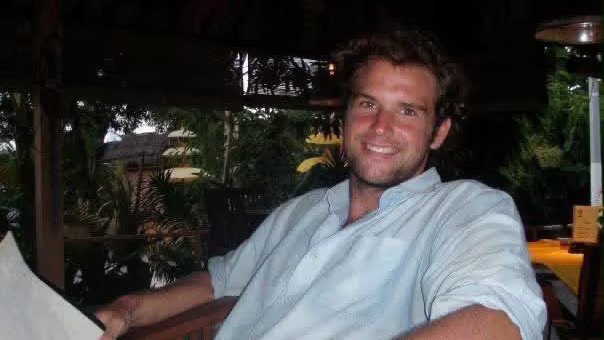
A 39-year-old Perth man who had spent fifteen years building a life in Bali, running a business, raising a son, and trying to sort out his visa paperwork, is dead after being taken into immigration detention on Friday. Cameron Hughes never made it out of that detention centre alive. His family says they don't know why, and the explanations they're getting don't add up.
A Father Trying to Stay Near His Kid
Hughes had been in Bali since his early twenties. He was married to an Indonesian woman, had an eight-year-old son, and ran a car restoration business in Jimbaran, South Kuta. By any measure, this was a man who had put down roots.
According to ABC, Hughes had recently separated from his wife and was in the process of trying to extend his visa so he could remain close to his son. That's the context here. He wasn't a tourist who overstayed a party. He was a father trying to work out the bureaucratic machinery that stands between him and his kid.
His family described him in a statement as "a beautiful person who loved his family deeply and was a devoted father" who was "resilient, hardworking and proud of overcoming challenges to build a good life." Whatever was happening with his immigration paperwork, that's who showed up at the detention centre on Friday.
What Officials Say Happened
Bali immigration authorities told ABC that Hughes was taken into detention Friday, local time, over an alleged breach of his visa conditions. So far, a fairly routine bureaucratic story.
Then it stops being routine. A spokesperson for Bali immigration's Ngurah Rai office said that during "periodic monitoring via CCTV, officers noticed an anomaly when the detainee remained motionless for an extended period inside the rest room." Staff then checked his vital signs, administered first aid including supplemental oxygen, and called an ambulance.
Hughes was declared dead on the way to hospital. The preliminary medical assessment listed the cause of death as cardiac arrest. He was 39 years old.
The Family's Story Doesn't Match
Here's where things get uncomfortable. ABC reports that Hughes's family says it has received conflicting information that raises questions about the official cause of death account, and they're pushing for far more detail about both how he came to be detained and what happened while he was in custody.
The family is also pushing back on another part of the official framing. Immigration authorities apparently suggested Hughes had failed to cooperate with officials, which his family flatly denies. They say they had been in regular contact with Bali immigration to clarify his status. That's not the behaviour of someone refusing to engage with the system.
"We will be working closely with consular staff to understand what actually happened," the family said in their statement. Which is a very measured, diplomatic way of saying: we do not believe we have been told the truth yet.
Canberra's Response: Technically Adequate, Thoroughly Useless
The Department of Foreign Affairs and Trade confirmed to ABC that it is providing consular assistance to the Hughes family. "We send our deepest condolences to the family at this difficult time," a spokesperson said. "Owing to our privacy obligations, we are unable to provide further comment."
There it is. The full weight of the Australian government's response to a citizen dying in foreign detention: condolences, and a polite bureaucratic door closing in your face. Privacy obligations are a real thing. They are also a very convenient thing when you'd rather not discuss the specifics of how one of your citizens ended up dead in a Bali holding room.
Consular assistance is better than nothing. It is also a very low bar.
A Family Left Holding the Pieces
ABC reports the family's statement cuts through all the official language cleanly: "Taken too soon doesn't even come close. We are completely broken as a family."
There's an eight-year-old boy in Bali who no longer has his father. That boy's dad went in to deal with a visa problem and didn't come home. Whatever the full story turns out to be, that part is not in dispute.
The family says they're working with consular staff to get answers. That process will take time, run into walls, and involve a lot of formal language that means very little to a grieving family trying to understand something that makes no sense to them right now.
The Dingo Take
Let's be honest about what a story like this reveals. Immigration detention is a system designed to process paperwork violations, and in this case it appears to have processed a man right out of existence. A 39-year-old with no apparent health crisis on record, held over a visa issue, dead within hours. The official explanation is cardiac arrest. The family says the information they're getting conflicts. Both of those things can be true and still leave an enormous gap in the middle where the actual truth lives.
Australia's consular system is not nothing, but it is also not built for situations like this. DFAT's response, condolences plus a privacy shield, is the institutional equivalent of a shrug. The Hughes family is going to need more than that to get real answers out of Indonesian immigration authorities, and the Australian government's appetite for making those kinds of demands of Indonesia tends to run pretty shallow pretty fast. Diplomatic relationships are delicate. Dead Australians in detention are awkward. These two facts have a long history of producing unsatisfying outcomes for grieving families.
Cameron Hughes spent fifteen years building something in Bali. He was trying to stay in the country to be near his son. That's what was happening when the system grabbed him. Whatever you think about visa enforcement, whatever bureaucratic boxes he may or may not have failed to tick, a father of an eight-year-old should not be dying in a detention centre bathroom while officers watch on CCTV and wait to see if he moves. Someone needs to account for what happened in that room, and "cardiac arrest" written on a form is not the same thing as an explanation.



Comments