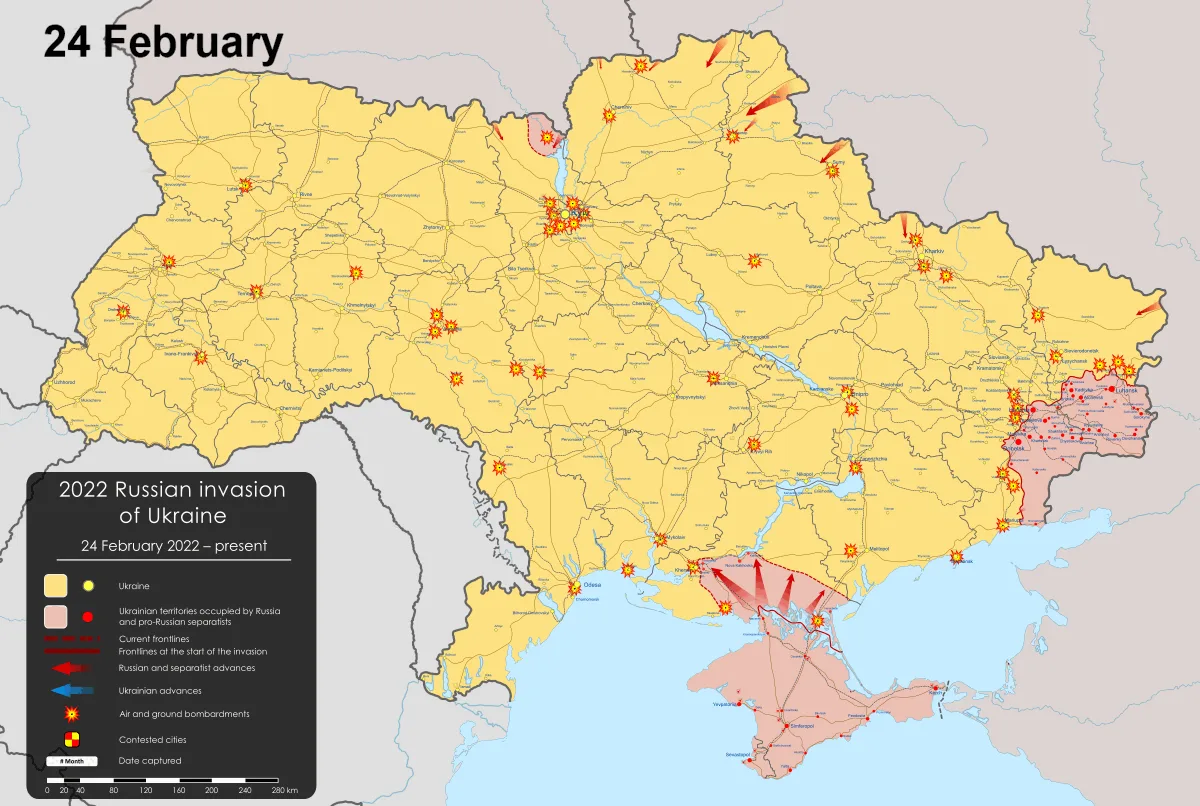
Ukraine just hit the refinery that literally fuels the Russian Air Force. The Syzran Oil Refinery in Samara Oblast went up in spectacular flames overnight on July 12, with video posted by locals showing towering black smoke rising from a facility that processes nine million tons of crude oil per year. This is the third Russian refinery Ukraine has struck in four days, and Moscow is starting to panic about it.
500 Miles Deep Into Russia, and Nobody Stopped It
The Syzran refinery sits more than 800 kilometers from the Ukrainian border. Let that number sink in for a second. Ukraine sent drones over half a continent's worth of Russian territory, hit a major industrial facility, and Russia's air defenses apparently watched it happen. Photos and videos shared by local residents, as reported by the Kyiv Independent, show massive fires tearing through the site.
The specific weapons used have not been confirmed, but this is not exactly a mystery. Ukrainian forces have spent the last two years developing and deploying domestically-produced long-range drones specifically designed to reach targets that Russian planners assumed were safely out of range. Syzran is not some obscure backwater installation either. This refinery exports petroleum products via the Volga River and the Caspian Sea and supplies fuel directly to Russian military units across central and southern Russia.
Three Refineries in Four Days
The pace of these strikes is the real story. On July 8, Ukraine hit the Saratov Oil Refinery and knocked out production entirely, according to the Kyiv Independent. One night later, on July 9, Ukrainian forces struck the Ilsky Oil Refinery in Krasnodar Krai. Then came Syzran. Three refineries. Four days. Ukraine is not stumbling onto targets of opportunity here. This is a deliberate, coordinated campaign.
Kyiv has been explicit about its strategic logic. Energy infrastructure feeds the war machine directly, supplying fuel for Russian aircraft, armor, and logistics. Knock out the refineries, and you are not just hurting Russia's economy. You are squeezing the operational capacity of the military that is currently shelling Ukrainian cities. The Kyiv Independent notes that Ukraine considers these sites valid military targets precisely because of their role in sustaining the invasion.
Russia Just Banned Diesel Exports. That's Not a Coincidence.
Here is the part where you see the campaign actually working. The Russian government announced earlier this week that it would ban the export of diesel fuel until at least the end of July. That is an extraordinary admission. Russia is one of the world's largest petroleum exporters, and Moscow just told the world it cannot spare the diesel. The Kyiv Independent reports this came after weeks of Ukraine successfully pummeling energy infrastructure.
The fuel supply crisis inside Russia is real and worsening. The Kyiv Independent points to export bans, price hikes, and sales restrictions already rippling through the Russian economy. When a petrostate starts rationing its own fuel, something has gone very wrong. Ukraine's deep strike campaign did not cause Russia's energy problems single-handedly, but it is very clearly making them a lot worse, and doing so at a moment when Russia can least afford the strain.
What We Know and What We Don't
To be straight with you: the full extent of the damage at Syzran is not yet confirmed. The Kyiv Independent noted it could not immediately verify all reports, and Ukraine's military had not commented publicly as of the time of publication. Russian state media is not exactly a reliable narrator when it comes to domestic infrastructure embarrassments, so the details will take time to shake out.
What is confirmed is this: fires broke out, residents filmed them, and the facility in question supplies fuel to the Russian Air Force. Whether the damage is catastrophic or merely serious, Ukraine hit something that matters. A refinery with nine million tons of annual processing capacity does not just brush off a drone strike and carry on.
The Dingo Take
There is a version of this war that the Western press covered extensively in 2022 and 2023, where Ukraine was heroically defending territory and desperately pleading for weapons. That story was true. But this is a different story now, and it deserves the same attention. Ukraine has built a long-range strike capability that is reaching hundreds of miles into Russian territory and systematically dismantling the energy infrastructure that keeps Putin's military running. This is not desperation. This is strategy, and it appears to be working.
The Russian diesel export ban is the tell. Governments do not voluntarily cut off major export revenue streams unless they have no choice. Russia has no choice right now because its refining capacity keeps catching fire. Three refineries in four days is the kind of operational tempo that should be front-page news, and the fact that it is getting buried under the general noise of the war is a real failure of proportion in how we cover this conflict.
None of this means the war is over, or that Ukraine is winning in any final sense. Russia still occupies Ukrainian territory, still has the larger army, and still has a patron in the Kremlin who shows no interest in negotiating in good faith. But the image of Russian planners staring at a map and watching their fuel supplies burn, 500 miles from the front line, in a city they thought was untouchable? That is a meaningful shift. Ukraine is not just surviving this war. It is changing the terms of it.




Comments