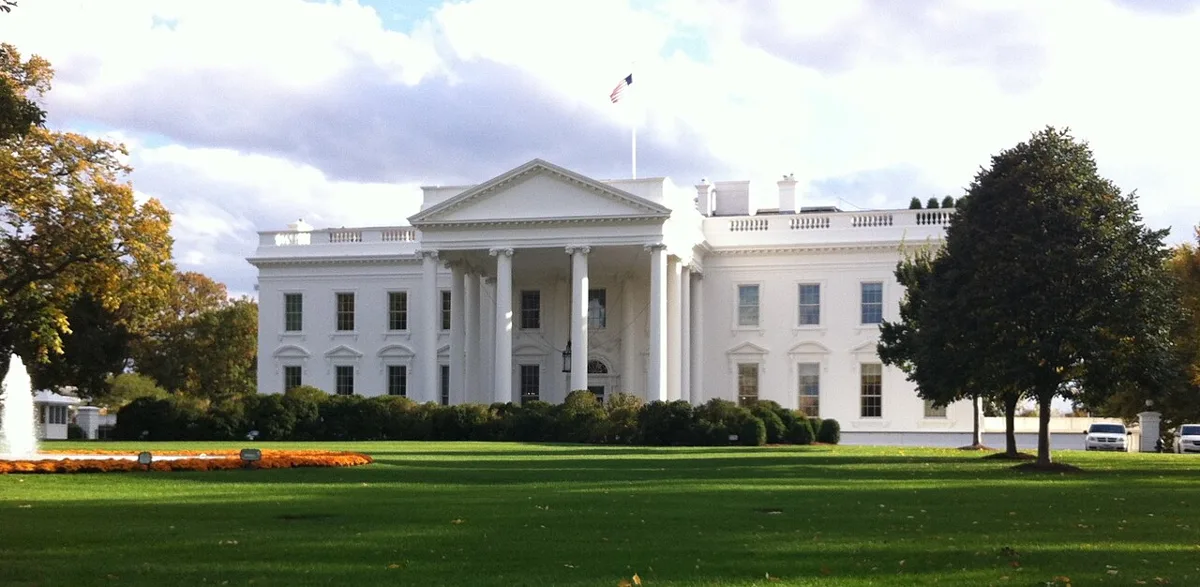
A former senior commander in Iran's Islamic Revolutionary Guard Corps went on record this weekend to say Iran could assassinate Donald Trump inside the White House, quote, 'whenever necessary.' This is where we are. This is the news.
The Quote That Belongs in a Bond Villain Script
Hossein Kanani Moghaddam, a former top IRGC commander, did not mince words when speaking to Iranian news website Fararu. 'If the goal is to assassinate Trump, the Islamic Republic can easily do so in the White House,' he said. 'Whenever necessary, we are capable of doing that.'
Set aside for a moment the diplomatic and geopolitical implications of a former senior military official of a foreign government publicly threatening to murder a sitting US president on his own turf. Just read that sentence again and let it sit with you. A man who used to run operations for one of the most aggressive paramilitary forces on the planet is telling an Iranian news outlet that the White House is not a safe house.
The New York Post first reported the remarks. Whether Moghaddam is speaking for the Iranian government, blowing smoke for domestic audiences, or just freelancing his grievances into a microphone is, to be clear, an important distinction. But 'former senior IRGC commander makes public assassination threat against US president' is not a headline you shrug at and scroll past.
The Talks That Aren't About Peace
Moghaddam was also helpfully candid about what Iran actually thinks it's doing at the negotiating table. 'We are not negotiating with the Americans for peace. We are negotiating to reduce tensions,' he said. He went further: the talks with Washington are, in his framing, a tool to 'strengthen the Islamic Republic's demands,' not to reach any kind of lasting settlement.
'We are not negotiating for peace with Trump and his criminal aides,' he added, in case the first part was too subtle. 'In the negotiations, we are only seeking to restore our rights and clarify the accusations made against us by the United States.'
And on the question of revenge? 'They remain firmly on the table.' So to recap: the talks are not about peace, the White House is apparently a viable target, and retaliation is still very much on the menu. Diplomacy is going great.
Meanwhile, the Bombs Are Already Falling
This rhetorical escalation does not exist in a vacuum. US strikes on Iran intensified over the weekend, with the Post reporting that American military action pushed further inland, beyond the coastal areas that had previously been targeted. This is not a skirmish. This is a war that is growing.
Trump, for his part, vowed to hit Iran 'very hard,' criticizing Tehran for failing to agree to a peace deal. He also announced that the United States would become the 'guardian' of the Strait of Hormuz, the narrow waterway through which nearly one-fifth of the world's oil supply passes. 'Now we're going to guard it, and we're going to get paid for guarding it,' Trump said Monday. Whether the nations of the region signed up for this arrangement is, apparently, beside the point.
The Strait and the Stakes
Iran has declared the Strait of Hormuz closed, and traffic through the chokepoint has already dropped in response. Oil prices rose over the weekend as markets processed what a sustained closure of one of the most critical shipping lanes on earth would actually mean. One-fifth of global oil traffic moves through that narrow passage. If it stays closed, or even significantly disrupted, the economic consequences ripple out fast and ugly.
Iranian military spokesman Ebrahim Zolfaghari escalated the regional warnings too. 'The leaders of the countries in the region are warned that any cooperation with the United States or logistical support for its military will be regarded as an act of war against Iran's sovereignty and national security,' he said. Iran also accused the US of undermining Oman-brokered talks aimed at keeping the strait open, condemning what it called America's 'repeated provocations and destabilizing actions.' Both sides are accusing the other of blowing up the diplomacy. Shocking, truly.
Nobody Is Backing Down
Here is the core problem. The United States is escalating militarily. Iran is escalating rhetorically and economically. The talks that were supposed to provide an off-ramp are being described by one of Iran's own former commanders as a pressure tactic rather than a sincere negotiation. And a man who spent his career running IRGC operations is sitting down with a news website to explain that killing Trump in the White House is, technically, on the table.
None of these things are compatible with a situation that de-escalates on its own. Every signal from both sides is pointing in the same direction, and it is not toward a handshake and a joint press conference.
The Dingo Take
Let's be precise about what happened here. A former commander of one of Iran's most powerful military organizations told a domestic news outlet that his country could kill the President of the United States inside the White House, and that revenge against America remains 'firmly on the table.' That is not a gaffe. That is a deliberate statement, made publicly, for an audience. Whether it reflects actual Iranian government policy or whether Moghaddam is doing what retired generals everywhere do, which is cosplay relevance on media platforms, the fact that this kind of talk is considered acceptable public discourse in Tehran right now tells you something important about how this conflict is going.
Trump claiming the US will 'guard' the Strait of Hormuz and get paid for it sounds like something a mob boss says about a shipping lane, not a coherent foreign policy. But incoherent or not, American bombs are landing further inside Iran than they were last week, oil prices are climbing, and a waterway responsible for a staggering share of global energy supply is being used as a bargaining chip by a country that has nothing left to lose from squeezing it. The economic exposure here is not abstract. It touches every country on earth that buys oil, which is all of them.
The 'negotiations' both sides keep referencing are clearly not functioning as negotiations in any traditional sense. They are a parallel track where both countries say what they need to say for their domestic audiences while the actual situation on the ground gets worse week by week. At some point, that gap between the diplomatic theater and the military reality closes fast and badly. We are not there yet. But the former IRGC commander bragging about White House assassination capabilities on a Monday is not a sign that we are headed somewhere good.


Comments