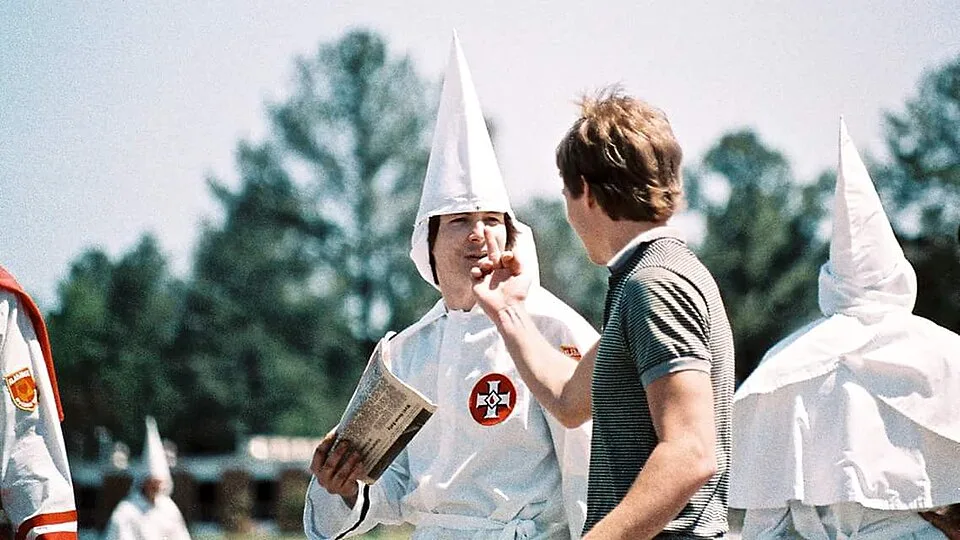
A building where the Ku Klux Klan once held its klavern meetings in Fort Worth, Texas, is being converted into an arts and community center. That sentence is real. It is happening in 2026. And depending on your politics, your reaction to it probably tells you everything about where this country actually is right now.
What's Actually Happening in Fort Worth
According to Axios, advocates in Fort Worth are in the process of transforming the former KKK Klavern No. 101 auditorium into a functioning arts and community center. The building, which served as a gathering hall for one of the most violent white supremacist organizations in American history, will now be repurposed as a site meant to serve the community rather than terrorize it.
This is not a demolition. This is not a historical preservation project that slaps a plaque on a wall and calls it education. This is something more deliberate: a community choosing to take a structure built for hate and turn it into something that might actually do some good. The specifics of the programming and funding are still developing, but the intent is clear enough.
The Bigger Fight Nobody Finished
Fort Worth is not operating in a vacuum here. As Axios reports, this is part of a broader national conversation that erupted after the Confederate monument backlash and has never fully resolved itself. What do you do with the physical infrastructure of American racism? Tear it down? Preserve it behind glass? Give it back to the communities it was used to threaten?
These are not abstract philosophical questions. These are arguments happening in city councils, community meetings, and court rooms right now, about real buildings and real land that in many cases are still standing in the middle of neighborhoods where Black Americans, Indigenous communities, and other targeted groups still live. The Confederate statue fights got the headlines. The quieter, harder question of what to do with everything else is still grinding forward.
The options on the table, as framed by Axios, are essentially four: demolish, preserve, reinterpret, or return. Each of those choices carries a completely different theory of what historical accountability actually means. And surprise, surprise, Americans cannot agree on any of them.
Why Tearing It Down Is Not Always the Answer
The instinct to demolish is understandable. Nobody wants a KKK hall standing in their neighborhood like a monument to the years when organized white supremacists ran local governments, terrorized families, and murdered people with near-total impunity. That instinct is correct, morally speaking.
But there is a real argument that erasure does its own kind of damage. If you knock down every physical remnant of this history, you make it easier for the next generation to convince themselves it was never that bad, or that it happened somewhere else, to someone else, a long time ago. Keeping a Klan hall standing as an arts center forces a confrontation. Every person who walks through that door knows what happened there. That is uncomfortable, which is exactly the point.
What Reparation Actually Looks Like in Practice
The framing Axios uses is worth sitting with: "sites of reparation." Not memorials. Not museums. Not heritage sites. Reparation. That is a specific word that carries a specific political charge in the United States, and whoever coined that phrase for this context knew exactly what they were doing.
Turning a Klan hall into a functional community arts center is a form of material reparation, small in scale but concrete in practice. The building that was used to organize violence against a community now belongs, in some meaningful sense, to that community. Whether that framing holds up legally, politically, and practically over time is a different question. But as a concept, it is a more honest reckoning than most American institutions ever manage.
The Confederate Monument Backlash Was Just the Opening Act
After the murder of George Floyd in 2020 and the protests that followed, cities across the country pulled down or debated pulling down Confederate statues at a pace that genuinely surprised a lot of people. Robert E. Lee came off pedestals in Richmond. Confederate generals disappeared from public squares. It felt, briefly, like something had shifted.
It had not shifted enough. The statues were the visible, obvious targets. The harder inventory of racist infrastructure, the klaverns, the sundown town signage, the land seized through discriminatory policies, the buildings constructed with convict lease labor, that accounting never really came. Fort Worth's project is a reminder that the list is long and most of it is still untouched.
The backlash to the backlash has also been fierce. Axios notes that new fights have emerged in communities across the country over exactly these questions. In the current political climate, where the federal government has spent the last year aggressively dismantling diversity programs and rebranding civil rights history as a culture war attack on "real Americans," the people trying to turn a Klan hall into an arts center are doing so into a pretty strong headwind.
The Dingo Take
Here is what the Fort Worth project actually represents: a community refusing to wait for a federal reckoning that is never coming, and deciding to do something specific and local and real instead. That is not nothing. It might be the only playbook available right now, given that the people currently running the national government would sooner rename a highway after a Confederate general than fund a community arts center in a historically Black neighborhood.
The harder truth is that converting one building, however symbolically charged, does not resolve the structural question of what America owes to the communities that were systematically terrorized by institutions like the KKK. A Klavern becomes an arts center. The wealth gap persists. The school funding disparities persist. The criminal justice disparities persist. Symbolic reparation and material reparation are not the same thing, and conflating them is how a country spends decades feeling good about itself while changing very little.
But cynicism is not a policy either. Fort Worth is doing something instead of nothing, and that deserves credit even if it deserves scrutiny at the same time. The KKK built that auditorium to last. The least we can do is make sure it ends its days hosting something they would have absolutely hated.




Comments