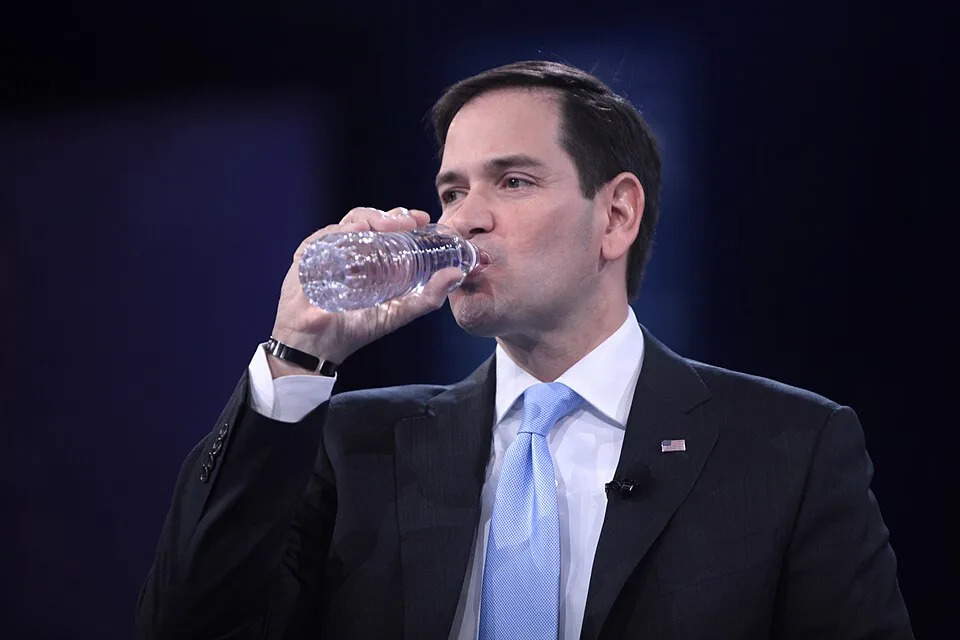
The United States government announced Monday that it intends to 'systematically disable' an international war crimes tribunal, and the Secretary of State went on camera to explain that the real threat to America is not bombs or missiles, but statutes. Actual statutes. Legal ones. Marco Rubio looked into a camera and said the quiet part so loud it rattled the windows at the Hague.
What They Actually Said Out Loud
Let's start with the exact words, because they deserve to be read slowly. According to Al Jazeera, the US State Department issued a release vowing 'a whole-of-government response to systematically disable' the International Criminal Court. Not challenge. Not contest. Disable.
Rubio then recorded a video statement accusing the ICC of 'waging a war against our country, not with bullets or missiles, but with statutes, compacts, and the force of so-called international law.' He added: 'If they believe they can deprive us of our sovereignty, we will teach them the full meaning of American resolve.' That last line was delivered, presumably, without any awareness of how a mob boss sounds when he says it.
An op-ed appeared in the Wall Street Journal to round out the media blitz. The full package: press release, video, newspaper column. A whole content strategy. For dismantling the global war crimes court.
What They Are Actually Threatening to Do
Here is where it gets slightly less dramatic and slightly more bureaucratic. Al Jazeera reports the announcement 'included few concrete steps' but listed several 'actions under consideration.' These include pressuring US military partners to reject the ICC's authority, slapping increased sanctions on ICC personnel and affiliated organizations, and applying 'increased scrutiny' to countries that don't denounce the court while still accepting American assistance.
In other words, the plan is: more sanctions, more arm-twisting, and a strongly-worded letter campaign. The Trump administration has already imposed sanctions on ICC officials and on rights groups that provided evidence to the court, so this is less a new strategy than a louder announcement of the old one.
The US is not a signatory to the Rome Statute, the founding charter that created the ICC in 2002. Officially, that means the court has no jurisdiction over Americans. The tension, as Al Jazeera explains, is that US citizens can still be investigated through probes involving countries that are party to the charter. The ICC has been looking into alleged war crimes in Afghanistan, including alleged abuses by US military and intelligence personnel, since 2020. No Americans have been prosecuted. The court keeps existing anyway. This appears to be the problem.
The Timing Makes Basically No Sense
Even people who study this for a living are scratching their heads. William Schabas, a professor of international law at Middlesex University London, told Al Jazeera he found the timing 'perplexing,' noting the ICC has not taken any actions related to the US or its allies since Trump returned to office in January 2025.
Schabas suggested the administration may be 'speculating on where the court might investigate,' which is a polite way of saying they are pre-emptively going to war against a hypothetical. The Trump administration has, it should be said, given investigators some material to work with lately. Al Jazeera points to US strikes on alleged drug-smuggling boats in the Caribbean, the abduction of Venezuelan leader Nicolas Maduro, and actions taken during the US-Israel war with Iran as events international law experts say could eventually attract ICC scrutiny.
Schabas also offered a darker read on the whole thing. He noted the court is currently dealing with internal scandals surrounding lead prosecutor Karim Khan, and suggested the Trump team might simply be calculating that the ICC is already wounded. 'Maybe they're just feeling they'll kick it some more, and that'll do a death blow to it,' he told Al Jazeera. That's not a legal argument. That's an opportunist smelling blood.
What This Is Really About
The ICC issued an arrest warrant for Israeli Prime Minister Benjamin Netanyahu last year over alleged war crimes in Gaza. The Trump administration's hostility toward the court did not begin there, but that warrant is the live wire running through all of this. Every sanction, every threat, every Rubio video exists in the context of an American government that has decided Israel faces no international accountability whatsoever, on any charge, under any tribunal, ever.
Raed Jarrar, advocacy director at the Washington, DC-based rights organization DAWN, put it plainly. 'It is not the ICC that Rubio is dismantling brick by brick, but the rules-based international order that grew out of the ashes of World War II,' he said in a statement to Al Jazeera. That order, for all its failures and inconsistencies, was built specifically so that the powerful couldn't simply opt out of accountability when it became inconvenient. The Trump administration is making the case, loudly and in op-ed form, that they absolutely should be able to.
The Dingo Take
Let's be honest about what is happening here. The United States government is threatening to destroy an international war crimes court, not because it prosecuted any Americans, but because it might, and because it had the audacity to suggest that a US ally bombing hospitals and starving civilians is something a court of law should look at. The entire 'whole-of-government response' is basically a preemptive legal threat aimed at protecting the right to commit atrocities without paperwork.
Rubio's framing, that international law is itself a weapon of war against the United States, is one of the most genuinely deranged things an American Secretary of State has said in public in recent memory. And the bar has been very high lately. When you reach the point of arguing that the concept of war crimes is an attack on your sovereignty, you have stopped making a legal argument and started making a confession.
The ICC is not perfect. It has prosecuted African leaders at wildly disproportionate rates compared to Western ones, and the Khan scandal is real. But 'this court is flawed' and 'this court should be destroyed so war criminals can operate freely' are not the same argument, and the Trump administration is hoping you won't notice the gap. Schabas is probably right that they smell a wounded institution and are moving in for the kill. The question is what it says about a country when dismantling accountability for atrocities is just another Monday press release.


Comments