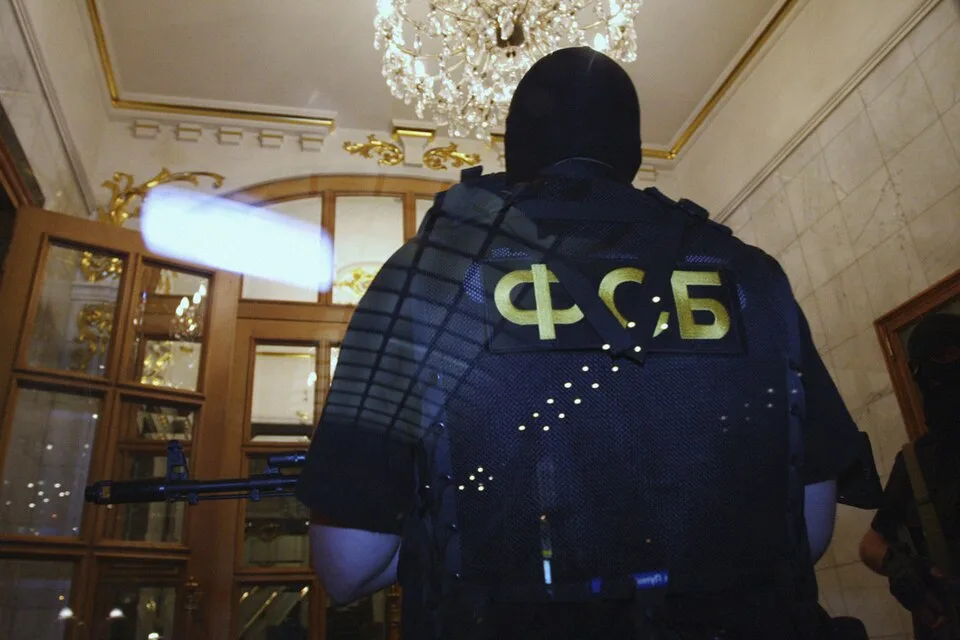
Russia's intelligence services have apparently been running a continent-wide sabotage operation against Europe's railways, power grids, and government ministries, and they got caught. France, the European Union, and the United Kingdom all moved Monday to sanction the people responsible, as Europe collectively ran out of patience for pretending this isn't already a war.
What Russia Actually Did
France's Foreign Minister Jean-Noel Barrot announced Monday that Russia's ambassador in Paris would be summoned over what he called 'a vast cyber campaign' orchestrated by the FSB, Russia's primary intelligence and security service. The targets, according to Barrot, were companies, government ministries, and service operators across a dozen European countries. The goal was either stealing information or breaking things.
And they weren't just breaking digital things. Barrot specifically cited Poland's railway infrastructure as an example of the physical sabotage component. Two Ukrainian nationals allegedly working for Russian intelligence were accused of blowing up a Polish railway line in November 2025. Poland's top diplomat called it 'an act of state terror.' A separate alleged FSB plot targeting Poland's energy grid the following month, according to the UK government, could have knocked out electricity for 500,000 civilians if it had succeeded. Half a million people sitting in the dark because Putin is having feelings about NATO. Great stuff.
Who Got Hit and Who's Getting Sanctioned
The list of targeted countries reads like a roll call of anyone who has ever inconvenienced the Kremlin: France, Germany, Poland, Cyprus, the Netherlands, Austria, Slovakia, Romania, and Finland, among others. The EU says these attacks caused 'disruptions and financial losses' across the bloc. That is a very polite way of saying Russia has been kicking Europe in the shins repeatedly for years.
The EU announced sanctions on nine individuals and four entities, including officers from the GRU, Russia's military intelligence agency, alongside cybercriminals, self-described hacktivists, and private companies that apparently moonlight as FSB contractors. The UK went further, sanctioning 24 individuals and entities total for what London described as 'cyber and hybrid operations.' France separately confirmed it would impose matching sanctions on the same nine individuals and four entities tied to the FSB campaign.
The 'Ecosystem' Language Is Doing a Lot of Work
The EU's official statement condemned what it called Russia's 'malicious cyber ecosystem,' a phrase that sounds like something from a nature documentary about apex predators. The bloc accused the FSB of controlling a 'variety of cyber threat groups' whose activities included 'infiltration of governmental networks and sabotage of critical infrastructure.' The ecosystem in question spans state intelligence officers, organized cybercriminals, hacktivists, and private companies, all operating under the FSB's general direction.
This is not some rogue operation run by a few bored hackers in a basement. CBS News reports the EU's statement explicitly described Russia 'leveraging' this entire network as a coordinated instrument of state policy. That is a government using criminal gangs, fake activists, and corporate cutouts as a military force against its neighbors. What is the polite diplomatic term for that? The EU went with 'malicious cyber ecosystem.' The rest of us might use different words.
Meanwhile, the Drones Are Still Flying
Monday's sanctions announcement came as France was hosting a summit of the 'Coalition of the Willing,' a group of Ukraine's allies gathering in Paris. Kremlin spokesman Dmitry Peskov, who has the energy of a man who has been assigned to say increasingly unhinged things for a living, called the group 'a coalition of warmongers' and added that Russia would be 'watching very closely.' Presumably between cyberattacks.
The cyber operations are only part of the picture CBS News is reporting. A wave of mysterious drone sightings near airports and military bases across Western Europe has also been widely attributed to Russia, alongside more direct incursions into NATO airspace by Russian warplanes. In April, Sweden revealed it had foiled a Russian cyberattack on a thermal power plant the previous year. Poland, Norway, Denmark, and Latvia have all separately warned that Russia is targeting critical infrastructure. Some of America's allies have been saying for months that Europe is in a gray zone between peace and war. At some point, the gray zone starts to look a lot like just war.
The Dingo Take
Here is the situation Europe is in right now. A foreign government is blowing up railways, trying to cut power to hundreds of thousands of civilians, infiltrating government networks, flying drones over military bases, and running a continent-wide intelligence operation through a network of spies, criminals, and hired hacktivists. And the response, so far, is summoning an ambassador and sanctioning 24 people. The ambassador will show up, receive a stern talking-to, and go home. The 24 people being sanctioned almost certainly do not have a lot of assets parked in EU banks they were planning to access anytime soon.
None of this means the sanctions are wrong. They are the right call. The problem is that Europe has been making the right call in measured, proportionate, diplomatically appropriate increments while Russia has been blowing up train tracks. There is a mismatch of urgency here that is genuinely alarming. When the EU's own statement describes an enemy that has built an entire military-grade cyber apparatus fusing spy agencies, organized crime, and private contractors into a single weapon aimed at European infrastructure, the appropriate reaction is probably not another round of asset freezes on nine guys.
The Coalition of the Willing met in Paris on the same day all of this dropped. That timing is not accidental. Europe is signaling that it sees what Russia is doing and is moving to respond collectively. Whether that collective response ever catches up to the scale of what Russia is actually doing remains the central question of the next several years. History is not especially reassuring on this front.



Comments