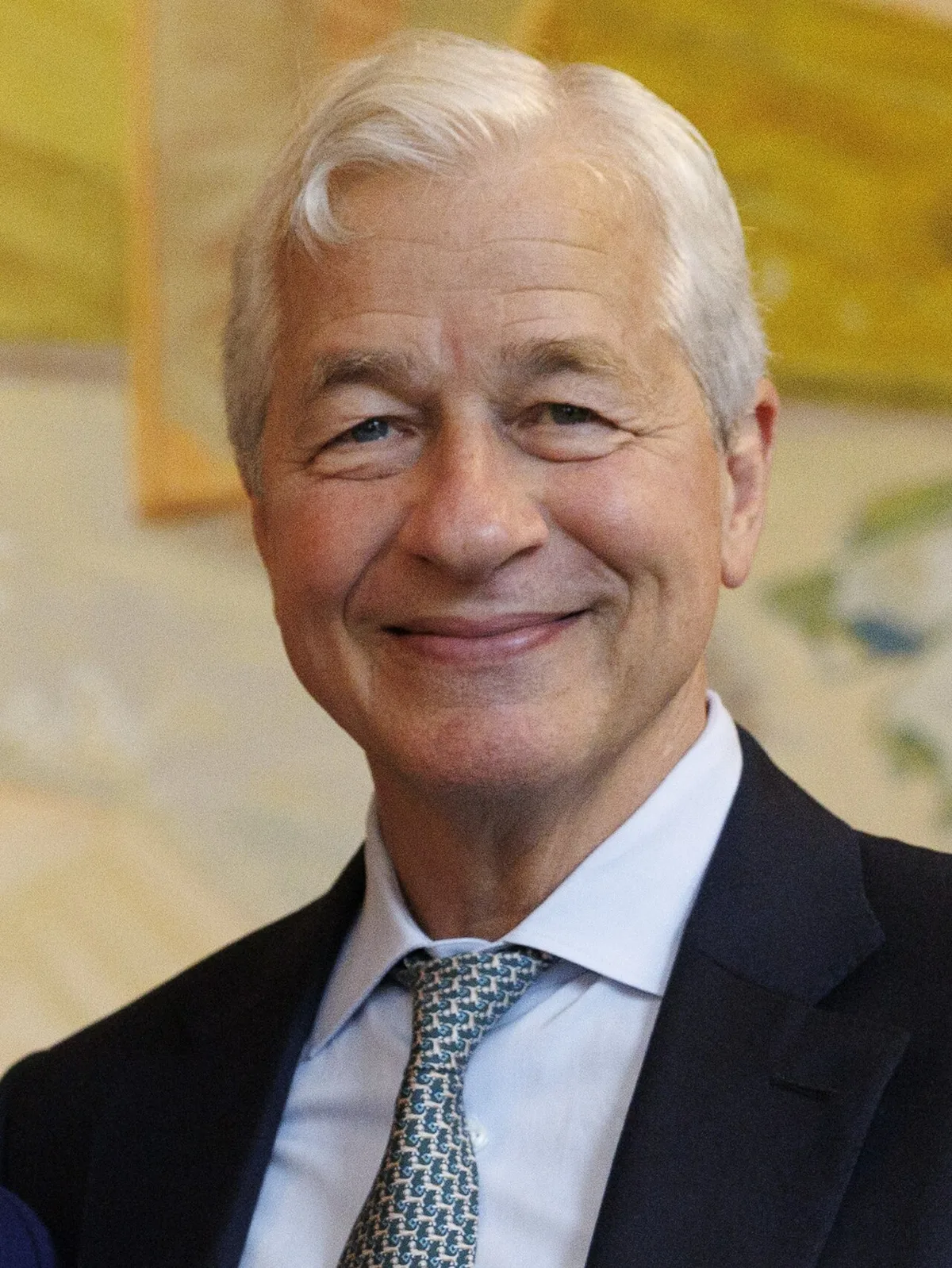
A newly surfaced 2009 email suggests that Jeffrey Epstein, convicted child sex trafficker, may have been backstage-directing JPMorgan Chase's lobbying strategy against a British banker bonus tax. Senator Elizabeth Warren would like Jamie Dimon to explain that. Jamie Dimon, who told a court in 2023 that he had never once heard Epstein's name until his 2019 arrest, now has some reading to do.
The Email That Won't Go Away
Here's the thing about the Epstein files that the Department of Justice released earlier this year: they keep producing new and spectacular problems for powerful men who would very much like you to stop talking about Jeffrey Epstein.
One of those men is Jamie Dimon. A 2009 email that emerged from the DOJ's disclosures appears to show Epstein writing to former Labour minister Peter Mandelson, asking whether Dimon should personally lobby then-UK Chancellor Alistair Darling to kill a proposed tax on bankers' bonuses. Mandelson, according to The Guardian's reporting, wrote back that Dimon should 'mildly threaten' the Chancellor. Dimon reportedly did exactly that, telling Darling that JPMorgan was a major UK employer and buyer of government bonds, and dangling the threat of canceling investment in a new London headquarters.
So to recap: a convicted pedophile and sex trafficker appears to have been advising one of the most powerful bankers in the world on how to strongarm a foreign government. And the most powerful banker in the world told a court he had no idea who that man was.
Warren Sends the Letter
Senator Elizabeth Warren, the top Democrat on the Senate Banking Committee, sent a letter to Dimon last week pressing him directly on JPMorgan's relationship with Epstein, first reported by the Financial Times and published by the committee. 'It is critical that Congress and the American public fully understand the extent of any interactions the bank and you had with Epstein,' Warren wrote.
She cited the resurfaced emails specifically, calling them evidence of 'serious questions regarding the extent of the bank's relationship with Epstein, and your knowledge of these ties.' This is not some crank op-ed. This is the ranking Democrat on the committee that oversees the entire banking sector formally demanding the CEO of the largest bank in the United States explain his possible connections to a child sex trafficking operation.
That's the kind of sentence that should lead every financial news broadcast in the country. It mostly hasn't.
What Dimon Has Said, and What the Record Now Suggests
In 2023, Dimon testified in a court proceeding that he had never met Epstein and hadn't heard his name until Epstein's federal arrest in 2019. JPMorgan has maintained this position consistently, and a spokesperson reiterated to The Guardian that Dimon 'never met Epstein and was not involved in any decisions about his account.'
The bank's official line is that any association with Epstein was a mistake, that they would not have continued banking him had they known he was actively committing crimes, and that they dropped him as a client in 2013, years before his eventual federal prosecution. That's the clean version. The messier version involves a 2009 email showing Epstein apparently triangulating access to Dimon through European political connections, in service of a real lobbying outcome that actually happened.
Those two versions of events are not easy to reconcile.
The Staley Problem Keeps Compounding
It's not just Warren's letter complicating things for Dimon. Former JPMorgan executive Jes Staley, who later became CEO of Barclays, has previously alleged that he communicated with Dimon about the bank's relationship with Epstein. JPMorgan has categorically denied this, calling Staley's testimony 'evasive and unreliable,' a characterization a UK tribunal apparently agreed with.
The bank sued Staley, claiming he hid Epstein's crimes from colleagues to protect him as a client. That lawsuit was later reported to have settled confidentially. So: the man JPMorgan says lied about Dimon also happens to be the man JPMorgan paid, in some undisclosed amount, to go away quietly. Make of that what you will.
Mandelson, for his part, was fired as US ambassador in September after revelations about his close friendship with Epstein became public. The circle of powerful men whose careers have been disrupted by their proximity to Epstein keeps growing. Dimon so far has avoided that fate. Warren's letter is a signal that some people in Congress intend to keep asking whether that's justified.
Why This Matters Beyond the Gossip
Look, this isn't just a rich-guys-and-a-bad-man story. What the Epstein files have been slowly revealing, through DOJ disclosures and civil litigation and now congressional inquiries, is the texture of how power actually operates. A trafficker and convicted sex offender was embedded deeply enough in the financial and political establishment that he was apparently helping to coordinate lobbying strategy for the biggest bank in America against a foreign government's tax policy.
That's not a footnote. That is a window into something genuinely rotten about the way elite networks function. The British government was being lobbied by JPMorgan at what appears to be Epstein's suggestion, routed through a senior British politician who would later lose his ambassadorship over his Epstein ties. This was not some peripheral weirdness happening in the background. This was business.
According to The Guardian's reporting, JPMorgan maintained Epstein as a client until 2013, despite his 2008 guilty plea to state charges of soliciting prostitution from a minor in Florida. The bank says it didn't know the full extent of his crimes. The email from 2009 suggests he was, at minimum, a useful enough contact to be advising on high-level lobbying operations.
The Dingo Take
Jamie Dimon is one of the most carefully managed public figures in American finance. He's cultivated a reputation as a blunt-talking, grown-up institutionalist, the kind of serious man who gets invited to Davos and quoted in think pieces about responsible capitalism. That reputation is going to get a real workout over the next few months, because 'I didn't know who Jeffrey Epstein was' is a much harder claim to sustain when documents keep emerging showing Epstein appearing to coordinate access to Dimon through Peter Mandelson's inbox.
Warren's letter probably won't get a satisfying answer. That's not really how these things work. Dimon will have his lawyers write back something careful and deniable, and it will get three paragraphs in the financial press, and then something else will happen. But the pressure is accumulating, and the DOJ files are not finished producing surprises. Every new document release is another roll of the dice for people who spent a decade insisting they barely knew the guy.
The Epstein files were always going to be a long-running story. The establishment bet that releasing them in pieces would dilute the damage, that the public's attention would fracture before the full picture came together. Maybe they're right. But Elizabeth Warren sending a formal letter to the CEO of JPMorgan demanding he explain a convicted sex trafficker's role in bank lobbying strategy is not nothing. That's a fact in the public record now, sitting there, waiting for the next email to surface.



Comments