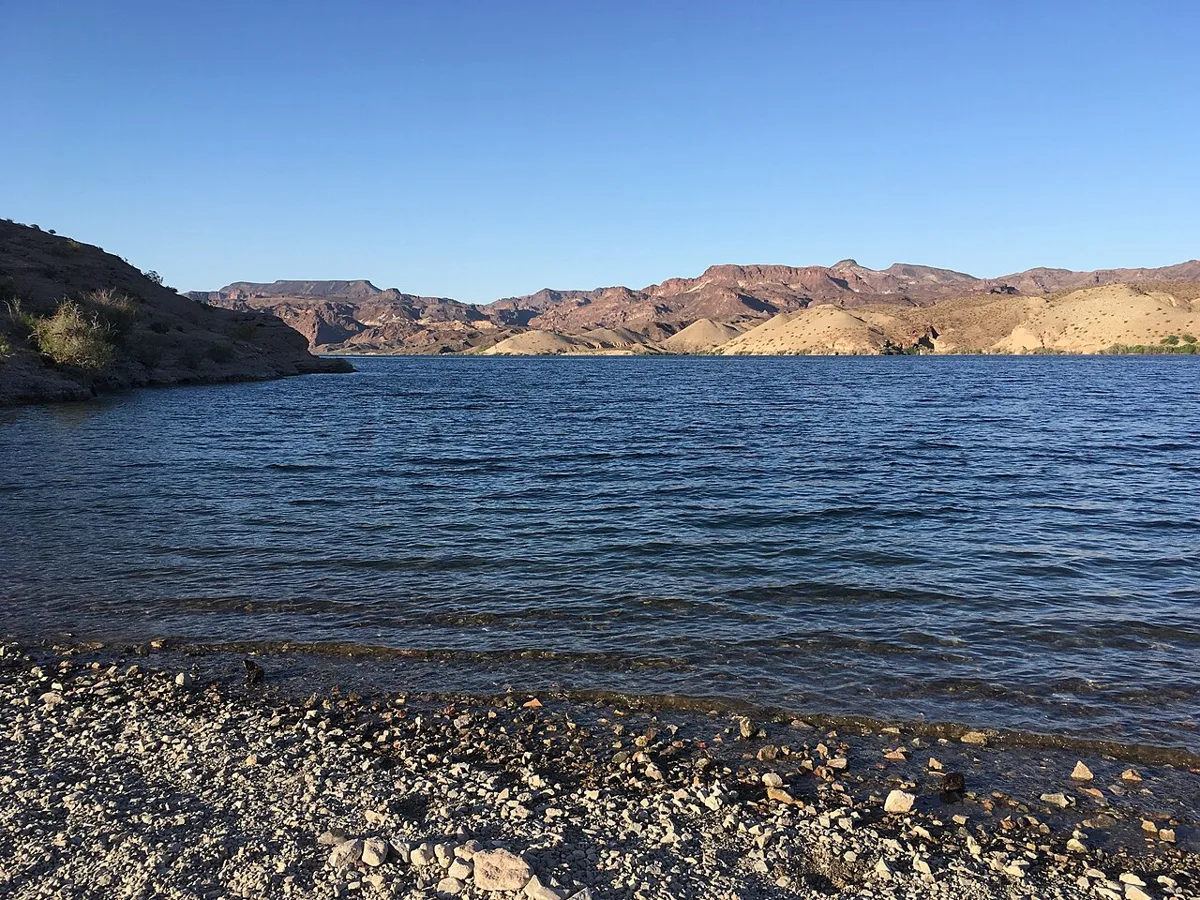
There is exactly one river left in the entire Colorado River basin that still flows the way rivers are supposed to flow, unblocked by giant dams, unsliced by major diversions, still following the ancient rhythms of snowmelt and gravity. It's called the Yampa. And it is, to put it plainly, surrounded.
One River. Forty Million People. One Very Bad Math Problem.
The Colorado River system is the plumbing for the American West. According to The Guardian, it supplies water to more than 40 million people across seven states, dozens of tribes, and parts of Mexico. It irrigates more than 5.5 acres of farmland and fuels an estimated $1.4 trillion in economic activity. It supports habitat for over 150 threatened or endangered species.
It is also, to be blunt, on life support. The basin has been overdrawn for decades. Negotiators have blown through deadline after deadline trying to work out how to manage it in a hotter, drier climate. This past winter was the warmest on record for the region. A devastating snowpack shortfall and a historically brutal spring added fresh pressure to a system already teetering on the edge.
Into this nightmare walks the Yampa River, 250 miles of alpine tundra, cottonwood forest, and ancient red-rock canyon that rises in Colorado's Rocky Mountains and joins the Green River in Utah. It is, The Guardian reports, the last river in the Colorado basin that still follows its natural seasonal cycle. Everybody who wants water and doesn't currently have enough of it has noticed.
The Bullseye That Won't Go Away
The Yampa has already had some very close calls. The Guardian reports that its waters have been eyed by the oil shale industry, by growing communities along Colorado's Front Range, and by farmers getting squeezed by the broader basin-wide crisis. Every time the system gets more desperate, someone looks at that big, wild, undammed river and starts thinking about straws.
And the climate is quietly taking its cut regardless of what anyone decides in any negotiating room. Flows on the Yampa have declined by roughly a quarter over the last century. That's without any new major diversions. That's just warming temperatures doing their quiet, relentless work.
"The bullseye will always be on the Yampa's back," Kent Vertrees, an advocate and guide with the non-profit Friends of the Yampa, told The Guardian. He's not being dramatic. He's being a realist who has watched water politics in the American West for a long time and knows exactly how this story tends to go.
So They Put Everyone in a Raft
Here's a tactic that's either brilliant or desperate, and honestly might be both. For over a decade, Vertrees and other guides have been shepherding people who actually have power over the Yampa's future down the river itself. Scientists. Policymakers. Tribal representatives. Ranchers. The Guardian's reporter was on the most recent trip, along with about 30 people total.
The logic is straightforward: it's a lot harder to sign away a river you've spent five days on. When you've kissed Tiger Wall for luck before a Class IV rapid, when you've huddled in a tent while snow dusts the canyon tops, when you've watched a beaver cut silently through an eddy and a moose tromp into the shallows, the river stops being an abstraction on a policy document and starts being a place you've been. That's the whole game.
"One of our board members used to say that the environment is the medicine and recreation is the spoon," Lindsey Marlow, executive director of Friends of the Yampa, told The Guardian. The adventure gets people there. What they see when they look around is supposed to do the rest.
An Ecological Engine the Rest of the System Depends On
This isn't just about keeping one pretty river pretty. Michael Fiebig, director of the Southwest River Protection Program for American Rivers and a guide on the trip, told The Guardian that the Yampa and its confluence with the Green River represent "the most intact remnants of how the system once was." His framing: "The Yampa truly is the ecological engine that keeps that reach going."
That reach includes habitat for the endangered Colorado pikeminnow, a native fish that, per The Guardian's reporting, can live more than 40 years and grow more than four feet long. It has survived in this basin for a very long time. The question is whether it can survive us.
The river's free-flowing character isn't a quirk or a lucky accident. It's a functioning piece of a much larger system that the rest of the Colorado basin depends on in ways that are only now becoming fully understood, precisely because everything else has already been altered beyond recognition. The Yampa is what the baseline looks like. Once it's gone, that baseline is gone too.
The Clock Is Already Running
None of this is comfortably far-off or theoretical. The negotiations over how to restructure the Colorado River compact are happening right now, and they are, according to The Guardian, stuck in "thorny disagreements" with no clear resolution. Every year the talks drag on is another year of strain on a system that doesn't have much slack left.
The Yampa exists in that gap between what's been decided and what hasn't yet been taken. It is, as Vertrees put it to The Guardian, "a relic of the past." That phrase deserves a moment. A relic. Something that survived when everything around it didn't. Something that only exists now because a long chain of decisions, compromises, and sheer luck kept the bulldozers and diversion channels pointed somewhere else.
That chain of luck is not a water management strategy. But right now, it's much of what the Yampa has.
The Dingo Take
The American West built its modern identity on water it never really had. Seven states signed a compact in 1922 dividing up the Colorado River based on flow estimates that turned out to be wildly optimistic, struck during one of the wettest periods in centuries. That mistake has been quietly compounding for a hundred years, and the bill is now due in a very big way.
The Yampa is the last physical proof that this system once worked, that a river in this basin could still just be a river, not a reservoir or a diversion or a legal abstraction fought over by lawyers in Denver. That it still exists at all is remarkable. That we are apparently going to keep having the same circular negotiations while temperatures rise and flows drop suggests we have not fully absorbed what remarkable actually means here.
Vertrees and the Friends of the Yampa are doing something honest and smart by dragging decision-makers onto the water itself. But the people who need to be in those rafts aren't scientists and ranchers who already love rivers. They're the legislators who have spent careers treating water in the West as a resource problem with a technical solution waiting just around the corner. There is no such solution. There is only the Yampa, running the way it has for millions of years, and a very finite amount of time before someone who needs water more than they need a wild river decides to do something about that.




Comments