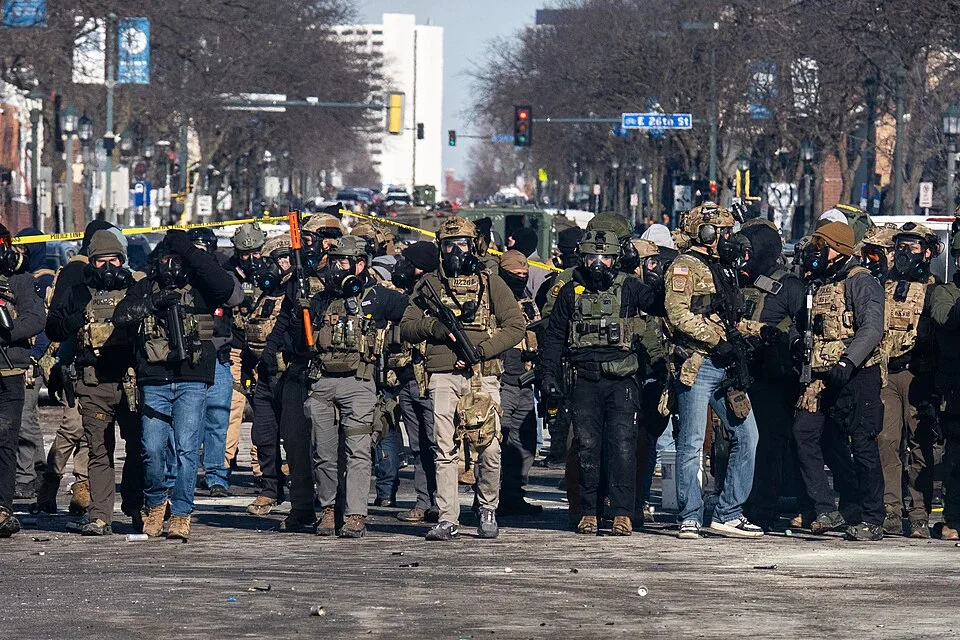
A 28-year-old man is dead after running from federal immigration agents in a Florida parking lot and getting struck by a semi truck on a busy highway. It is the third person to die during an immigration enforcement operation in the United States in the past seven days. Three people dead in one week, and the Department of Homeland Security has not said a single word about any of it.
What Happened in St. Augustine
According to The Guardian, agents with Homeland Security Investigations, a division of ICE, approached four men in a vehicle parked at a convenience store along a busy road in St. Augustine, Florida, on Tuesday morning. The men ran. One of them ran the wrong way.
Florida Highway Patrol spokesperson Master Sgt. Dylan Bryan confirmed that the man entered a live lane of traffic and was struck by a tractor trailer. "The pedestrian was struck by the tractor trailer in the right lane and sustained fatal injuries on scene," Bryan said in a statement. "The tractor trailer immediately stopped and attempted to render aid to the victim."
The man died at the scene. He was 28 years old. His name has not been released. The location, about 35 miles south of Jacksonville, was first reported as a pedestrian accident by local news and the St. Johns County Sheriff's Office Tuesday morning, before the federal immigration angle became clear. The New York Times first connected the death to HSI agents.
What we do not know: whether this man was the specific target of the operation, whether the other three men were arrested or escaped, and whether Border Patrol agents were also involved. An image from the scene, as The Guardian notes, shows a Border Patrol vehicle present. Officials from the St. Johns County Sheriff's Office and Customs and Border Protection both declined to answer questions and redirected reporters to ICE. ICE did not respond.
Two Shootings Before This. Two.
This is not an isolated incident. That is the whole point. The Guardian reports that this is the third immigration enforcement-related death in one week, and the other two were not accidents.
On Monday, an ICE officer shot and killed Johan Sebastian Duran Guerrero, a 26-year-old Colombian immigrant, during an arrest attempt in Maine. The week before that, Lorenzo Salgado Araujo was shot and killed by ICE agents in Texas while he and his coworkers were on their way to work. On their way to work. ICE approached, bullets flew, a man died on his commute.
Three deaths. Seven days. Three different states. The thread connecting all of them is federal immigration enforcement under the Trump administration operating at a pace and aggression that is now, measurably, getting people killed on American roadsides and parking lots.
The Official Response: Silence
DHS did not respond to multiple requests for comment from The Guardian. ICE did not respond. The Florida Highway Patrol said call ICE. The sheriff's office said call ICE. CBP said call ICE. ICE said nothing.
This is the communications strategy of an agency that knows what the optics look like and has decided it does not care. When three people die in a week during your operations, the normal government response is some kind of statement. A spokesperson. A press conference. A paragraph. Something. The Trump administration's DHS has concluded that accountability is for other administrations.
What DHS has not clarified, as The Guardian points out, is whether the man who died in Florida was even the person agents were trying to arrest. He may have been a bystander to an operation aimed at someone else entirely. We genuinely do not know. They are not telling us.
The Fever Pitch Nobody in Charge Seems to Hear
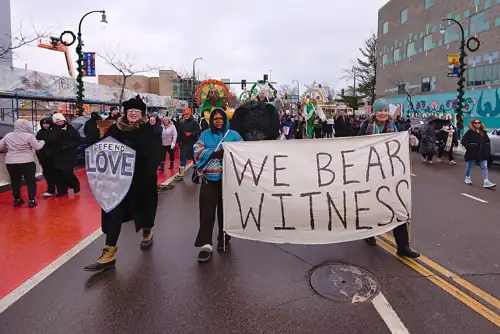
The Guardian describes public backlash against DHS as reaching "a fever pitch" following these deaths, and that is not editorial exaggeration. The shootings of Duran Guerrero and Salgado Araujo generated significant outcry, protests, and calls for congressional investigation from Democrats.
The political reality, though, is that congressional Republicans have shown zero appetite for scrutinizing immigration enforcement under Trump. The administration has framed enforcement aggression not as a problem to be managed but as a feature to be celebrated. When people are dying during your operations at a rate of three per week, and your official response is to not return phone calls, you are not worried about accountability. You have decided there isn't any.
St. Augustine is 35 miles south of Jacksonville. It is a tourist town. Somebody's morning commute on Tuesday included watching a man get killed by a truck in a lane of traffic because he was running from federal agents in a parking lot. That happened. It happened three times this week if you count the bullets.
The Dingo Take
Here is the thing about three deaths in seven days: it is a pattern. One death during an enforcement operation is a tragedy and maybe an anomaly. Two is alarming. Three in one week, across three states, with two of them involving agents firing guns at people, is a policy outcome. This is what happens when you prioritize speed and volume over any procedural guardrails, when you tell agencies to arrest as many people as fast as possible and then decline to answer questions when the body count starts rising.
The silence from DHS is not accidental. Agencies that believe they are operating correctly hold press conferences. Agencies that know they are operating in legally and morally murky territory redirect every question to a phone number that doesn't pick up. ICE has essentially gone dark on three consecutive deaths and is counting on the news cycle to move fast enough that no single incident accumulates the weight it deserves. It is a bet they have made before and won.
A 28-year-old man ran into traffic and died. We don't know his name. We don't know if he was the person agents were looking for. We don't know what the other three men were told or what they saw that made all of them run hard enough that one of them ran into a highway. What we know is that DHS has our number and isn't calling back, and that next week the count might be four.



Comments