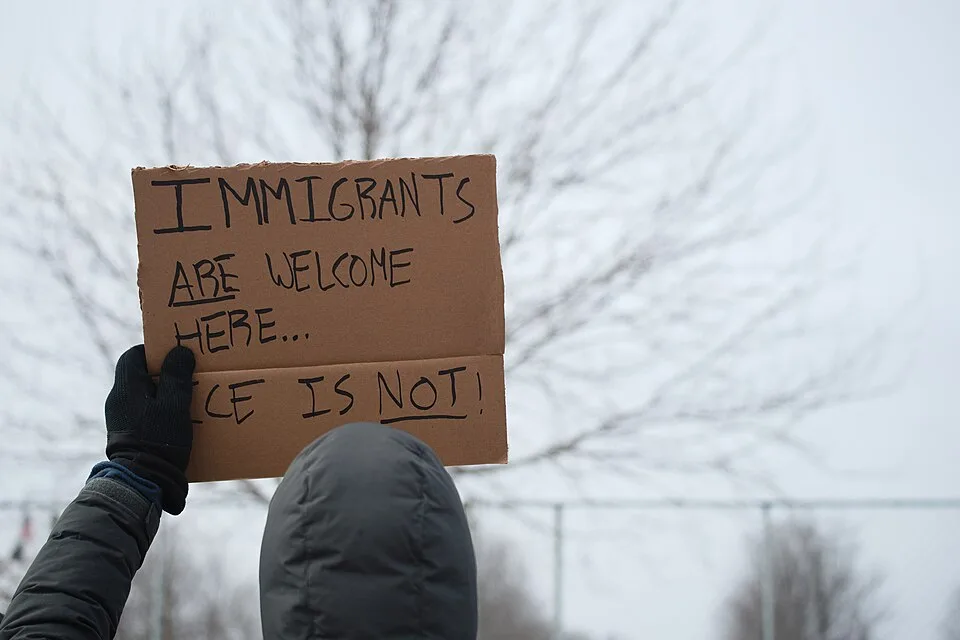
A damning new report documents 412 verified incidents of federal and local law enforcement misusing crowd control weapons on immigration protesters across the United States, resulting in blindings, traumatic brain injuries, and fractures. Physicians for Human Rights and the UC Berkeley Human Rights Center spent nearly a year tracking the carnage, and they say what they found is almost certainly just the tip of it. The true number of injuries, they warn, is "far greater."
What 'Less-Lethal' Actually Looks Like
Let's be precise about what we're talking about here. Teargas, pepper spray, rubber bullets, bean bag rounds, stun grenades, water cannons, and what the report calls "improvised" weapons, including horses and riot shields used as battering tools. These are the toys that federal and local law enforcement have been deploying against people protesting outside ICE detention centers and during immigration enforcement operations since June 2025.
The report, released this week by Physicians for Human Rights and the UC Berkeley Human Rights Center, documented 203 injuries from those 412 verified incidents. Blindings. Traumatic brain injuries. Lacerations. Fractures. Contusions. And that's only what researchers could confirm through visual investigative techniques, which, as the report notes, cannot adequately assess invisible injuries like chemical damage, chronic pain, or hearing loss.
So when you hear someone say "less-lethal," understand that term refers to the weapon's design intent, not its real-world consequences for the person whose eye it just destroyed.
Who Was Pulling the Trigger
Here's a number that deserves to be read twice. According to the report, Department of Homeland Security officials, meaning ICE and Customs and Border Protection agents, were responsible for 64% of all documented misuse incidents. Not local cops. Not state troopers. The federal government.
That said, local and state law enforcement were not sitting this one out. The Guardian reports that researchers flagged specific concern about jurisdictions like Los Angeles, where local officials piled on top of what federal agents were already doing. In New Jersey, this played out on camera for the entire country when ICE agents pepper sprayed Senator Andy Kim outside the Delaney Hall detention center in Newark, triggering weeks of escalating confrontations that left dozens of protesters injured.
The researchers defined "misuse" by three clear standards: targeting people in protected categories like journalists and healthcare workers, harming vulnerable populations including children and elderly people, and using the weapons improperly, whether that meant firing at close range, aiming at people's heads, or ignoring the manufacturer's own safety guidelines. On all three counts, the report found systematic, repeated violations.
The Bovino Effect
The report draws a direct line between incident spikes and the command tenure of Gregory Bovino, the former Border Patrol commander-at-large who became the face of the Trump administration's most aggressive immigration surge operations. According to Physicians for Human Rights, in each city where federal enforcement was ordered to escalate, incident counts rose sharply within days of Bovino's arrival.
Bovino's story has its own grim arc. After two US citizens were shot and killed by federal immigration officials in Minneapolis, he was removed from his position. He then turned on the administration that empowered him, accusing them of not being tough enough, and retired in March. The Guardian reports he is now a critic of the very crackdown he helped orchestrate. Make of that what you will.
DHS did not respond to the Guardian's inquiries about the report before publication. Which is also something you can make of what you will.
Children in the Chemical Cloud
If the adult casualty numbers haven't landed yet, sit with this one. A separate ProPublica report from earlier this year identified 70 children across the United States who had been harmed by teargas or pepper spray. Not just at protests. During immigration enforcement operations too.
Seventy kids. Gassed or sprayed. By American law enforcement officials, in America, in 2025 and 2026.
The lead author of the PHR and HRC report, Dr. Rohini Haar, told the Guardian she began working on it after seeing news coverage of a pastor being blasted in the face with a chemical weapon by a federal official in Oakland. That single image was enough to launch a year-long investigation that ultimately confirmed what a lot of people already suspected: this was not a series of isolated incidents. It was a pattern.
The Map They Built So You Can't Look Away
One of the most significant elements of this release is what PHR and HRC built alongside the report: an interactive map showing where these weapons were used, what kind, and against whom. The explicit purpose is to let readers see what happened in their own communities. That is a deliberate choice, and a smart one.
National outrage is easy to tune out. Discovering that federal agents deployed stun grenades two miles from your house is a different kind of confrontation with reality. The researchers want this information localized, specific, and impossible to dismiss as someone else's problem happening somewhere far away.
As Dr. Haar put it plainly to the Guardian: "Those weapons can cause harm. It's just when they're used, how they're used and if they're used." A year of data now answers all three of those questions, and none of the answers are good.
The Dingo Take
Here is the thing about calling something "less-lethal." It is a description of what the weapon is designed not to do, not a guarantee of what it will actually do when a federal agent fires a rubber bullet at someone's face from close range, or when a toddler at an immigration raid inhales a face full of pepper spray. Seventy children. Four hundred and twelve verified misuse incidents. Blindings. The government has been doing this for over a year at scale, in public, on camera, and DHS could not find the time to respond to a single question about it.
The involvement of federal officials in nearly two thirds of these incidents is not incidental. This is not a story about a few bad apples in local police departments losing their cool at a tense protest. This is the federal government of the United States systematically deploying chemical and kinetic weapons against its own citizens for opposing immigration policy, then escalating those operations in direct correlation with a commander-at-large who has since retired in a cloud of self-righteous grievance. That is a coherent, top-down policy choice. The report proves it.
DHS's silence in response to the Guardian's questions is its own kind of answer. When you have done nothing wrong, you say so. When 412 documented incidents of your agents blinding, brain-damaging, and gassing protesters, journalists, healthcare workers, and children are laid out in a peer-reviewed report with an interactive map, apparently you say nothing and hope everyone moves on to the next news cycle. Do not move on to the next news cycle.



Comments