
In 2015, Lindsey Graham called Donald Trump a jackass, Trump retaliated by reading Graham's personal cell number aloud at a campaign rally, and somehow, improbably, those two men ended up as the most consequential foreign policy duo in recent Republican history. Graham died Saturday, hours after returning from his tenth trip to Ukraine, still working a Russia sanctions bill, still pushing Saudi-Israel normalization, still convinced the administration had unfinished business with Iran. The man never stopped.
The Rivalry That Should Have Stayed a Rivalry
Let's be clear about how absurd this origin story is. Graham ran against Trump in the 2016 primary and got demolished. Trump, being Trump, didn't just beat him — he humiliated him by turning a campaign rally into a prank call session, reading Graham's private cell number to thousands of screaming supporters. It was petty, juvenile, and wildly effective. It was also, apparently, just the opening act.
After losing, Graham did something most politicians' egos would never allow. According to Fox News, he looked at the results, admitted Trump understood the American public better than he did, and decided to make himself useful. That's either an extraordinary display of pragmatism or a complete abandonment of principle, depending on how charitable you're feeling. Possibly both.
How You Build Influence in the Trump Era: Show Up and Never Shut Up
Graham's strategy was almost offensively simple. He showed up. Constantly. Fox News reports that Trump himself told reporters, "He would call me all the time. I'd say, 'Stop calling me, Lindsey.'" That's not the description of a peer relationship. That's the description of a very persistent, very well-informed lobbyist who happened to have a Senate badge.
But it worked. Retired four-star general Jack Keane, chairman of the Institute for the Study of War, told Fox News Digital that Graham made a conscious decision to offer the president advice and counsel, and that it grew into both a personal and professional relationship. Keane's assessment of why it worked is damning in the most instructive way: "Graham knew the world better than almost anyone in Washington, and he likely knew many foreign leaders better than President Trump's own appointees."
Read that again. Better than the president's own appointees. Graham essentially became an unofficial secretary of state operating out of a Senate office, and he got there by being relentlessly, exhaustingly present.
Ten Trips to Ukraine and a Stalled Sanctions Bill
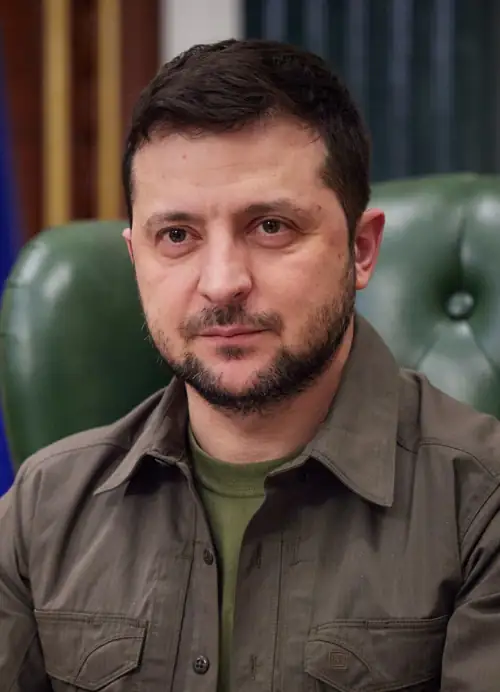
Graham completed his tenth trip to Ukraine shortly before his death. Ten trips. While most senators were back home doing constituent services events and ribbon cuttings, Graham was in Kyiv, maintaining what Fox News describes as a tight personal relationship with President Volodymyr Zelenskyy. He had similar relationships with Israeli Prime Minister Benjamin Netanyahu, NATO Secretary-General Mark Rutte, and various Gulf leaders.
In the hours before he died, Fox News reports, Graham told a confidant he wasn't feeling well but joked he couldn't die yet because he still had work to do. The work in question: a bipartisan Russia sanctions bill he was trying to push through the Senate, ongoing Saudi-Israel normalization talks, and what he believed was unfinished business confronting Iran. He reportedly refused medical help before a scheduled television appearance. The man was, by any measure, completely incapable of stopping.
A Hawk Flying in an 'America First' Wind
Here is the tension at the center of Graham's legacy, and it's a real one. Graham was a product of a different Republican foreign policy tradition entirely. He built his worldview traveling the world with John McCain and Joe Lieberman — the so-called "Three Amigos" — championing American military leadership, democratic alliances, and confronting authoritarian adversaries. That's the framework he never really abandoned.
Fox News reports that Graham publicly disagreed with Trump over Iran, preferring strikes and regime change over negotiation, and repeatedly pushed for a harder line against Russia. Those positions put him closer to the pre-Trump GOP establishment than to the president's instincts. So the real question, the one that Graham's death leaves permanently unanswered, is this: was he actually shaping Trump's foreign policy decisions, or was he a hawk in an advisory role that the president ignored whenever it was inconvenient and cited whenever it was useful? Nobody outside the Oval Office knows the answer to that, and we probably never will.
What Trump Said, and What It Means
Trump described Graham as "like a member of the family" and told Fox News he was among the last people to speak with the senator after Graham returned from Ukraine. That's a significant thing to say about a man you were publicly feuding with a decade ago. Whether it reflects genuine grief or the Trump tendency to retrospectively lionize everyone he's lost access to is, again, a question with no clean answer.
What is clear is that Graham's death removes one of the few remaining figures in Washington who had both the access and the institutional knowledge to push back on Trump's foreign policy impulses from the inside. His office had become, as Fox News describes it, an unofficial waypoint for foreign leaders trying to understand or influence the Trump administration. That waypoint is now closed. The foreign leaders who used to call Graham's office will need to find another door.
The Dingo Take
The Lindsey Graham story is genuinely complicated, which is not something you get to say about many figures in modern American politics. He was a hawk who chose to orbit a president with deeply conflicting instincts about American power abroad. He was a man of obvious principle who swallowed enough of his pride to become useful to someone who had publicly humiliated him. Whether that makes him a pragmatist or an institutionalist or just someone who loved the work more than he loved being right is a legitimate debate.
What is not debatable is that the American foreign policy apparatus just lost someone who knew where the bodies were buried on every continent, maintained personal relationships with heads of state that took decades to build, and was willing to get on a plane to Ukraine for the tenth time when most of his Senate colleagues were struggling to name the foreign minister. That is genuinely hard to replace. The bipartisan Russia sanctions bill he was pushing dies with him unless someone picks it up fast. The Saudi-Israel normalization push loses its most aggressive advocate. The pressure campaign on Iran loses a voice that was, if anything, more hawkish than the administration itself.
The 2015 version of Graham would have told you that Donald Trump was a disaster waiting to happen. The 2026 version was one of the last people Trump talked to before Graham died. What happened in between is a case study in how Washington actually works, as opposed to how anyone pretends it works. The man called Trump a jackass, got his phone number read out at a rally, and spent the next decade becoming indispensable anyway. That is either the most depressing or the most instructive political story of the last ten years. Probably both.

Comments