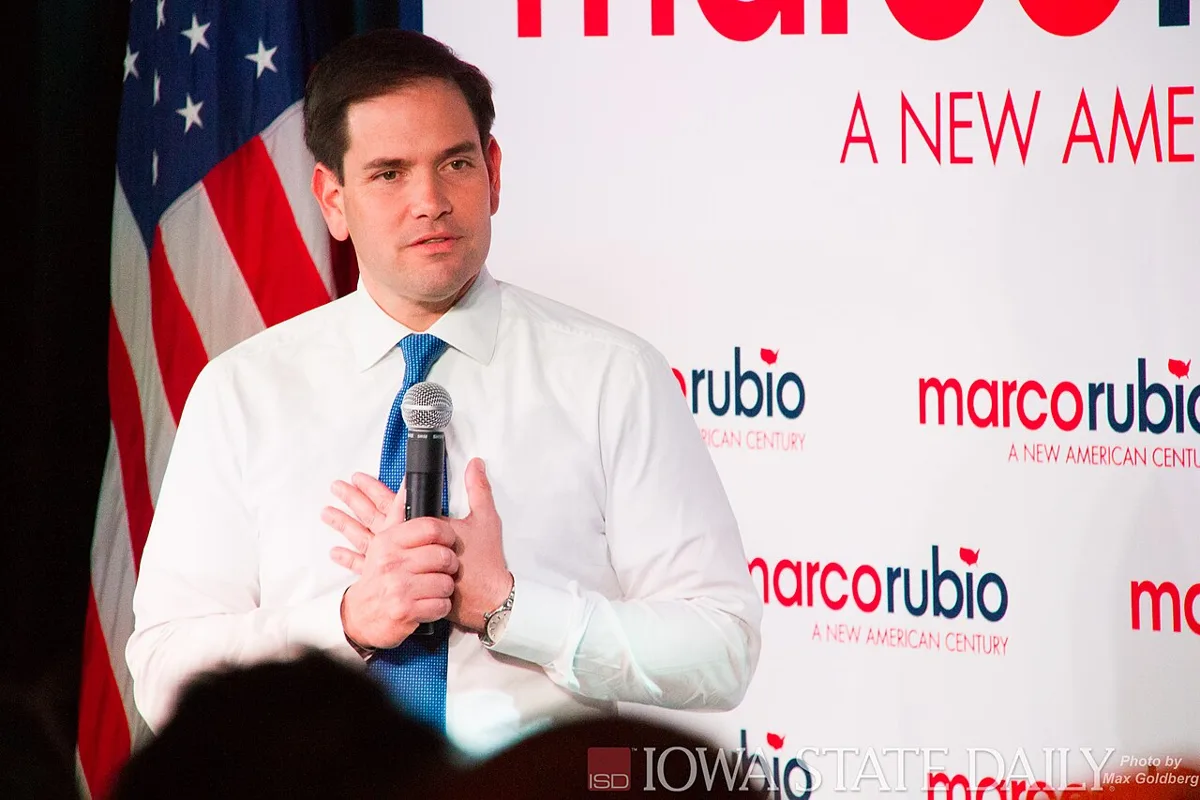
Marco Rubio wants to destroy the world's war crimes tribunal, and he's not being subtle about it. The Secretary of State published a full op-ed in the Wall Street Journal on Monday declaring his intention to 'dismantle' the International Criminal Court, backed by threats of sanctions against any country that doesn't get on board. The reason he gave is that the court might one day drag American Border Patrol agents before foreign judges. The reason experts gave is considerably less flattering.
The Pitch, and Why It Falls Apart Immediately
Rubio's argument, laid out in the Wall Street Journal and a companion video posted to X, is that the ICC poses an existential threat to American sovereignty. He conjured images of US Border Patrol agents and elected officials being hauled before international judges and imprisoned for, in his words, 'the so-called crime of defending their own country.'
There is one fairly significant problem with this framing. The ICC cannot do any of that. The court, headquartered in The Hague, only has jurisdiction over crimes committed in countries that have ratified the Rome Statute, the 2002 treaty that created the court. The United States has not ratified it. The court has not opened investigations into crimes committed on American soil. The scenario Rubio described is, according to three international legal experts who spoke to The Guardian, not how the ICC works at all.
'The ICC is not claiming jurisdiction over conduct in the United States,' Kenneth Roth, former executive director of Human Rights Watch, told The Guardian. What the court does have jurisdiction over is crimes committed on the territory of countries that have accepted it. Countries like Afghanistan. Countries like Palestine.
What This Is Actually About
Roth was direct about what he thinks Rubio's campaign is really chasing. 'Trump wants to be able to commit war crimes on the territory of countries that have accepted the court's jurisdiction,' he told The Guardian. 'That's what this is about.'
The ICC has an active investigation into US service member conduct in Afghanistan. It has issued arrest warrants for Israeli Prime Minister Benjamin Netanyahu and Defense Minister Yoav Gallant over their conduct in Gaza. Palestine has consented to ICC jurisdiction over its territory. Six weeks into his second term, Trump declared a 'national emergency' over what he called the court's 'illegitimate and baseless actions targeting America and our close ally Israel,' and slapped sanctions on the chief prosecutor, two deputies, and six judges.
The administration spent all of 2025 expanding that sanctions regime, piling on penalties against a UN human rights official and three Palestinian human rights groups involved in documenting potential Israeli war crimes. Monday's announcement is less a new policy than it is an escalation of one that's been running for over a year.
The Actual Plan, Such As It Is
According to CNN, the State Department's strategy to 'dismantle' the ICC involves pressuring other nations to abandon the court. 'Nations that refuse to reject the ICC's false authority while relying on US assistance are likely to come under increased scrutiny,' an unnamed official told CNN, with possible punishments including sanctions, travel bans, and visa revocations. In other words: abandon the war crimes tribunal, or we will punish you.
A former senior US government sanctions official, speaking anonymously to The Guardian due to the political sensitivity of the matter, said there are rumors the Trump administration may sanction the ICC as a whole. If that happens, Americans would be banned from working with the court, and American companies, staff, or banks could face financial penalties or jail time for doing business with it. 'It gives you the sense that this is a pre-emptive campaign against any action the ICC might be considering vis-a-vis Venezuela or elsewhere abroad,' the former official said.
The Hypocrisy the Administration Didn't Think You'd Notice
Here is a fun detail. When the ICC has gone after Russia for war crimes committed in Ukraine, a Rome Statute signatory, the Trump administration was quite enthusiastic about the court's authority. The concept of international criminal justice is apparently fine when it targets adversaries and not so fine when it comes anywhere near US allies or US personnel.
This is not a subtle inconsistency. It is the whole point. The administration is not opposed to the ICC as an institution. It is opposed to the ICC as an obstacle. Raed Jarrar, advocacy director at Dawn, put it plainly in a statement to The Guardian: 'It is not the ICC that Rubio is dismantling brick by brick, but the rules-based international order that grew out of the ashes of World War Two.'
What Experts Are Actually Warning
Beyond the Afghanistan and Palestine investigations, the ICC is currently active in Sudan, Ukraine, and elsewhere. A successful US pressure campaign to fracture the court's membership or strangle it financially would have consequences far beyond whatever the administration is trying to protect.
Roth told The Guardian that Rubio is 'dressing up his quest for impunity for American war crimes under the label of national sovereignty, which ignores the sovereign right of other nations to invoke the ICC for crimes committed on their territory.' Jarrar went further, suggesting that actively sabotaging an ICC prosecution could itself constitute obstruction of justice under the Rome Statute. Whether anyone could actually enforce that charge against a US official is another question entirely, which may be precisely the point.
The Dingo Take
Let's be clear about what is happening here. The Secretary of State of the United States published a major op-ed in a national newspaper calling for the destruction of the primary international institution that exists to prosecute genocide and war crimes. His reason, stripped of the sovereignty language and the border agent imagery, is that the court is investigating things the US and Israel did, and the administration would prefer it didn't.
This is not a legal argument. It is not even really a political argument. It is a protection racket with a passport. 'Nice international justice system you've got there. Would be a shame if your foreign aid got cut.' The fact that the administration cheered ICC jurisdiction over Russian war crimes while systematically dismantling the court for daring to look at American and Israeli conduct is not a contradiction they are trying to hide. It is the whole strategy, stated in public, daring anyone to do something about it.
The rules-based international order has always been somewhat aspirational, applied inconsistently and propped up by selective enforcement. But there was at least a pretense that the rules applied to everyone. What Rubio is proposing to formalize is the opposite: a world where accountability is for your enemies, and impunity is for your friends. History has a word for that arrangement. It is not 'sovereignty.'



Comments