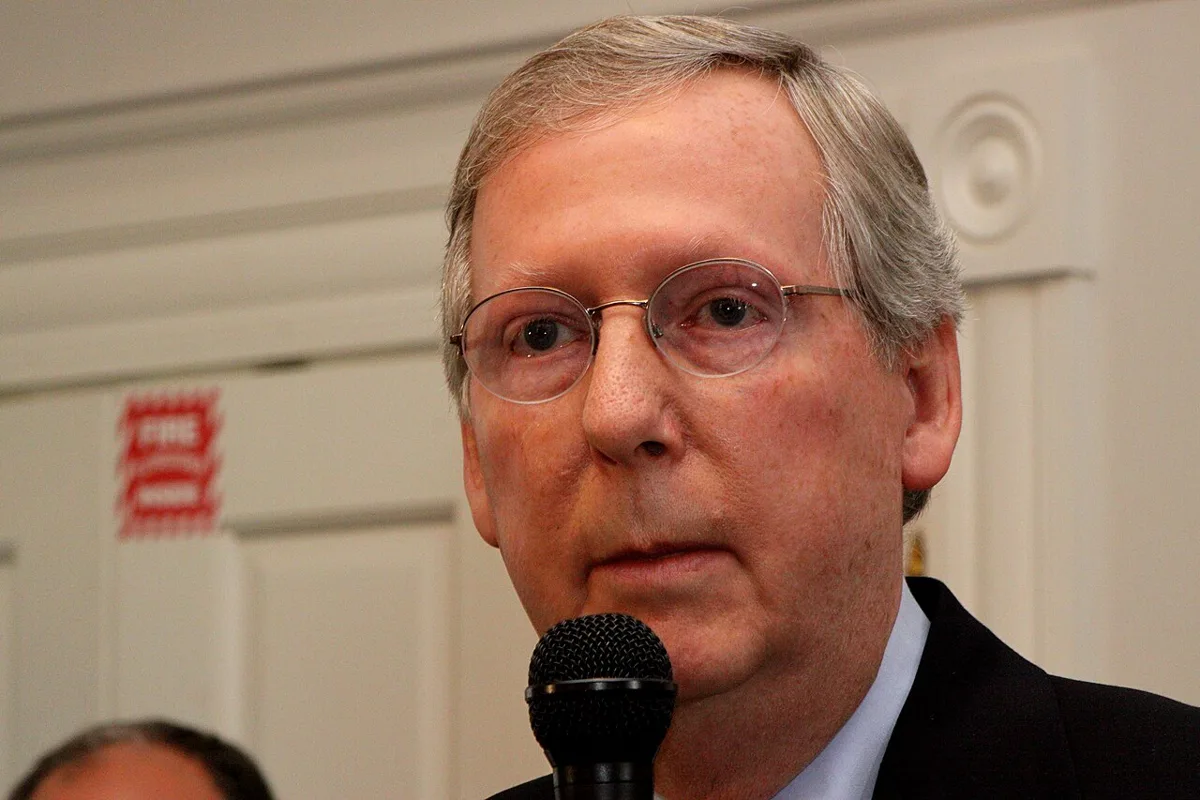
One senator and one congressman disappeared from their jobs for months, told nobody why, and the American public was just supposed to be cool with that. They were not cool with that. Now, finally, someone in Washington has introduced a bill that would require members of Congress to actually explain themselves when they vanish, which, again, should not have required a bill.
Let's Recap the Disappearing Acts
Here's what happened. Rep. Tom Kean Jr., a Republican from New Jersey, missed nearly four months of House votes. Four months. No explanation was offered to his constituents, to the press, or to anyone who might have noticed that their elected representative had stopped showing up to the job they pay him to do. He revealed last month, according to Axios, that he had been hospitalized for depression.
Then there's Mitch McConnell, who at this point has had more unexplained public freezes and absences than a malfunctioning animatronic. The Kentucky senator broke his silence recently about a week-plus disappearance, per Axios, which was itself only the latest in a series of episodes that his office had stonewalled reporters about for years.
Two powerful men. Months of silence. Zero transparency. And nothing about it was technically illegal, which tells you everything you need to know about the ethics framework Congress built for itself.
So Someone Wrote a Bill. Good. Also: Why Did This Take This Long?
The prolonged absences of both Kean and McConnell have inspired a new piece of legislation that would force members of Congress to provide more information when they go AWOL, Axios reports. The bill is a direct response to what has become an intense national debate over how much federal lawmakers actually owe the public when it comes to their health and availability.
The debate is legitimate. These are people who vote on legislation that affects every American. They collect federal salaries. They hold committee seats. They have staff, offices, and constituents who depend on them to be present and functioning. The idea that they get to simply not show up for months with no explanation is not a quirk of the system. It is a failure of the system.
The fact that it took two high-profile vanishing acts to get here is its own kind of indictment. This wasn't some gray area. Members of Congress have been getting sick, aging out of coherence, and quietly stepping back from their duties for decades while their offices issued non-answers and the press was expected to politely look away.
The Health Privacy Argument Is Real, and It Doesn't End the Conversation
Look, no one is arguing that Mitch McConnell owes America a live-streamed MRI. Health is personal. Mental health carries stigma that is real and harmful, and Kean's disclosure about his hospitalization for depression took genuine courage in a political culture that still treats mental illness as weakness.
But there is a difference between privacy and deception by omission. A private citizen gets to handle their health however they choose. A sitting senator or congressman is not a private citizen in the relevant sense. They accepted a public role with public obligations. When that role goes unfilled for weeks or months, the public has a legitimate interest in knowing why, or at the minimum, whether it is being filled at all.
The question the new bill seems designed to answer is: what is the minimum? What do voters actually have a right to know, and when? That is not an unreasonable thing to legislate. The opposition to it, when it comes, will be loud and dressed up in the language of dignity and privacy. Watch for that. It will mostly be about avoiding accountability.
What the Bill Would Actually Do
Axios is reporting that the legislation would require members of Congress to disclose more information when they are absent, though the full text and specific requirements were not published at time of reporting. The details matter enormously here. A bill that requires vague disclosure on a loose timeline is nearly useless. A bill with teeth, specific timelines, minimum information thresholds, and real consequences for non-compliance, is a different animal entirely.
Congress has a long and distinguished history of passing ethics reforms with so many carve-outs and loopholes that they function mainly as press releases. The incentive structure runs the wrong direction: the people writing the rules are the same people who benefit from weaker rules. That is not cynicism. That is just how this works.
So the bill is a start. Whether it stays a start or becomes something that actually changes behavior depends entirely on whether the members voting on it are willing to apply real standards to themselves. Recent history suggests we should not hold our breath, but we should absolutely hold their feet to the fire.
The Bigger Picture Nobody Wants to Talk About
McConnell is 84 years old. Kean is 55 and was hospitalized for months. These are not isolated incidents. They are part of a pattern in a legislative body where the average age has been climbing for decades and where the informal norm has long been to keep health struggles out of the public record for as long as humanly possible.
This is a structural problem dressed up as a series of individual scandals. Congress has no real mechanism for addressing incapacity short of resignation or the 25th Amendment equivalent that doesn't exist for legislators. Members can miss months of votes and face no formal accountability whatsoever. Their offices can stonewall, their colleagues can cover, and the whole machine keeps moving as if nothing happened.
Voters in Kentucky and New Jersey found out what their representatives were going through after the fact, from press releases, not from any formal obligation to disclose. That is not a functioning democracy. It is a performance of one.
The Dingo Take
Here is the uncomfortable truth sitting at the center of this story: the only reason this bill exists is because two men powerful enough to have shaped American policy for decades went dark, and enough people got angry enough, loudly enough, that someone finally felt obligated to do something. That is not a success story. That is what it looks like when the minimum bar is on the floor and someone still had to point it out.
Kean's disclosure about depression is worth taking seriously on its own terms. Mental health crises are real, they do not follow congressional calendars, and the stigma around them kills people. None of that is funny. What is galling is the secrecy, the assumption that constituents don't deserve to know their representative is incapacitated, the weeks and months of nothing while offices issued non-answers and the press waited politely. That part is not a mental health story. That is an accountability story.
McConnell has been doing a version of this for years. Freezing on camera. Disappearing. His office batting away questions like they were personal affronts. He is one of the most powerful people in the history of the United States Senate and the American public has been functionally lied to about his condition through silence and misdirection for a long time. If this bill passes with real requirements and real consequences, great. If it passes as a fig leaf, which is the way to bet, then we will be writing this same article again in four years about whoever disappears next. Different name, same story.




Comments