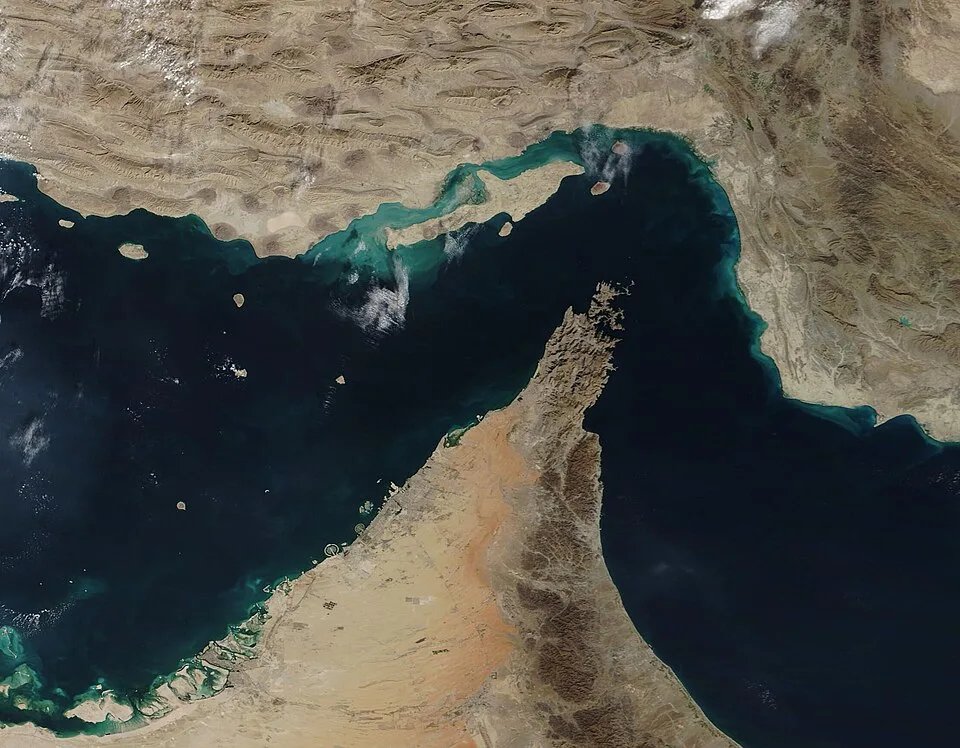
Donald Trump declared himself guardian of the world's most critical oil chokepoint on Monday, slapped a 20% fee on every ship that passes through it, and then un-slapped it roughly 24 hours later because some Gulf state leaders called him. The replacement plan is 'trade and investment deals' that Trump describes as 'MASSIVE' but has provided absolutely zero details about. Meanwhile, the US military has spent three straight nights bombing Iran, oil prices are spiking, and a naval blockade of Iranian ports went live Tuesday afternoon Eastern Time.
How We Got Here: Bombs, Blockades, and a Toll Booth Nobody Asked For
Back on February 28, the US and Israel launched strikes against Iran. Tehran responded by effectively shutting down the Strait of Hormuz, which previously handled roughly 25% of the world's oil and 20% of its liquefied natural gas. Tanker traffic has slowed to a two-month low, according to shipping data, and the benchmark Brent Crude price has risen sharply as a result.
Fast forward to this week. The US has now conducted three consecutive nights of strikes targeting Iran's ability to threaten shipping in the area. Iran's state media reported explosions in multiple cities Tuesday, including Bushehr, which is home to a nuclear power plant. Tehran, for its part, claimed it struck US military facilities in Bahrain and Jordan, and also hit two United Arab Emirates tankers. So: a lot is happening.
Into this geopolitical fire, Trump on Monday decided to pour the accelerant of a brand new idea: a 20% fee on all cargo shipping through the Strait of Hormuz, payable to the United States for the service of, in Trump's words, protecting it. He also announced the US was reimposing its naval blockade on Iranian ports, set to take effect at 4 PM Eastern on Tuesday. Bold moves, all of them. Some of them lasted less than a day.
The Fee That Wasn't
Here is a precise timeline of Trump's Hormuz toll policy: Monday, he announced it. Tuesday, he killed it. That's the whole timeline.
In a Truth Social post, Trump wrote that he had decided to replace the 20% fee with 'Trade and Investment Deals that the various Gulf States will be making into the United States,' adding that 'Those Investments will be MASSIVE but, at the same time, extraordinarily good for them, and their future.' He provided no further details, because of course he didn't.
Speaking later after meeting with new Iraqi Prime Minister Ali al-Zaidi, Trump explained that he doesn't 'like the concept of a fee' but also that it's 'not fair' the US is protecting the Strait for the entire world. He said he changed his mind after receiving numerous calls from Gulf leaders. So the policy of the United States regarding a critical global waterway in an active conflict zone got reversed because Trump's phone rang a few times. Tremendous governance.
What Trump Says Is Happening vs. What Is Actually Happening
Trump's Truth Social post also declared that the Strait 'is open to ALL Ship traffic except for Iran' and that 'oil is flowing like never before, thanks to the awesome Power of the United States Military.' The BBC reports that shipping data shows traffic through the Strait has slowed to a two-month low. Those two things are not compatible with each other.
The blockade of Iranian ports did go into effect as scheduled, per US Central Command. That part of the plan survived. The 20% toll on everybody else? Gone. Replaced by deals that are, per the president, massive, but also currently imaginary in the sense that no terms, no signatories, and no amounts have been disclosed to the public or, seemingly, anyone.
Iran Hits Back, Israel Warns, and the Region Does What It Always Does
While the toll drama was playing out, the actual shooting war was continuing at pace. BBC News reports that Iran targeted US military facilities in Bahrain and Jordan, on top of striking those two UAE tankers. The US military says its strikes are aimed at degrading Iran's capability to threaten shipping, which is the kind of mission statement that could plausibly keep a military busy for a very long time.
Israeli Prime Minister Benjamin Netanyahu also weighed in Tuesday with a video statement warning that Israel's retaliation against Iran would be 'much more powerful' if Iran attacks first. Which is either a deterrence message or a provocation dressed up as a deterrence message, depending on your read of the region. Iran accuses the US of interfering in its management of the Strait of Hormuz. The US position is that Iran does not get to manage the Strait of Hormuz anymore. One of these positions is going to have to give.
What a 20% Hormuz Toll Would Have Actually Meant
It is worth spending a moment on how catastrophically bad the toll idea was before we let it slip quietly into the grave Trump dug for it. The Strait of Hormuz is not a parking garage that one country owns. It is an international waterway through which Japan, South Korea, China, India, and essentially all of Europe's energy supply passes at various points. Slapping a 20% US fee on that traffic would have triggered an immediate and furious diplomatic response from every US ally with an economy that runs on imported energy, which is most of them.
The fact that Gulf state leaders called Trump and the policy evaporated within 24 hours suggests those conversations were not warm congratulations. It also suggests that Trump's advisors either did not think through the implications before he posted on Truth Social, or they did and he posted anyway. Neither option is particularly reassuring when you are in the middle of an active military conflict.
The Dingo Take
Here is what the last 48 hours in US foreign policy actually looked like: The president announced a 20% unilateral toll on the most strategically important waterway in the world, got some phone calls, and deleted the policy. Simultaneously, the US military is on its third night of strikes against a country that has nuclear facilities and regional proxies with missiles. A naval blockade of Iranian ports went live Tuesday. Oil prices are climbing. Tanker traffic is at a two-month low. And the official public explanation for the investment-deals-instead-of-a-fee pivot is essentially 'the Gulf guys called and it seemed fair.'
There is no coherent strategic framework visible here. There is a man posting on Truth Social in capital letters about MASSIVE deals that do not yet exist, while the military conducts operations that could spiral in about fifteen different directions, in a region that has a well-documented history of spiraling. The blockade is real. The strikes are real. The oil price spike is real. The fee that was going to pay for all of this lasted less than a news cycle.
If you are keeping score at home: the US is now in an active military conflict with Iran, has reimposed a naval blockade, is bombing Iranian cities including one with a nuclear power plant, and the financing plan for protecting the Strait is currently 'deals, trust me, huge ones.' Sleep well.




Comments