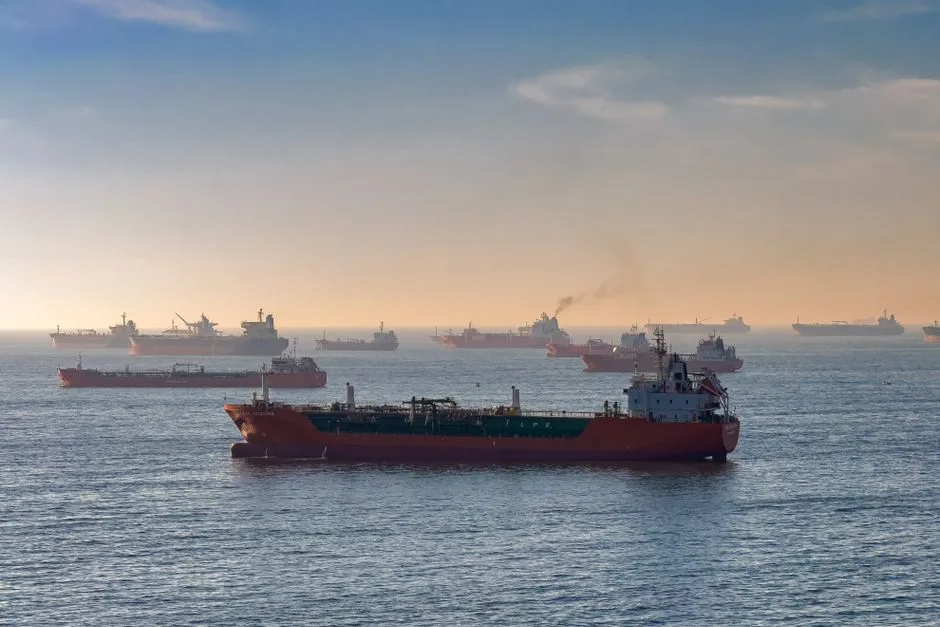
Donald Trump went on Truth Social Monday morning to announce that the United States would 'probably run' the Strait of Hormuz and charge foreign ships a 20% fee to pass through it, like a tollbooth on a waterway America does not control. That same evening, he insisted the strait is open and the U.S. has made 'significant progress.' Military experts, war-gamers, and people who have spent their careers studying exactly this kind of conflict would like a word.
What Trump Is Claiming vs. What Is Actually Happening
Let's be precise about what Monday looked like, because it was a lot. Trump posted on Truth Social that the U.S. is reinstating what he called 'THE IRANIAN BLOCKADE,' stopping Iranian ships and their customers from entering or leaving Iranian ports while guaranteeing 'fair and open use' of the strait to everyone else. He then said the U.S. would impose a 20% fee on cargo shipments passing through.
That's a remarkable set of claims to make about a waterway that 20% of the world's oil normally flows through, and that Iran has insisted it controls. Commercial shipping has been avoiding the traditional route for weeks out of fear of Iranian mines. Ships have been rerouting along the coast of Oman under U.S. drone and aircraft overwatch. That is not, by any reasonable definition, an open strait.
By Monday evening, Trump had pivoted to reassurance mode. 'The strait is open. It will be open,' he told reporters. Iran, for its part, vowed to fight back against any U.S. interference. So we have a president saying the strait is open, Iran saying it will resist, and tanker captains choosing the long way around. You can decide who to believe.
The People Who War-Gamed This Are Not Reassured
Jason Campbell spent years at RAND running war-game simulations of U.S. military conflict with Iran before becoming a senior fellow at the Middle East Institute and a former Pentagon official. He is, in other words, exactly the kind of person you want to listen to right now, and what he is saying is not great.
'Iran has been preparing for this type of asymmetric conflict for decades now,' Campbell told CBS News. 'I think they're starting to demonstrate why no other U.S. president since Reagan has elected to engage at this level of conflict with Iran, because they have that ability to completely disrupt the Strait of Hormuz.'
The specific problems are worth spelling out. Iran produces weapons components across dispersed facilities specifically to survive airstrikes. Its military units are authorized to act without waiting for orders from Tehran, which means there's no central command to decapitate. They don't mass in one place. Drones and missiles get hidden across a country that is, CBS News points out, a third the size of the continental United States. Airstrikes, the thing Trump has been using, are not built for this problem.
The Ground Troops Math Is Brutal
Here is the number that should be dominating every conversation about this conflict: tens of thousands. That is how many U.S. troops Campbell says would be required to actually secure the Strait of Hormuz, not symbolically, not rhetorically, but functionally. Enough troops to destroy hidden munitions caches, enough to secure hundreds of miles of Iranian coastline, enough to hold large swaths of inland territory against what would almost certainly be an active insurgency.
'It's very difficult to envision any scenario where you could satisfactorily secure the Strait of Hormuz absent ground forces,' Campbell told CBS News. Standing that force up would take months and come with, in his measured words, 'very high costs.' That's former Pentagon official for 'this would be catastrophic and expensive in ways that are difficult to fully describe in polite company.'
For reference: the Iraq War at its peak involved roughly 170,000 U.S. troops and took about 20 years to not resolve. Iran has a larger population, more sophisticated weapons, and has specifically spent decades preparing to fight this kind of war. The math is not encouraging.
The Navy Option Isn't Much Better
The other path experts discuss is a massive naval escort operation, essentially doing what the U.S. did in the 1980s when it escorted Kuwaiti oil tankers through the strait during the Iran-Iraq War. Michael Eisenstadt, who directs the Military and Security Studies Program at the Washington Institute for Near East Policy and is a former U.S. military analyst, walked CBS News through why that comparison should not make anyone feel better.
The U.S. Navy is smaller now than it was in the 1980s. Iran's capabilities are dramatically more advanced, including drones and missiles that have already been used in the current conflict. 'You'd still need a very large chunk of the U.S. fleet being dedicated to this on an open-ended basis,' Eisenstadt said. And an escort operation doesn't eliminate the threat, it just means American sailors are positioned between Iranian weapons and the tankers those weapons are aimed at.
Eisenstadt was direct about where that leads. Clearing anti-ship drone and missile launch sites would probably require putting American troops ashore. Putting troops ashore while also running escort operations means more exposure. More exposure means, as he put it, U.S. service member casualties 'can go up.' That's the polite version.
The Political Clock Is Ticking Too
Eric Lob, a nonresident scholar at the Carnegie Endowment for International Peace's Middle East program and a professor at Florida International University, framed the larger strategic picture to CBS News in a way that cuts to the core of what Trump is actually facing. 'It's really a kind of test of wills to see how much economic pain the Iranians are willing to absorb and then how much economic pain and even political liability this could be for Trump and the Republicans heading into November,' Lob said.
Oil prices are rising again. Gas prices are high. The war is unpopular with a significant chunk of Americans. The midterms are coming. Trump went into this conflict, CBS News reports, believing the situation was moving toward resolution, and now he is watching renewed escalations and markets responding badly to all of it. That is a problem that airstrikes and Truth Social posts cannot fix.
The 20% strait toll idea, which is extraordinary even by the standards of this administration, has not been elaborated on in any detail. It's unclear how exactly the U.S. would collect fees from cargo ships passing through water Iran also claims to control, or what legal authority that rests on, or who exactly agreed to any of this. It has the feel of something announced before anyone checked whether it was possible.
The Dingo Take
Let's state the obvious: the president is telling the American public that a major military objective is accomplished while his own military's analysts are on the record saying it would take tens of thousands of ground troops and months of buildup to actually accomplish it. Those are not compatible statements. One of them is true. The other one is what gets posted on Truth Social.
What is actually happening in the Strait of Hormuz is a slow-motion demonstration of everything experts warned about before this war started. Iran has spent decades specifically preparing to make this kind of conflict unwinnable at a cost the United States is willing to pay. They have done the reading. They ran their own war games. And now the U.S. is discovering, in real time and in public, that 'maximum pressure' and airstrikes are not the same thing as strategic victory over a country that has been preparing for exactly this fight since before most of Trump's cabinet was in politics.
The midterms are in November. Gas is expensive. The strait is not open in any meaningful sense. And the people who actually know how to secure it are telling anyone who will listen that the price tag, in money, ships, and American lives, is one this country has not come close to agreeing to pay. At some point the gap between what the president is saying and what is actually happening has to close. It always does. The only question is what it costs when it does.




Comments