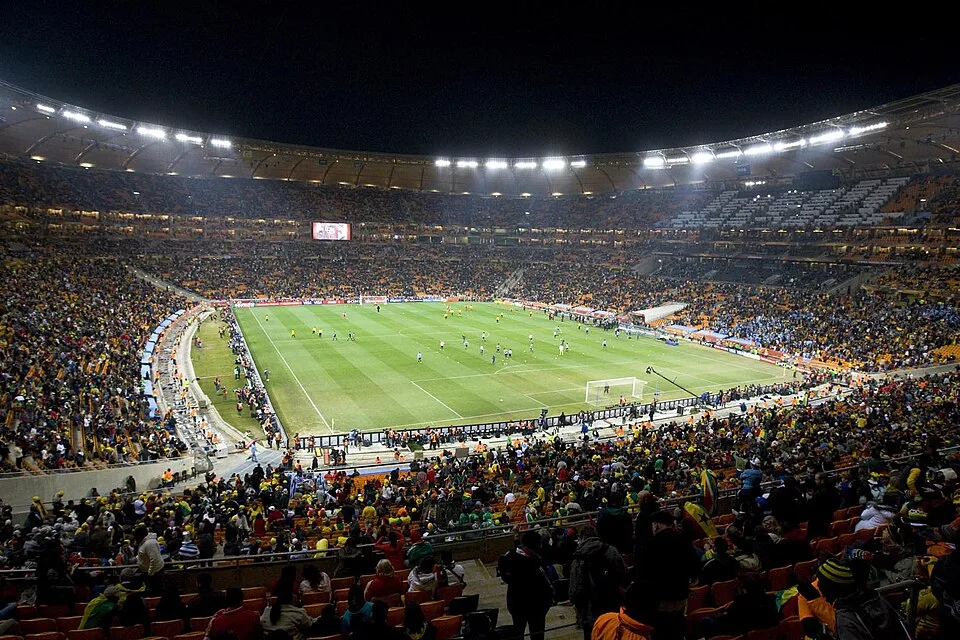
The FIFA World Cup semifinals kick off Tuesday, and the soccer gods have already played their cruelest trick: the two best teams in the world are meeting before the final. France vs. Spain in Arlington, Texas is the match everyone wanted to see on Sunday in New Jersey, and instead we're getting it in round four. Somewhere in Zurich, a tournament bracket is laughing at all of us.
France vs. Spain: A Final That Isn't
Spain enters Tuesday unbeaten in their last 36 matches, one win away from tying Italy's all-time international record, according to the New York Post. They have conceded exactly one goal in six World Cup games. One. In six games. Against teams that qualified for the biggest tournament on the planet.
France, meanwhile, has scored 16 goals in those same six games, second only to Argentina in the entire tournament. They've won five of their six matches by two goals or more. Didier Deschamps' squad is playing in their third consecutive World Cup semifinal, and a win Tuesday would cement an argument that this French generation is the greatest international dynasty the sport has ever produced. No pressure.
Spanish coach Luis de la Fuente put it as plainly as anyone Monday, telling reporters the France matchup "could be a World Cup final-before-the-final." He's right. Oddsmakers see almost nothing separating these two, with France installed as a slight favorite, and whoever wins Tuesday becomes an even bigger favorite in the final against either England or Argentina. The bracket has essentially handed one of these two teams the trophy already. The Sunday final in East Rutherford is almost a formality.
Mbappé vs. Yamal, or: What Happens When Unstoppable Meets Immovable
As NPR describes it, this is a classic "unstoppable force meets immovable object" situation. France has the attack. Spain has the defense. Something enormous has to give.
Kylian Mbappé leads all scorers at this World Cup with eight goals. Ousmane Dembele has added five. Michael Olise leads the entire tournament with five assists. France's front three is not a front three, it is a controlled demolition crew that shows up in a hard hat and leaves through a hole in the wall. The only question mark is Mbappé's ankle, which he appeared to hurt leaving France's quarterfinal against Morocco in the 77th minute. He told reporters Monday it was "minor." His coach said he'd be 100 percent. His teammate Warren Zaïre-Emery told NPR that in these moments, "he knows how to play. And it's true he does not want to lose against Spain."
On the other side, 19-year-old Lamine Yamal turned a year older on Monday and has spent this World Cup being slightly less than the transcendent force he was at Euro 2024, still working back from a hamstring issue. He has one goal in six games. His coach is not worried. "The big day from Lamine is yet to come in this World Cup," de la Fuente told reporters, "so I hope tomorrow is his day." Yamal, for his part, was not feeling humble. "If France should fear anyone, it's us," he told the New York Post after Spain beat Belgium. "I think we're the two best teams at the World Cup." He's 19 years old and completely unbothered. It's genuinely terrifying.
The Chess Match at 100 MPH
The tactical setup here is almost too clean. Spain wants the ball. France wants the space that chasing the ball creates. The New York Post described Spain's midfield, built around Dani Olmo, Rodri and Pedri, as suffocating opponents "like an anaconda strangles its prey." Spain's fullbacks stretch the field. France's forwards wait. One misplaced pass and Mbappé, Dembele and Olise are running at open space like three Ferraris somebody left the keys in.
De la Fuente told reporters Spain needs to "be careful with France's counterattacks. Their transitions are very devastating." He said it with the measured calm of a man who has watched the tape and found something that concerned him. Spain will also play with one less day of rest than France, a fact that midfielder Alex Baena addressed directly, per the New York Post: "We knew before the World Cup what we signed up for. When you get closer to the end your legs can feel it a little, but these are not excuses." Good. No excuses. Just a semifinal that should be the final, played indoors in Dallas, under a roof, in what may be the single greatest soccer game of the last several years.
Argentina vs. England: History, Messi, and 60 Years of Hurt
Wednesday's match in Atlanta has its own gravitational pull, even if it's playing second fiddle to the France-Spain spectacle. Argentina are the defending World Cup champions, having lifted the trophy in 2022. England's last title was 1966. Sixty years. The sport was invented in England. They have won it once. Their entire national soccer identity is basically a hostage situation that they've been locked inside since the summer Geoff Hurst scored a hat-trick.
England reached this point the hard way. NPR reports they survived a Round of 16 match against Mexico at the Azteca in Mexico City while playing with ten men after defender Jarell Quansah received a red card in the 54th minute. Quansah is suspended and misses the semifinal. They then beat Norway in the quarterfinal, holding superstar Erling Haaland scoreless. A win Wednesday would be the first time England has even reached a World Cup final since that 1966 triumph. Jude Bellingham and Harry Kane would be walking into legitimately uncharted territory for their generation.
Argentina, meanwhile, has been hanging on for dear life. Extra time against Cape Verde. A miraculous late comeback over Egypt. Extra time again to beat Switzerland. They have looked tremendous in flashes and terrifyingly fragile in others. Still, they have Lionel Messi, who is 39 years old and likely playing in his last World Cup, scoring eight goals and performing, as NPR notes, with his characteristic stroll through matches while everyone else around him jogs. He walks. They sprint. He scores. It defies physics. It defies time. It defies everything.
What Happens Next
France vs. Spain kicks off Tuesday at 3 p.m. ET in Arlington, Texas. Argentina vs. England is Wednesday at 3 p.m. ET in Atlanta. The final is Sunday in East Rutherford, New Jersey. Both semifinal matches are indoors, which at least spares us the spectacle of watching elite athletes wilt in summer Texas humidity.
Every match airs on FOX or FOX Sports 1. The world, essentially, will be watching. Spain and France have each won the World Cup in recent memory, Spain in 2010 and France in 2018. Argentina won in 2022. England won in 1966, which predates color television in most households. The stakes could not be more lopsided, narratively speaking.
The Dingo Take
Here is the part that should genuinely bother you as a sports fan: the two best teams in this World Cup drew a bracket that puts them in the same semifinal, meaning one of them is going home before the final. Spain or France will be watching Sunday from a hotel room. One of the best soccer teams assembled in a generation will exit before the championship match because of where a ball landed during a lottery draw in December. The tournament format expanded to 48 teams this cycle, adding more games, more chaos, more revenue, and apparently the chance to accidentally schedule what should be the final three rounds too early. FIFA giveth. FIFA also taketh away your ability to see the two best teams on the planet meet when it actually matters.
The Argentina-England side of the bracket is its own beautiful disaster. You have the greatest player in the history of the sport, at 39, possibly in his final appearance on this stage, against a country whose entire relationship with soccer is defined by heartbreak and a single afternoon in 1966. If England wins Wednesday, grown adults will cry in pubs from London to Manchester in a way that has not happened in six decades. If Messi wins, he adds one more chapter to a career that has no remaining superlatives left to throw at it.
Either way, somebody is going to feel something enormous this week. That part, at least, FIFA got right.




Comments