
A Russian-born Chicago investor who donated $12 million to Trump's political operation and an undisclosed sum to Trump's ballroom project has been appointed chairman of a brand-new $200 million State Department fund covering central Asia and the south Caucasus. He has never held a government job before. He does, however, happen to own a major stake in Armenia's largest telecommunications company, which is located inside the fund's exact investment zone.
Let's Run Through What Just Happened
The Guardian broke the story on Friday: Konstantin Sokolov, founder of two private equity firms and a major shareholder in Viva Armenia, has been appointed founder and chair of the Tripp+ Enterprise Fund, a State Department vehicle authorized to make loans, equity investments, and grants across Armenia, Azerbaijan, Georgia, Kazakhstan, Kyrgyzstan, Tajikistan, Turkmenistan, and Uzbekistan. The fund has $201 million to work with.
Sokolov had no previous government experience when he was handed the keys to this thing. What he did have was $11 million wired to Trump's Super PAC, MAGA Inc, another $443,000 to the Republican National Committee, and an undisclosed donation to Trump's ballroom project, which the president himself said raised over $350 million from 36 donors. The State Department confirmed the appointment on Friday and referred further questions nowhere useful.
The Ballroom-to-Boardroom Pipeline Is Humming Along Nicely
Sokolov is not the first person to drop a check at Mar-a-Lago and walk out with a government title. According to research by Public Citizen, two-thirds of the corporate donors to Trump's ballroom project have since received government contracts. Several individual donors have cashed in on appointments too: Benjamin Leon Jr, a Cuban American healthcare billionaire, is now the US ambassador to Spain. Oklahoma oil executive Harold Hamm secured tax breaks for his company and has helped shape Trump's energy policy.
Sokolov is simply the latest entry in what is becoming one of the more exhaustively documented corruption patterns in modern American political history. At least he has investment experience, which is more than you can say for some of the ambassadors currently representing the United States abroad. That is a very low bar, and we should be clear that clearing it does not make any of this okay.
The Part Where His Personal Business Interests Become Relevant
Here is where it gets genuinely uncomfortable. Sokolov's personal website lists him as a major shareholder in Viva Armenia, the country's largest telecom company. He also holds positions with the Northern Pillar Energy Consortium, a clean energy and fiber-optic undersea cable initiative connecting Europe and Africa, and serves as chair of Pelagos Data Centres. Energy and telecommunications, as it happens, are two of the sectors the Tripp+ fund is explicitly designed to invest in.
The State Department told the Guardian that the fund would comply with conflict-of-interest requirements. What those requirements are, how they will be enforced, and whether anyone outside the administration will have meaningful visibility into the decisions Sokolov makes with $200 million in public money remains entirely unclear. The State Department also said the fund would conduct independent audits and annual reporting. We have heard the phrase "independent audit" from this administration before, so forgive us if we are not setting off fireworks.
Sokolov declined the Guardian's interview request and did not answer a detailed list of questions about his appointment. The White House referred questions to the State Department. The State Department referred questions to the void.
What Experts Are Actually Saying
The Guardian spoke to four US foreign assistance experts about the appointment. Don Niss, a former program officer for US enterprise funds in eastern Europe, acknowledged that politically connected appointees are not unusual. "It's not unreasonable for politically connected people to get involved," he said. The key question, he noted, is whether those people have actual expertise in investment banking, private equity, or the relevant industries. Sokolov, to his credit, has been working as an investor for more than 20 years across multinational infrastructure and telecommunications projects.
A second former USAID administrator put the essential concern more directly: "The question is, does he have the ability to personally benefit from investment decisions? The answer should be no." That administrator did not say the answer is no. They said the answer should be no. Those are very different sentences.
The Bigger Picture Here Is Also Not Great
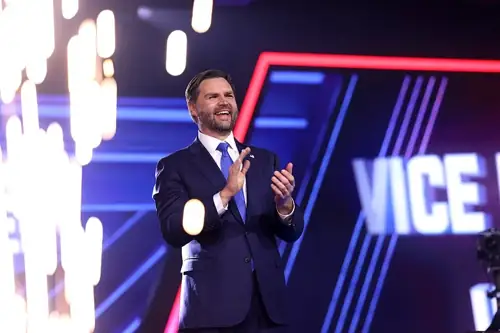
The Tripp+ fund takes its name from the Trump Route for International Peace and Prosperity, a 27-mile trade corridor spanning southern Armenia and Azerbaijan. JD Vance traveled to Yerevan in February and described the fund as part of a "historic transformation." Secretary of State Marco Rubio and Armenian Foreign Minister Ararat Mirzoyan signed the Tripp economic and security agreement in late May.
The Trump administration has invested heavily in Armenia since brokering a peace deal between Armenia and Azerbaijan last August, committing $9 billion to Armenia's nuclear energy sector and selling $11 million in US reconnaissance drones to Yerevan, the first-ever American military technology sale there. The Development Finance Corporation, led by private equity scion Ben Black, has also announced plans to build a development company for railways and other infrastructure on the proposed route. There is a lot of money moving through this corridor. Quite a few people with connections to the people controlling that money also have business interests in the region. This is the situation.
The Dingo Take
Look, there is a version of this story where Sokolov is genuinely the best person available for this job, brings real expertise to a strategically important region, and manages to run a $200 million public fund without once nudging a single dollar toward the Armenian telecom company he owns a major stake in. That version exists. It is just not the version suggested by literally any of the surrounding facts.
What we actually have is a man who gave at least $12 million to Trump's political machine, received an undisclosed amount at the president's ballroom, and was then handed a government chairmanship with no prior public service experience, overseeing a fund explicitly targeted at sectors where he has pre-existing financial interests. The administration's response to questions about potential conflicts of interest is essentially "trust the audit." The same administration that has spent two years systematically dismantling every independent oversight mechanism in the federal government.
Sokolov might be a fine investor. The corridor might generate real economic benefit. The peace deal might hold. But when the same pattern repeats itself over and over, ballroom donation followed by government position followed by convenient policy overlap, at some point calling it a coincidence stops being journalism and starts being performance art. The Guardian did the work. The facts are sitting right there. What exactly is anyone going to do about it?



Comments