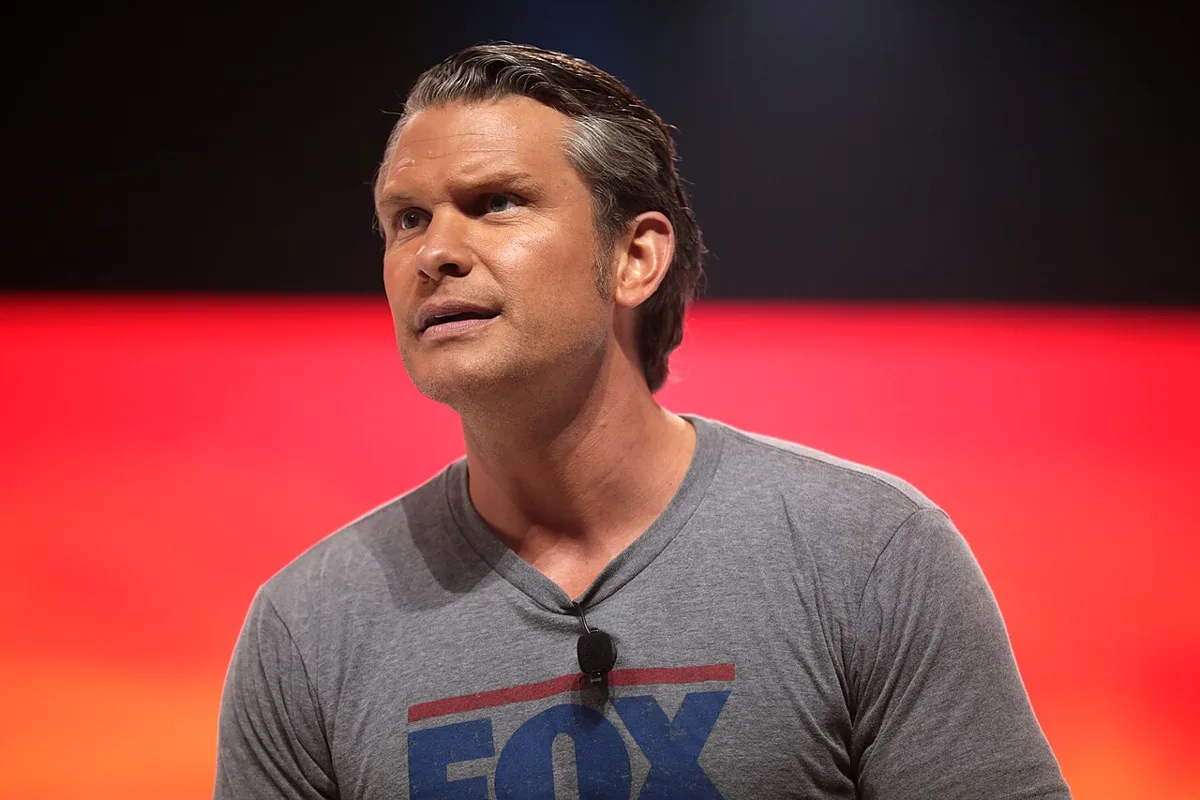
Pete Hegseth, a man who was confirmed as Secretary of Defense despite allegations that would have disqualified him from serving in the military he now commands, has announced that he will screen American soldiers for low testosterone. Mandatory. Annual. For every service member over thirty. This is real. This is the Pentagon now.
What Hegseth Actually Said
On Wednesday, Hegseth posted a video to X announcing the new Department of Defense screening program for testosterone deficiency. "I'm authorizing a new screening program for testosterone deficiency for our service members, ensuring you have the right testosterone levels to operate at your absolute best," he said, with the full gravitas of a man who absolutely has a Joe Rogan episode queued up.
According to The Guardian, service members 30 and older will undergo annual testosterone tests as part of their standard health assessments. Troops under 30 can opt in voluntarily. Treatment, including testosterone replacement therapy, is technically optional, though one imagines the social pressure inside a military unit to not be the guy who declined the testosterone program is not exactly zero.
Hegseth framed the whole thing in the language of battlefield readiness. "The modern battlefield is brutal and unrelenting," he said. "It requires and demands maximum psychological and mental readiness." He also used the phrase "leading edge of lethality," which sounds like something a supplement company would put on a tub of pre-workout powder, but sure, this is official Pentagon policy now.
The Science, Which Nobody Asked About
Here is the part where we check in with medical reality, which has been having a rough few years in Washington. Research published in the journal Social Science and Medicine found that young men are already being aggressively targeted by online influencers and wellness companies promoting hormone tests and treatments as essential to being a "real man," and that testosterone screening is medically unwarranted for most people in that age group. The Guardian flagged this research, and it is worth sitting with for a moment.
The military is now institutionalizing, at the federal level, a screening program that the medical literature says most people don't need, in response to a "crisis" that is being driven primarily by supplement industry marketing and podcasters who want to sell you capsules. The Department of Defense has a budget of roughly $850 billion. This is what they chose to spend attention on.
To be clear, genuine testosterone deficiency is a real medical condition that affects a real subset of people and has real treatments. Nobody is arguing otherwise. The question is whether the Pentagon should be running a mandatory annual screening program for it, premised on the idea that American soldiers are systematically under-testosteroned in ways that threaten national security. That is a very different claim, and nobody making it has produced evidence to support it.
The Administration's Ongoing Obsession
Hegseth is not operating in isolation here. This fits neatly into a worldview that has been circulating at the top of the Trump administration for a while now. As The Guardian reports, Robert F. Kennedy Jr., age 72, has described injecting testosterone as part of his personal anti-aging regimen, and last October he warned, without any supporting evidence, that today's American teenagers have "50% of the testosterone of a 65-year-old man."
That claim, to be direct about it, is not supported by science. It is the kind of thing that sounds alarming and specific enough to be mistaken for a statistic, but it is not a statistic. It is a vibe. It is the wellness-influencer-to-cabinet-secretary pipeline completing its full cycle.
What we are watching is a feedback loop. Fringe health grifters push the idea of a masculinity crisis to sell supplements and grow audiences. Politicians absorb and amplify those ideas because they resonate with a certain voter base. Those politicians get into power and write the fringe ideas into federal policy. The Pentagon is now the end point of that chain.
The Troops, Who Did Not Ask for This
It is also worth remembering who is actually on the receiving end of this policy: the men and women serving in the US military, who are already subject to some of the most demanding physical and psychological evaluations of any workforce on earth. The military has existing, rigorous health screening protocols. It has fitness standards. It has medical infrastructure.
The suggestion embedded in Hegseth's announcement is that those systems have been leaving something on the table, that soldiers have been going into combat without someone checking their hormone panels. That is a strange implicit criticism of the military medical establishment, coming from the guy who is nominally in charge of it.
And for the troops themselves, particularly the ones who are already skeptical of federal health initiatives or who have complicated relationships with mandatory medical procedures, being told you are getting an annual testosterone check whether you like it or not is probably not the morale boost Hegseth is imagining it to be.
The Dingo Take
Let's be honest about what this is. This is culture war content dressed up in a uniform. The testosterone obsession gripping this administration is not a health policy, it is a brand. It tells a specific audience a specific story about who real men are, what is wrong with America, and who is going to fix it. That story is enormously useful politically. As an actual approach to military readiness, it is somewhere between irrelevant and actively distracting from problems the Pentagon should be focused on.
There are real readiness issues in the US military. Recruiting shortfalls. Mental health infrastructure that has been strained for two decades of grinding deployments. Veterans' health systems that are chronically underfunded. Equipment maintenance backlogs. You could spend a very long time listing the things that deserve the Defense Secretary's attention before you get to mandatory testosterone panels. Hegseth apparently speed-ran that list.
The cruelest joke in all of this is the framing of "elite medical care." Hegseth used that phrase to describe what this program offers troops. Elite medical care, in this context, means the same bro-science hormone optimization regimen that fitness influencers have been hawking to men anxious about their place in the world. The Pentagon has now given it a logo and a mandate. Sleep well, everyone.


Comments