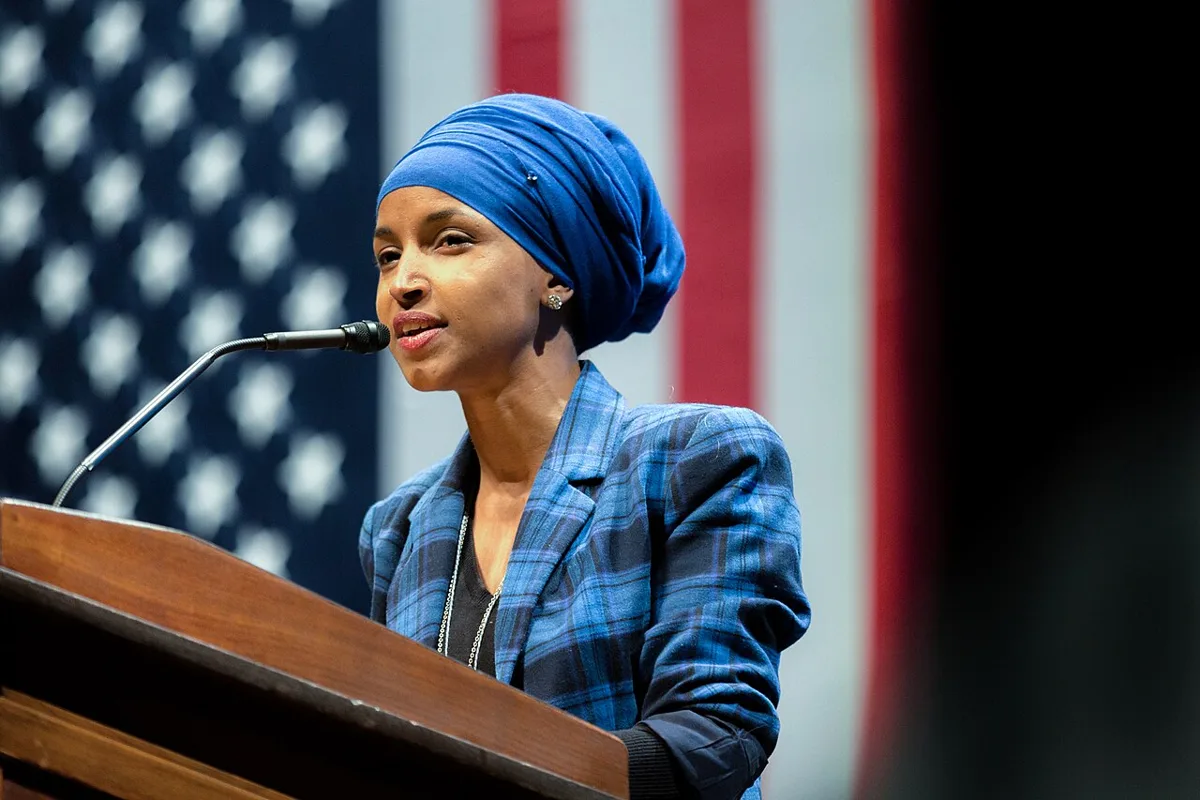
Two days. That's how long it took for someone in Congress to formally push back after Marco Rubio announced the United States would 'systematically disable' the International Criminal Court. The someone was Ilhan Omar, the pushback was a resolution urging the US to actually join the court, and the gap in between was apparently just enough time for the irony to fully marinate.
Rubio Says Dismantle It, Omar Says Join It
The Guardian, which broke this story exclusively on Wednesday, reports that Omar introduced a resolution in the House urging the United States to become a member of the International Criminal Court. The timing was deliberate. Secretary of State Marco Rubio had just gone on record two days earlier vowing to use sanctions and diplomatic pressure to take the court apart piece by piece.
Rubio's stated rationale is that the ICC poses a threat to 'every aspect of [America's] political and legal system.' This is a remarkable claim about a court that, as legal experts told the Guardian, cannot actually prosecute crimes on US soil because the United States is not a party to the Rome Statute, the 2002 treaty that created the tribunal. You cannot be hauled before a court you haven't joined. That's how courts work. That's how joining things works.
Omar, for her part, was not subtle about the contrast she was drawing. 'If we truly believe in human rights and the rule of law, we should strengthen international justice, not undermine it,' she said in a statement. 'The United States should lead by example and show that no one is above the law.' Whether her colleagues will line up behind that sentiment is, as the Guardian notes, very much an open question.
A Court With 125 Members and One Very Loud Enemy
The ICC is not some obscure fringe institution. It has been recognized by 125 countries. It was built on the lessons of the ad hoc tribunals that prosecuted war crimes in the former Yugoslavia, Rwanda, Cambodia, and Sierra Leone. It is, by any reasonable measure, the most significant permanent war crimes accountability mechanism humanity has ever managed to build.
The Trump administration wants to kneecap it. This is not a new impulse. Trump went after the ICC during his first term too. But Rubio's pledge to 'systematically disable' the court is an escalation in rhetoric and, apparently, in intent. The EU is not amused. EU spokesperson Anouar El Anouni said Tuesday that attacks or threats against the court and its personnel are 'simply not acceptable.' European lawmakers have rallied in the court's defense and rejected the administration's sovereignty argument outright.
The sovereignty argument, for what it's worth, is the fig leaf. The more operational concern for this administration is that the ICC is investigating alleged Israeli war crimes in the West Bank and Gaza, and two US advocacy groups have already sued the Trump administration, arguing that his 2025 executive order forced them to halt constitutionally protected work supporting that investigation. That lawsuit, reported by the Guardian, is making its way through the courts even as the administration tries to shut down the tribunal conducting the underlying inquiry.
The Brief, Beautiful Window When Republicans Liked This Court
Here is the part that should haunt every Republican who is currently nodding along to Rubio's sovereignty talking points. After Russia's full-scale invasion of Ukraine in 2022, the ICC briefly had bipartisan fans in Washington. The late Lindsey Graham, South Carolina senator and not historically a man known for his internationalist leanings, praised the court as 'a venue to bring bad actors to justice in those areas where the Rule of Law is absent.' He sponsored a resolution urging a war crimes investigation into Russia's conduct.
Omar introduced similar legislation in April 2022. Now she's reintroducing it, and the Republicans who were on board four years ago are nowhere to be found. The variable, in case you were wondering, is not the court. The court hasn't changed. The variable is who the court is looking at.
Senate Democrats did successfully block an ICC sanctions measure last year, according to the Guardian, but the caucus has stayed divided on how hard to push back against the administration's broader approach. Omar's resolution is the first formal congressional counter-move of this particular escalation cycle. Whether it gets any traction beyond her office is the question nobody is betting on right now.
What This Resolution Actually Does
To be straight with you: a resolution from a single Democratic congresswoman in the current House is not going to drag the United States into the ICC. Resolutions are non-binding. This one won't be signed into law. It won't force a floor vote. It is, in practical terms, a statement of position and a marker in the record.
But markers matter. The Guardian reports this is the first congressional pushback against the administration's pledge to dismantle the court. Someone had to go first. Someone had to put on record that not every American elected official thinks the appropriate response to a war crimes tribunal is to burn it down because it got too close to an inconvenient investigation. Omar made that someone her.
The Dingo Take
Let's just hold up the full picture here for a second. The United States, a country that helped create the post-World War II international legal order, that sent prosecutors to Nuremberg, that championed the ad hoc tribunals in the Balkans and Rwanda, is now being directed by its Secretary of State to 'systematically disable' the permanent court that grew out of all of that history. And the reason, dressed up in sovereignty language, is that the court is looking at war crimes in Gaza. That's where we are.
Omar's resolution won't pass. She knows it won't pass. That's not really the point. The point is that someone with a House floor and a vote is saying out loud, formally, with her name on it, that the United States should be strengthening international justice rather than strangling it. In an environment where Democrats have been divided and cautious on this specific issue, that takes something. Call it courage, call it political calculation, call it what you want. The resolution exists and the administration's position now has a formal congressional opponent attached to it.
Rubio's claim that the ICC threatens 'every aspect' of American political and legal life has been called out by legal experts as a mischaracterization. The court cannot touch American citizens for conduct on American soil. Full stop. What it can do is hold people accountable in places where local courts won't or can't, which is exactly the point of its existence and exactly why certain governments want it gone. The Trump administration is not confused about how the ICC works. It understands perfectly. That's the problem.


Comments