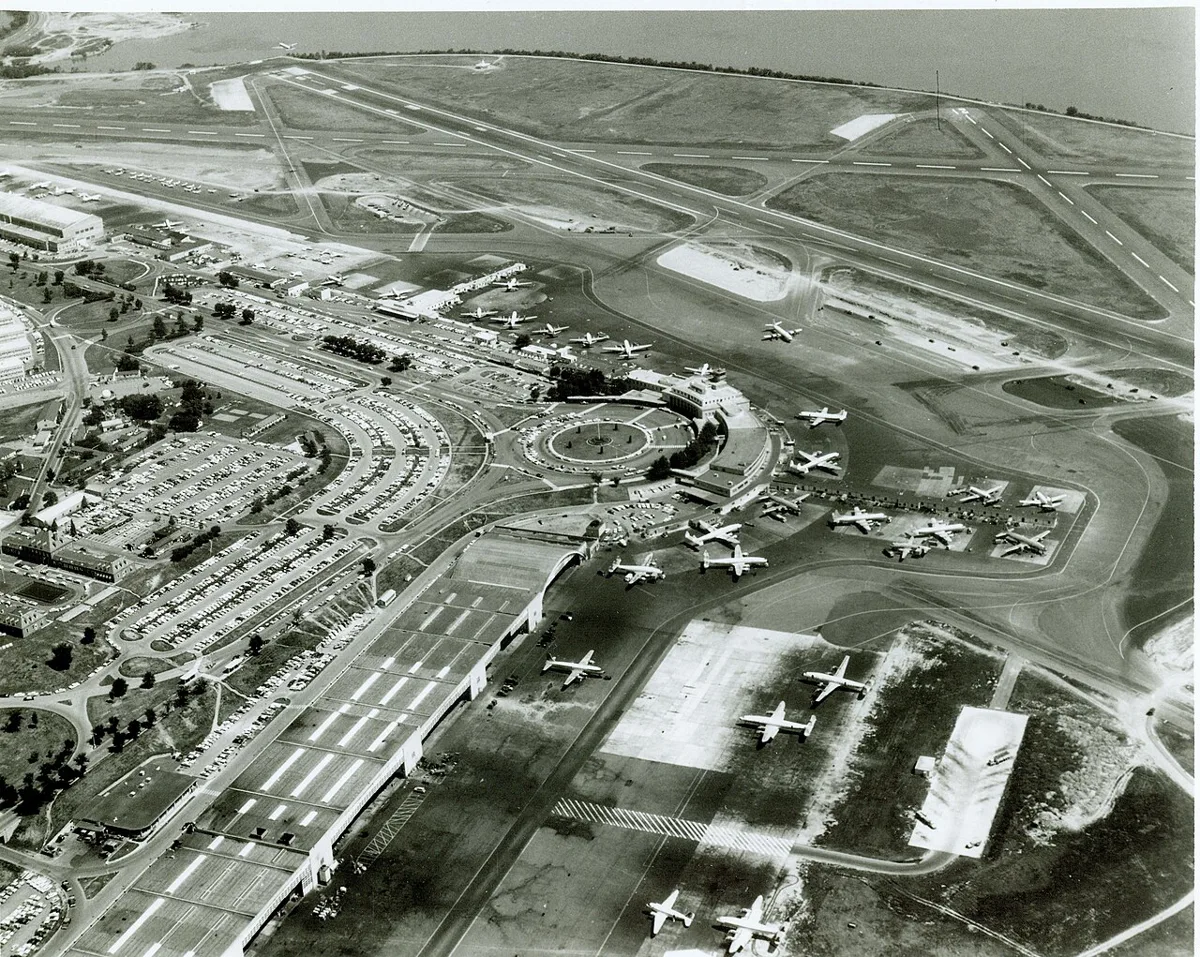
On Tuesday, more than 300 flights were delayed and at least 126 were outright canceled at Reagan National Airport because the Iraqi prime minister's security detail needed clear airspace for his motorcade to drive past it. Four hours of chaos at one of the busiest and most tightly controlled airports in the country, so a foreign leader could get from the White House to the Pentagon. This is the kind of thing that happens when you're four months into a war and everyone is extremely nervous about everything.
What Actually Happened at Reagan
According to CBS News, commercial flights at Ronald Reagan Washington National Airport were halted from 11 a.m. to roughly 3 p.m. ET on Tuesday. The cause was security protocols protecting Iraqi Prime Minister Ali al-Zaidi during his Washington visit. A security helicopter circled overhead as his motorcade traveled through DCA airspace on the way from the White House to the Pentagon.
Al-Zaidi's motorcade left the White House at 1:30 p.m., later than expected, which extended the disruption window. White House and FAA officials apparently tried to soften the blow by allowing some planes holding in the air to land and some planes on the ground to depart during breaks in the security window. CBS News reports the FAA and Department of Transportation both declined to comment, which is the government's way of saying 'yes, this happened, and we'd rather not discuss it.'
Flight tracking site FlightAware logged over 300 delays and 126 cancellations. For context, Reagan National is already one of the most congested airspaces in the United States, where commercial traffic has to weave around military flight paths and federal buildings on every approach. Adding a four-hour ground stop to that equation doesn't produce minor inconvenience. It produces a cascading disaster that ripples across the entire Eastern Seaboard.
Who Is This Guy and Why Is He Here
Ali al-Zaidi became Iraq's prime minister in May, and his path to that office had a distinctly American hand in it. CBS News reports that Trump threatened to pull U.S. support for Iraq if a candidate seen as too close to Iran won the election. Al-Zaidi got the job. This is the kind of foreign policy influence the U.S. government usually denies having and then describes openly in official statements.
The visit was framed as a discussion of U.S.-Iraqi bilateral relations, which is already a loaded topic given that U.S. troops are scheduled to leave Iraq by September 30 and Iraq's powerful pro-Iranian militias have been given a parallel deadline to disarm. Al-Zaidi's government is threading an extremely fine needle: close enough to Washington to keep the relationship intact, not so close that Iran, which has enormous influence inside Iraq, decides to make his life complicated.
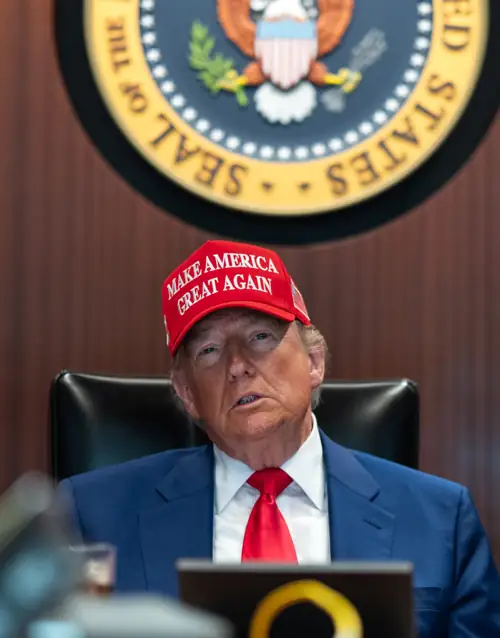
Trump, for his part, extended the meeting on a whim. CBS News quotes him saying he invited al-Zaidi to lunch because 'we have a tremendous chemistry together' and 'it wasn't scheduled, but we are going to do it on the fly.' On the fly. While a war with Iran is in its fourth month. Hundreds of planes were sitting on tarmacs across the region because the schedule slipped, and the president decided to add lunch.
The Wartime Paranoia Context
The disruption doesn't come out of nowhere. The U.S. has been at war with Iran for four months now, and CBS News notes that counterterrorism experts have flagged real concerns about Iranian retaliation on American soil. Iran has historically used U.S.-based surrogates for operations including attempted kidnappings and murder-for-hire plots against regime opponents. Protecting a foreign leader seen as an American ally in the middle of that conflict is not an irrational impulse.
And the threat picture has gotten genuinely weird lately. The FBI last month said it foiled a plot to attack a UFC fight at the White House using snipers and explosive-laden drones, later indicting eight people. CBS News reported at the time that no actual drones were recovered and the drone component was still in the discussion-and-research phase, which makes the indictment feel like a stretch, but the underlying point stands: the security environment around Washington right now is something out of a Tom Clancy novel that's gone slightly off the rails.
So yes, when an Iraqi prime minister who owes his job partly to American political pressure visits Washington while his country serves as a proxy battleground between the U.S. and Iran, the Secret Service is going to be cautious. The question is whether shutting down a major airport for four hours is calibrated security or maximum disruption dressed up as caution.
The People Who Paid for This Decision
The travelers sitting in terminals or circling over the Mid-Atlantic in holding patterns on Tuesday afternoon did not start a war with Iran. They were not consulted on al-Zaidi's lunch invitation. They had no say in a motorcade schedule that ran ninety minutes behind. And yet they are the ones who absorbed the cost of these decisions in the form of missed connections, canceled flights, and the particular misery of being told to just wait at Reagan National, which is not an airport designed for prolonged waiting.
This is how wartime governance works in practice. The big decisions get made at the top, and the friction generated by those decisions flows downward until it lands on ordinary people who were just trying to get somewhere. Over 300 flights. At minimum 126 cancellations. Hundreds of thousands of dollars in losses for airlines, passengers, and the businesses connected to all those trips. The FAA declined to comment.
The Dingo Take
Here is the thing about this story. None of the individual pieces are outrageous on their own. Protecting a foreign leader during a war? Sure. Securing airspace around a motorcade? Fine. A president extending a meeting because he likes the vibe? Annoying but whatever. It's the combination that reveals something: the United States is now in a permanent crisis posture where extraordinary disruptions to ordinary life have started to feel normal, and the people responsible for those disruptions don't feel much obligation to explain themselves. The FAA declined to comment. The DOT declined to comment. Over 300 flights.
The bit where Trump threatened to help determine who becomes Iraq's prime minister and then hosted that prime minister for an unscheduled lunch because the chemistry was good is doing a lot of heavy lifting in this story that nobody seems to be lifting. The U.S. is four months into a war with Iran, has troops leaving Iraq in September, is trying to get Iranian-backed militias in Iraq to disarm, and is simultaneously leaning on Iraq's political system hard enough to influence election outcomes. This is an extremely complicated situation being managed by an administration that schedules lunch 'on the fly.'
The 126 canceled flights are the least of it. They're just the part you can count.



Comments