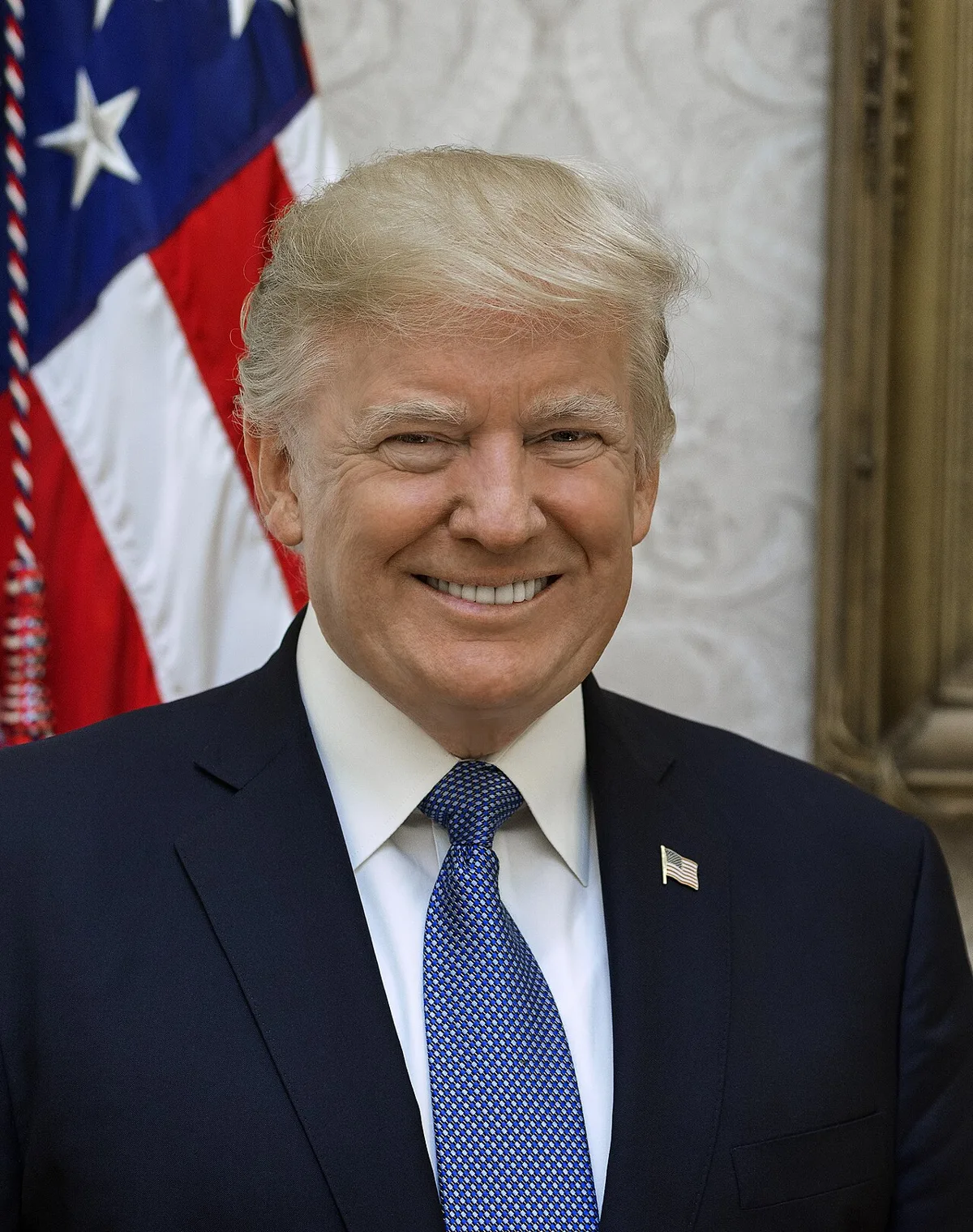
Donald Trump, a man who has now been president twice and still cannot stop relitigating an election he lost six years ago, will deliver a primetime address Thursday night that he is billing as 'really big news' about elections. He refused to say what specifically he plans to announce, which is fine, because we all already know. It is going to be the same debunked 2020 fraud claims he has been running on a loop since November of that year, dressed up for a national audience, timed perfectly to boost Republican midterm prospects.
The Preview No One Needed
According to NPR and the Associated Press, Trump told reporters in the Oval Office on Tuesday that his Thursday speech would cover elections, calling it the most important subject imaginable. 'It doesn't get bigger, because without free and fair elections, you don't have a country,' he said, while declining to offer any actual details because he wanted to 'save it for the moment.' He also said he would be 'discussing other things, too,' without elaborating on what those things might be.
This is the presidential equivalent of a movie trailer that shows you nothing except the release date and some ominous music. Except in this case, we already know exactly how the movie ends because he has released it before. Twice. The plot involves widespread fraud that dozens of audits, courts, and his own attorney general could never find any evidence of.
What He Has Already Said Out Loud This Week
To be clear about what 'really big news' likely means here, consider what Trump was saying just 48 hours before the speech. On Monday, the AP reports, Trump appeared on Newsmax and repeated baseless claims that Republican Spencer Pratt lost a Los Angeles mayoral primary because of fraud, pointing to California's slow vote-counting process as evidence. Federal prosecutors, apparently responsive to presidential pressure in ways that should terrify everyone, announced they were opening fraud investigations in the state.
This is the tell. When a president with a primetime address on the calendar is already warming up the fraud allegations on cable news the same week, the primetime address is not going to be about strengthening democratic institutions. It is going to be a greatest hits concert with new merch.
The timing matters too. Trump is, per the AP, currently dealing with a collapsing deal to end the war with Iran and the political fallout from recent deadly shootings by ICE officers. Nothing clears the news cycle of two slow-motion disasters like a nationally televised presidential address about voter fraud in an election that ended six years ago.
The Six-Year Grudge That Will Not Die
Let's run the tape on this, because the history here is staggering when you lay it out all at once. Trump first refused to commit to accepting election results in 2016, before he won. After winning, he convened an entire presidential commission to prove he had lost the popular vote due to fraud. That commission disbanded without finding anything. After losing in 2020, he called Georgia Secretary of State Brad Raffensperger and asked him to 'find 11,780 votes.' He and more than a dozen allies were indicted in Georgia over that call, though the charges were later dropped.
Repeated audits and reviews, the AP notes, many of them run by Republicans including Trump's own attorney general at the time, found no significant fraud in 2020. That is not a Democratic talking point. That is the conclusion of his own people.
None of this has slowed him down. He now frequently tells crowds he has won the White House 'three times.' He has packed his administration with officials who publicly endorse his false fraud claims. Last week, he fired the remaining members of the bipartisan Election Assistance Commission, a panel that had resisted his push to require citizenship documentation from voter registration applicants. The man is not confused about what happened in 2020. He is making a deliberate choice, every single day, to say something he knows is not true.
What He Actually Wants From All of This
Here is where the strategy becomes clear. Trump has made voting regulation a central issue of his second term, pushing for federal legislation requiring voter ID and sharply restricting mail-in voting, per the AP. November's midterms will determine control of Congress. A hostile House or Senate would effectively end his ability to push through his agenda for the back half of his term.
So what do you do if you are worried about losing those midterms? You spend months poisoning the well. You hold a primetime address telling tens of millions of people that elections cannot be trusted. You make fraud claims before the votes are even cast. Then, if Republicans lose seats in November, you have already pre-loaded the explanation. And if Democrats win anything significant, you have already told your base not to believe the results.
Maryland Gov. Wes Moore, campaigning in Georgia on Tuesday, called it a strategy 'for losers' when asked about Trump potentially relitigating 2020 in a national address. 'I think people are exhausted by having conversations about elections that happened six years ago, that we have the answer to,' Moore told reporters. That is a generous read. What Trump is doing is not exhausting. It is dangerous. There is a difference.
The Quiet Part Getting Louder
Earlier this year, FBI agents raided elections offices in Fulton County, Georgia, seizing materials from the 2020 election. Tulsi Gabbard, then serving as Trump's director of national intelligence, flew to Atlanta personally to oversee the execution of the search warrant. A sitting president's intelligence director, overseeing the FBI raid of a county elections office over a six-year-old election.
This is the part of the story that keeps getting buried under the daily volume of outrages. The president is using law enforcement to pursue political enemies over an election his own people confirmed he lost legitimately. He is gutting bipartisan election oversight bodies. He is calling U.S. attorneys directly to demand scrutiny of ongoing vote counts. And now he is taking all of that to a primetime national audience dressed up as a 'really big announcement.'
The speech is scheduled for 9 p.m. Thursday. Set a reminder if you want. Or do not. The content is not going to surprise you.
The Dingo Take
The most revealing thing about Trump's Thursday speech is not what he will say. It is that he can say it at all. A primetime presidential address is a serious tool. Networks clear their schedules. Tens of millions of people watch. The weight of the office gives every word a kind of institutional gravity that a Newsmax interview or a Truth Social post simply does not carry. And Trump is going to use that gravity to push claims that his own attorney general, his own hand-picked auditors, and a mountain of court rulings have all rejected. He is going to do it specifically to make millions of Americans doubt the legitimacy of elections that have not happened yet.
Wes Moore called it a strategy for losers, and he is right in the narrow sense that it reflects a man who cannot process having lost. But it is also a strategy that works. It worked after 2020. It kept his base furious, motivated, and convinced that the system was rigged against them. It got him elected again in 2024. Now he is running the same play before the midterms, except this time he has the full machinery of the federal government behind him, including the FBI, the Justice Department, and a freshly purged Election Assistance Commission.
There is no version of Thursday's speech that ends with Trump announcing a new commitment to expanding voter access or making elections more secure in any way that benefits actual voters. What is coming is a flood of grievance, preemptive excuse-making, and conspiracy validation delivered from the most powerful lectern in the world. The 'really big news' is that it never stopped.


Comments