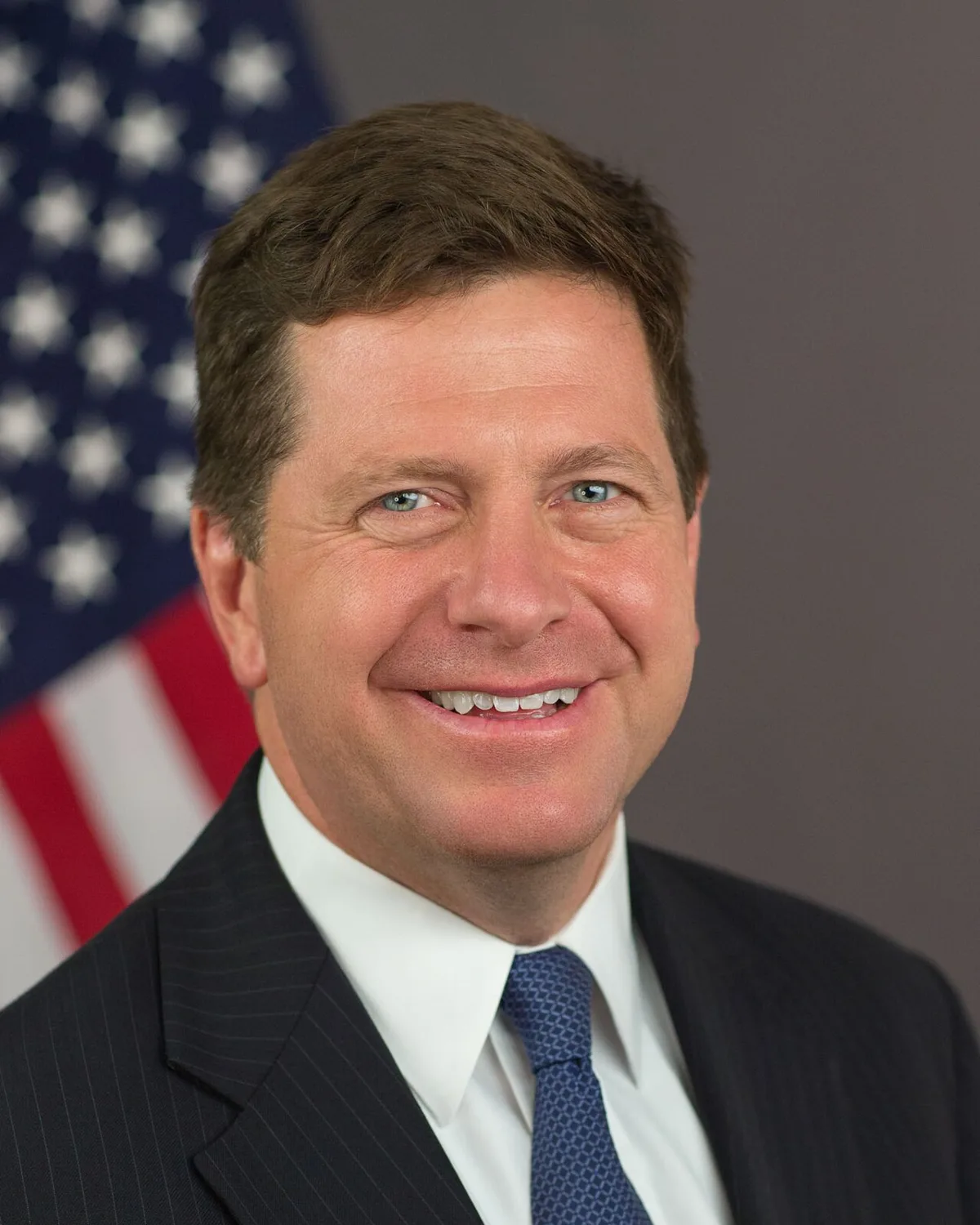
Jay Clayton, Donald Trump's nominee to run the entire United States intelligence apparatus, sat in front of the Senate on Wednesday and refused to say who won the 2020 presidential election. Senator Jon Ossoff asked him a question with a factually correct answer that every American over the age of nine already knows, and the man Trump wants overseeing the CIA, the NSA, and every other acronymed spy shop in the federal government just... wouldn't say it. That's your guy, folks.
The Question That Broke a Nominee
Let's be precise about what happened, because the details matter. According to The Guardian's live coverage, Clayton was asked directly by Senator Jon Ossoff who won the 2020 election. He refused to answer. Not "I don't recall." Not a dodge about not wanting to relitigate the past. A refusal. From a man seeking confirmation as the nation's top intelligence official.
The director of national intelligence oversees seventeen separate intelligence agencies. The job requires synthesizing reality, weighing evidence, and telling the president what is actually true, even when it's uncomfortable. Clayton's audition for that role was declining to acknowledge a documented, certified, court-tested, insurrection-inspiring historical fact that has been settled for five and a half years. Cool. Great hire. Very normal country we have here.
The Acting AG Who Forgot What Job He Has
Clayton wasn't even the only nominee having a rough day. Todd Blanche, currently serving as acting attorney general, described himself during his own confirmation hearing as Trump's lawyer before catching himself and walking it back. The Guardian reports he corrected the statement, but the correction doesn't really undo what the slip revealed.
Blanche was, of course, literally Trump's personal criminal defense attorney until very recently. He defended Trump through two federal indictments. And now he's auditioning to run the Justice Department, which is theoretically supposed to be independent of the president it serves. Describing himself as Trump's lawyer first and then remembering he's supposed to be America's lawyer is less a gaffe and more an accidental moment of total honesty from an administration that doesn't do many of those.
Together, Blanche and Clayton managed to make a single afternoon of Senate confirmation hearings feel like a stress test for the concept of institutional checks on executive power. The institution failed the test.
Meanwhile, a Senate Seat Changed Hands in Five Days
On a separate but equally disorienting front: Lindsey Graham died on Saturday night at 71, and by Tuesday his sister Darline Graham had been sworn into his Senate seat. That's four days from death to replacement. The Washington Beltway has seen some rapid political maneuvering over the years, but even by those standards, this timeline is striking.
Graham's office said he died of aortic dissection due to cardiovascular disease, per the chief medical examiner's preliminary ruling reported by The Guardian. South Carolina Governor Henry McMaster, with the backing of Donald Trump, appointed Darline to fill the remainder of her brother's term, which runs through January 3. At a press conference Monday, Darline said it was an "honor" to replace the man who had been her legal guardian since their parents died when she was a girl. She promised to "support the president" and carry forward Lindsey's work.
She's set to meet Trump in the Oval Office today, five days after her brother's death. Whatever else you want to say about the speed of all this, the human story underneath it is genuinely sad. Lindsey Graham was many things, a sometimes-senator, a perpetual hedger, a man whose political courage seemed to evaporate around 2016, but he was also a brother who stepped up when a little girl needed someone. His sister clearly loved him.
The Rest of Wednesday's Chaos, In Brief
Because there's always more. The Guardian also reports that 103 House Democrats voted to cut military aid to Israel, a number that would have been unthinkable in any prior Congress and signals that accusations of genocide against the Israeli government are moving from the progressive fringe into the Democratic mainstream. That's a significant political shift happening with very little fanfare.
Thomas Massie and Ro Khanna, the odd-couple pairing behind the Epstein Files Transparency Act, introduced a sequel bill that would let state officials, victims, and members of Congress sue the attorney general over records that get withheld. JD Vance, in an interview with Joe Rogan, denied the theory that Trump's ties to Epstein had given Israel leverage to blackmail the president into attacking Iran. That Vance had to specifically deny that particular theory on a podcast tells you something about the current information environment, though what exactly is left as an exercise for the reader.
And the Treasury Department announced the US Mint has started producing a commemorative dollar coin featuring Donald Trump's face, as part of the country's 250th anniversary celebration. America: 250 years old, with a national intelligence nominee who won't say who won an election that happened six years ago.
The Dingo Take
Here is the thing about Jay Clayton refusing to acknowledge who won the 2020 election: it's not a slip, it's not nerves, it's not a man who just blanked on a detail. It's an audition. Clayton knows exactly what answer keeps him in Trump's good graces, and he chose that over the answer that's actually true. This is the calculated behavior of someone who has already decided that personal advancement matters more than institutional honesty. Which would be a disqualifying trait in most jobs. For the director of national intelligence, it should be automatic grounds for rejection.
But it won't be. Because the Senate Republicans who would need to push back have spent the last decade discovering new and creative reasons why this particular line is not the one they'll hold. Blanche describing himself as Trump's lawyer and then remembering he's supposed to be the people's lawyer is the same phenomenon. These aren't accidents. This is what a government looks like when the people running it have stopped pretending the institutions they inhabit mean anything beyond their own advancement.
Darline Graham inherits a Senate seat from a brother she clearly loved, and she walks into that chamber on day five of her grief to "support the president." Clayton refuses to name an election winner any third-grader could identify. Blanche forgets for a moment which client he actually serves. The mint stamps Trump's face on a dollar coin. This is Wednesday in the United States of America, July 2026, and the only thing more exhausting than following it is imagining what Thursday looks like.

Comments