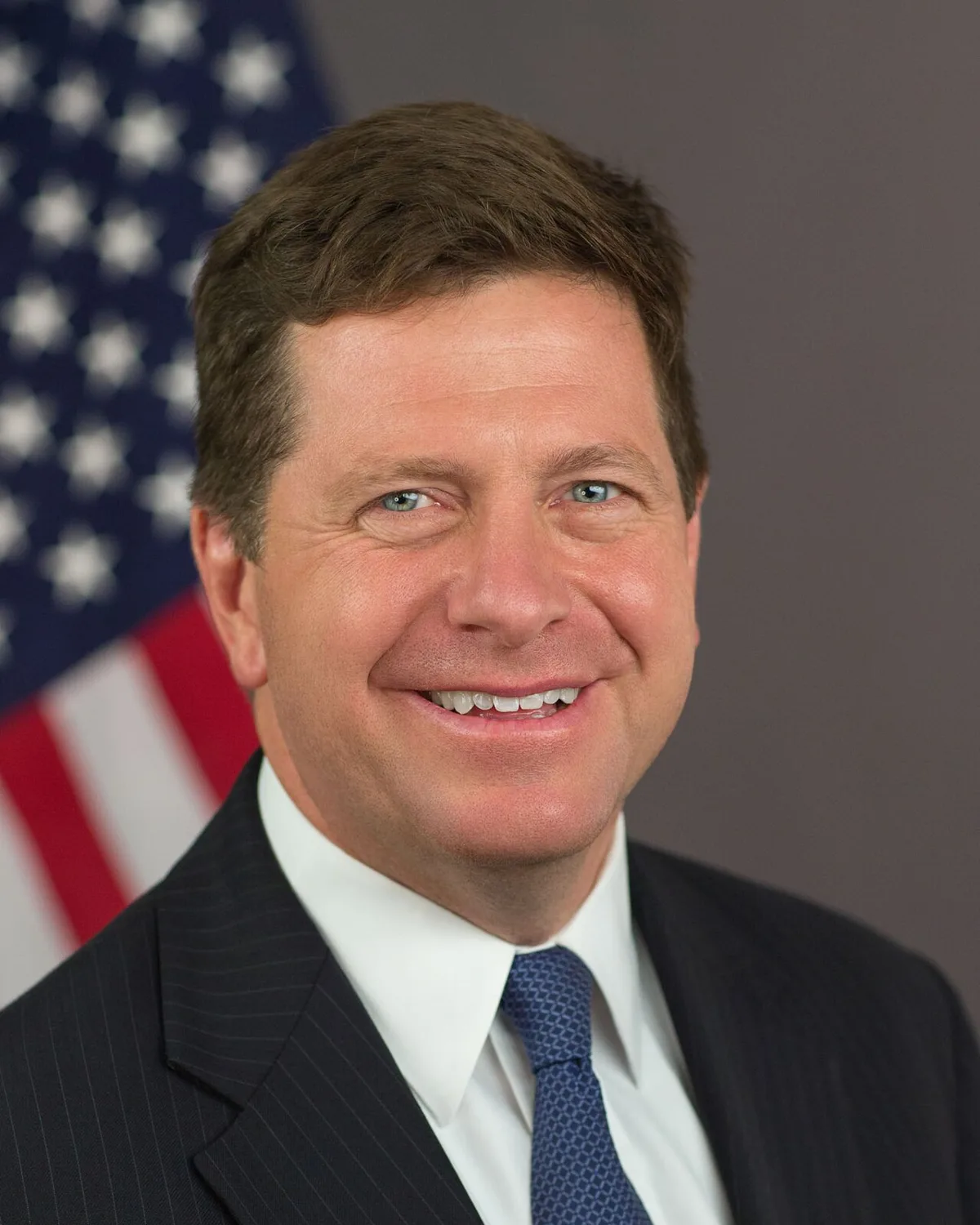
The good news is that Trump's pick to run America's entire intelligence apparatus is considered a reasonable, steady choice by members of both parties. The bad news is that he went on CNBC last month and said the United States is doing an "absolutely terrible job" of ensuring election integrity, and that California's mail-in voting basically rolls out a welcome mat for fraud. So, you know. Progress.
Everyone Likes This Guy, Which Is Already Suspicious
Jay Clayton, currently serving as U.S. attorney for the Southern District of New York, faces his Senate Intelligence Committee confirmation hearing Wednesday. According to NBC News, both Democratic and Republican senators are largely on board with his nomination, which in this Congress is roughly as common as spotting a unicorn parking a Prius.
The bipartisan goodwill exists mostly because Clayton is being compared to the guy he'd be replacing. Bill Pulte, the current acting director of national intelligence, came to one of the most sensitive posts in the U.S. government with no national security experience whatsoever, and spent his time at the Federal Housing Finance Agency launching investigations into people Donald Trump didn't like. The bar has been set so low it's a tripping hazard.
Sen. Mark Warner, the top Democrat on the Intelligence Committee, has called Clayton "a capable public servant" with the right temperament. When a Senate Democrat is praising a Trump intelligence nominee before the hearing even starts, either Clayton is genuinely solid or the current situation is so bad that anyone who has read a briefing document looks like a statesman by comparison.
About Those Election Comments
Here is where things get uncomfortable. Clayton told CNBC last month that America is doing "an absolutely terrible job" ensuring election integrity, and that the American people are "right to question it." He also argued that California's mail-in voting laws make "the opportunity for fraud so much greater."
Election experts and California officials say there is no evidence of widespread fraud in California's elections. As for the 2020 election more broadly, NBC News notes that no evidence of widespread fraud has ever emerged, and dozens of lawsuits seeking to overturn the results were dismissed or dropped. Clayton is parroting a claim that has failed in courtroom after courtroom, and he's doing it right before he's supposed to oversee the intelligence agencies that would theoretically be used to investigate such claims.
Democrats on the committee plan to press him on exactly this point. They want to know whether he'd be willing to give Trump unvarnished intelligence assessments, especially on elections, or whether he'd become another instrument of the administration's ongoing effort to relitigate 2020 and pre-litigate 2026.
The Election Integrity Circus Rolls Into Town Thursday
The timing of this hearing is not accidental. Trump is scheduled to deliver remarks Thursday evening focused on "election integrity" and his administration's findings around the 2020 election, NBC News reports. A White House task force has already collected thousands of pages of documents from intelligence agencies, with plans to declassify some of them.
Let's be clear about what that means. The administration is assembling a document dump designed to give Trump fresh ammunition to revive baseless fraud claims heading into November's midterms. Democrats on the Intelligence Committee are already worried that Trump could try to use intelligence or law enforcement agencies to interfere with how states run those elections. Getting a DNI confirmed who has publicly echoed Trump's election skepticism is not exactly the reassurance they were looking for.
Why Republicans Desperately Need This Confirmed
Republican senators have their own reasons to want Clayton through quickly, and they have nothing to do with principle. Congress has been deadlocked over extending the government's electronic surveillance authority, and Democrats have flatly refused to vote for reauthorization as long as Pulte remains intelligence chief. Clayton's confirmation is essentially the ransom payment.
So the dynamic here is: Democrats hate Pulte enough to hold surveillance reauthorization hostage, Republicans need that reauthorization badly enough to push through a nominee they might not otherwise embrace, and Trump gets to claim he installed someone respectable while simultaneously using the intelligence apparatus to chase election ghosts. Everyone wins. Except for the concept of functional government.
Clayton does bring some relevant credentials. As U.S. attorney, he oversaw the Justice Department's indictment of former Venezuelan President Nicolas Maduro on drug trafficking charges, and his office reviewed the Justice Department's files related to Jeffrey Epstein after Congress mandated their release. He's a corporate lawyer by background, not an intelligence professional, but compared to Pulte, he's practically a Cold War spymaster.
The Guy He's Replacing Is Still Doing Damage on His Way Out
Before Clayton can take the wheel, Trump has reportedly indicated he wants Pulte to keep slashing the workforce at the Office of the Director of National Intelligence in whatever time he has left. Tulsi Gabbard, who preceded Pulte, already cut hundreds of positions and moved teams to other agencies. Pulte is now expected to continue the demolition job.
This is how the Trump administration approaches institutions it doesn't control: gut them, then hand the ruins to someone slightly more presentable and declare the problem solved. Clayton may well be a capable administrator. But he is inheriting an intelligence community that has been deliberately hollowed out by two consecutive directors whose primary qualifications were loyalty to Trump and willingness to break things.
Trump initially nominated Clayton last month, then abruptly demanded the Senate cancel a confirmation hearing scheduled for June 17, hours before it was set to begin, because he wanted Clayton's successor as New York federal prosecutor confirmed first. The Senate has not yet confirmed that successor, James McDonald, but McDonald has been named deputy U.S. attorney to manage a "transition." The White House got tired of waiting and let the hearing happen anyway. Classic operational discipline.
The Dingo Take
Jay Clayton is probably going to be confirmed, and in the current environment, that probably counts as a win. He has actual prosecutorial experience, he has not publicly pledged to weaponize the intelligence community against Trump's enemies, and senators from both parties can tolerate him. By the standards of this administration, that makes him a statesman.
But let's not throw a parade. This is a man who went on television and told Americans their elections are riddled with fraud, echoing claims that have been rejected by courts, election officials, and every credible audit that has ever been conducted. He's about to become the nation's top intelligence officer days before Trump delivers a speech built around those same discredited claims. If Clayton thinks his job is to serve as an honest broker of intelligence assessments, his first test is going to arrive approximately 24 hours after he's sworn in.
The Senate Intelligence Committee should grill him hard on exactly that. Not out of partisanship. Out of basic institutional self-preservation. The intelligence community has spent the last two years being carved up, politicized, and staffed by loyalists. Clayton can either be the person who stabilizes it, or he can be the respectable face on the same rotten operation. Wednesday's hearing is when we find out which one he actually is.

Comments