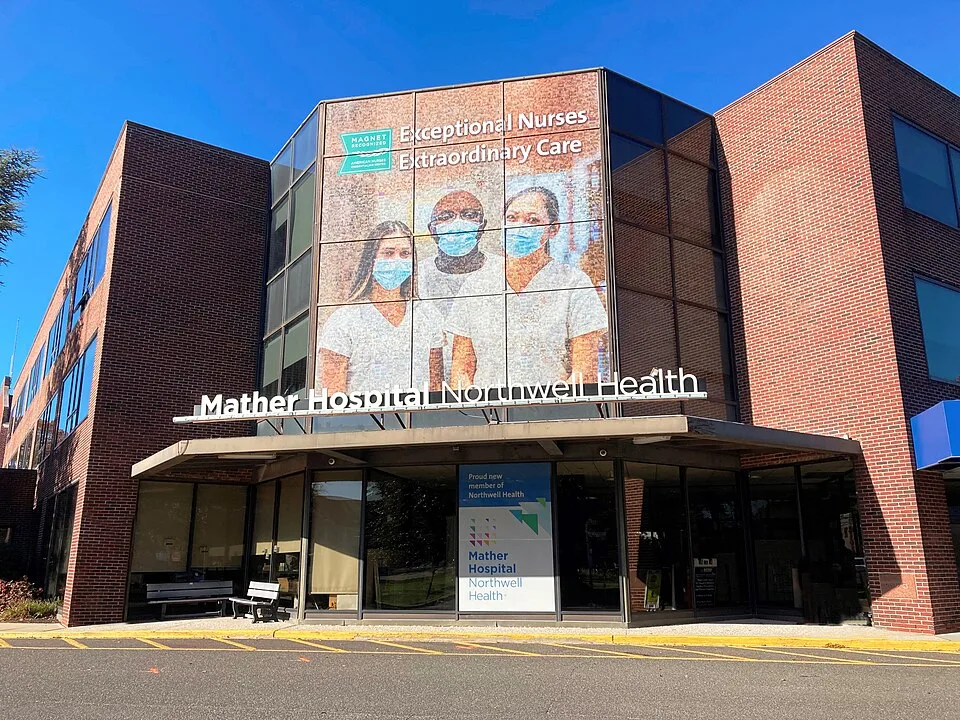
A doctor in upstate New York racked up $6,000 in medical bills during a high-risk pregnancy, despite having what she herself describes as "good insurance." Her crime? Needing a hospital with a NICU that happened to be out-of-network. The bill that would have made that $6,000 charge impossible has been sitting in the New York State Legislature since 1991.
What the Bill Actually Does
The New York Health Act would cover every single person living in New York State, full stop. No copays. No deductibles. No out-of-network penalties. According to WENY News, the coverage would include physical health, mental health, dental, vision, prosthetics, durable medical equipment, and ambulance services.
Read that list again. Mental health. Dental. Vision. Ambulance services. Things that most Americans with employer-sponsored insurance are still paying out of pocket for in 2026, this bill would just... include. As a baseline. For everyone.
The funding mechanism, as WENY reports, would be a payroll tax scaled to income, supplemented by the federal Medicare and Medicaid dollars the state already receives. Supporters say the net effect would actually save money for school districts and municipal budgets, which currently spend significant chunks of their budgets covering employees' health premiums.
Thirty-Five Years in the Making
The NYHA was first introduced in 1991 by Assemblyman Richard Gottfried. That was the same year the Soviet Union collapsed, Jeff Bezos was still working on Wall Street, and approximately zero Americans had ever heard of the World Wide Web. The bill is old enough to have a midlife crisis.
Marita Florini, a retired nurse practitioner with 38 years in primary care and a member of the League of Women Voters for Broome and Tioga Counties, told WENY she has supported the bill since Gottfried first put it forward. "There were so many people at the time who did not have adequate health insurance, or they were working three part-time jobs and had no health insurance," she said. Sound familiar? Because that sentence could have been written last Tuesday.
The bill has new sponsors now. State Senator Gustavo Rivera is carrying it in the Senate, where it currently sits in the Health Committee. It has undergone changes over the decades, but the core idea has never moved: healthcare tied to residency, not employment, not income, not whatever your employer decided to offer this open enrollment period.
The Doctor Who Became the Patient
Dr. Cori Marshall is a family medicine provider at Robert Packer Hospital's Sayre Family Practice department. She knows how the system works from the clinical side. And then she got pregnant with twins.
She told WENY that a rough pregnancy landed her in a hospital that was out of network, because it was the one with NICU capabilities if the babies came early. Her insurance, which she describes as "good," still left her with $6,000 in bills. She noted the cost would have been catastrophically higher if her twins had actually been born that day.
"This gives you that steadiness where you're not worried about changes in your life that would mess up what's going on," Dr. Marshall said of the NYHA. She supports the bill not just as a physician but as a person who got chewed up by the exact machine she works inside. There is something both darkly funny and deeply clarifying about a doctor getting a $6,000 bill for a pregnancy complication. If it can happen to her, it can happen to literally anyone.
The Opposition's Argument Is Basically a Shrug
State Senator Patrick Gallivan, a Republican representing the 60th Senate District, offered the main counterargument to WENY, and it boils down to two complaints: higher earners would pay more in taxes, and the bill doesn't specify how much healthcare providers would be paid.
Those are real concerns. They are also, notably, the kinds of concerns that get resolved during the process of writing and passing legislation, not reasons to reject the concept entirely. "It would be irresponsible for the state to implement such a massive program without knowing such details," Gallivan said. What he did not say is that the current system, where a physician can get a $6,000 bill for a pregnancy she didn't choose to complicate, is somehow responsible.
The payroll tax question is legitimate. Higher earners would pay more. That is how progressive taxation works. Whether the math pencils out in a way that benefits most New Yorkers is genuinely worth scrutinizing. But "the bill doesn't list exact tax brackets yet" is not the same as "this can't work," and treating it as such is the oldest stall tactic in the book.
What Happens If It Actually Passes
New York would become the first state in the country with universal healthcare coverage. The implications are enormous and would almost certainly trigger an immediate legal and political fight with the federal government over the Medicare and Medicaid funding the state would need to redirect.
Susan Beckley, a small business manager from Tompkins County who spoke at the League of Women Voters presentation, pointed out one of the less-discussed benefits: small businesses would no longer carry the weight of funding employee health coverage. For a country that claims to love small businesses, the current system of tying health insurance to employment is an odd way to show it.
For individual workers, the portability angle is significant. As Dr. Marshall told WENY, coverage under the NYHA wouldn't evaporate if you lose your job, change jobs, or get divorced. That kind of stability is something that most people in countries with universal healthcare take completely for granted. In New York in 2026, it would be revolutionary.
Why This Time Might Actually Be Different
People have been saying "this could be the year" about the NYHA for a long time, and those people have been wrong every single time. So any optimism here comes with a large asterisk. But a few things have shifted in ways that matter.
The most obvious one is Luigi Mangione. The December 2024 killing of UnitedHealthcare CEO Brian Thompson and the wave of public reaction that followed was not subtle. Polls showed a significant chunk of Americans expressing something between indifference and dark satisfaction at the news. That is not a normal response to a murder. It is a signal about how much rage has been quietly accumulating over denied claims, surprise bills, and the grinding absurdity of the American health insurance system. When a political issue crosses into the territory of true crime fixation, politicians who have been sitting on the fence tend to notice.
The political composition of Albany has also shifted. Democrats hold a supermajority in the State Assembly and a strong majority in the Senate. The main obstacle has rarely been Republican opposition in a chamber where Republicans are outnumbered. It has been moderate Democrats, particularly those with ties to the hospital and insurance industries, who have kept the bill from coming to a full floor vote. Whether the current political temperature, combined with genuine public fury at insurance companies, is enough to move those members is the real question. It is a long shot. It has always been a long shot. But the window for single-payer healthcare in a blue state has rarely looked more open than it does right now, and the advocates who have been pushing this thing since the first Bush administration are not slowing down.
The Dingo Take
Here is the part where we acknowledge the obvious: the New York Health Act has been introduced in some form every legislative session since 1991, and it has not passed. That is 35 years of hearings, presentations at community centers, passionate testimony from nurses and doctors and small business owners, and nothing. The bill is old enough to have watched itself fail dozens of times.
The political reality is brutal. Even in New York, a state that trends reliably blue, the insurance industry, the hospital lobbies, and enough Republican opposition to keep the bill bottled up in committee have managed to outlast every push. Gallivan's objections about unspecified tax rates and provider payment details would be easier to take seriously if they came attached to a genuine counter-proposal rather than functioning as a reason to do nothing while people rack up five-figure medical bills for the crime of having a complicated pregnancy.
A retired nurse practitioner has been fighting for this bill since George H.W. Bush was in the White House. A family doctor got a $6,000 bill for a health emergency she had no control over, despite carrying insurance she considered good. The system is not broken in a way that is subtle or hard to see. It is broken loudly, expensively, and on purpose. The New York Health Act may or may not be the right fix, but at some point, the people blocking it are going to have to explain what their fix actually is.



Comments