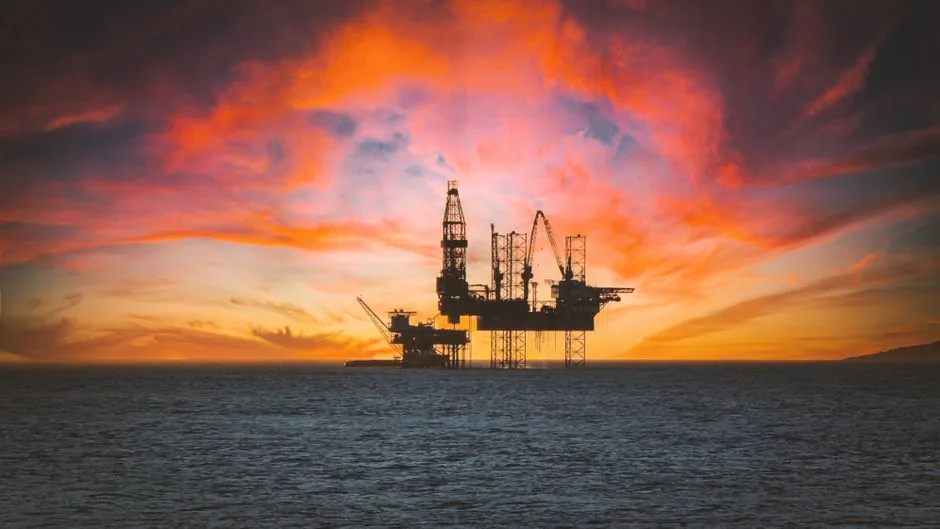
While you were wincing at the gas pump after the U.S.-Iran war sent oil prices through the roof, the world's top 100 oil and gas companies were quietly banking $30 million every single hour in excess profits. Not revenue. Profits. Every hour. Some Democrats have finally had enough and are pushing to claw back at least half of it.
The Numbers That Should Make You Put Down Your Coffee
According to an analysis by environmental nonprofit Global Witness and the Guardian, the $30 million per hour figure represents excess profits during the early days of the U.S.-Israeli war with Iran. That's money the companies made specifically because oil prices spiked globally, not because they got better at their jobs or drilled any harder.
Here's the kicker. The cost of actually producing oil hasn't changed much at all since the war began. That's not a liberal talking point. That comes directly from the American Petroleum Institute, the oil industry's own trade organization. So prices went up. Costs stayed flat. The difference went straight into shareholder pockets.
Global Witness also found that the top six European oil companies alone made at least $22 billion in just the first quarter of 2026. That's 43% more than they made in the same period last year. Forty-three percent. In one quarter. As a direct consequence of a war.
What Democrats Are Actually Proposing
Democratic Sen. Sheldon Whitehouse of Rhode Island and Rep. Ro Khanna of California reintroduced their windfall profit tax legislation in March. They first floated a version of this back in 2022, after Russia invaded Ukraine and oil companies had their last great orgy of unearned profit. Nobody acted then. Now they're trying again.
The mechanics are straightforward, almost insultingly so. As NPR explains it, you look at the average price of a barrel of oil before the war started. Then you compare that to what it costs now. Then you look at the excess profits generated on those barrels and, as Whitehouse puts it, you split the difference. Oil companies keep half. The other half goes into a fund redistributed to lower-income Americans through tax rebates.
"We're actually somewhat generous about letting the oil companies keep half of the excess profits," Whitehouse told NPR, "but we want at least half of it to go back." Half. They're asking for half of the money companies made because a war happened. The oil executives are still going to be fine.
The Industry's Response Is Exactly What You'd Expect
Dustin Meyer, senior vice president of the American Petroleum Institute, told NPR that proposals like this "erode exactly the sort of certainty that is needed to make the investment that has brought the United States to such an unparalleled position of American energy leadership."
Read that sentence again. The argument is that oil companies need certainty. The certainty that when a war breaks out and prices skyrocket through no effort or innovation of their own, they get to keep every single dollar. That is the business model they are defending. The uncertainty they fear is the possibility that the government might occasionally want some of the war windfall back.
This is the same industry that benefits from billions in annual federal subsidies in good years. When times are lean, they want public support. When times are obscenely profitable due to geopolitical catastrophe, that's private gain. Heads I win, tails you lose.
This Has Actually Worked Before, Elsewhere
The United Kingdom and European Union both enacted windfall oil taxes after Russia invaded Ukraine in 2022. According to Global Witness's Dominic Eagleton, the UK's tax raised more than $12 billion between 2022 and the end of fiscal year 2025, and it's still in place. The EU's temporary version raised almost $30 billion over two years. That money went primarily to help families struggling with high energy bills.
In April, ministers from Austria, Germany, Italy, Portugal and Spain wrote to the European Commission calling for another round of EU windfall taxes given the current crisis. So America's closest allies have done this. Repeatedly. Their oil sectors survived. Their governments got money back to struggling citizens. The sun continued to rise.
The U.S. has its own history with this. Congress passed a windfall profit tax in 1980 following the oil price spikes of the 1970s. Tyler Priest, a historian of oil and energy at the University of Iowa, told NPR the tax underperformed partly because oil prices collapsed in the mid-1980s, and partly because companies found ways to game it. Specifically, companies that sold crude to their own refineries lowered internal transfer prices to dodge the excise tax, then made the money back on the refining side. Whitehouse's office says the current proposal is designed to close those loopholes.
Meanwhile, You're Still Paying More for Gas
None of this abstract policy debate changes the fact that right now, today, Americans are paying elevated gas prices as a direct consequence of a war. The cost of getting to work, getting groceries, running a small business with a fleet of vehicles. All of it went up.
And the companies profiting from that pain are lobbying against any mechanism to return even a portion of those excess profits to the public. They are not embarrassed about this. They are sending their senior vice presidents on the record to explain why it would be harmful to their certainty.
The Dingo Take
Let's be honest about what a windfall profit is. It's not money you earned through innovation or hard work or smart strategy. It's money that fell out of the sky because a war started and suddenly everyone needed the thing you happen to sell. The oil companies did not cause prices to spike. They also did not do anything particularly clever to capture the upside. They just existed at the right moment, and the market handed them $30 million an hour.
The proposal on the table isn't confiscation. It isn't socialism. It's asking these companies to share half of the money they made because of someone else's catastrophe. Half. They keep the other half. They continue operating. Nothing about the fundamental structure of their business changes. The argument that this creates harmful uncertainty is an argument that oil companies should be permanently insulated from any democratic accountability over profits generated by wartime price shocks. That's not a serious policy position. That's just greed dressed up in think-tank language.
This legislation is going nowhere fast in the current Congress, and everyone involved knows it. But the fact that Global Witness ran the numbers, that NPR is covering it, that Whitehouse and Khanna keep reintroducing the bill anyway. That matters. At some point the gap between what these companies are making and what ordinary Americans are paying becomes impossible to ignore, even for people who usually wave away this kind of proposal. We're probably not there yet. But $30 million an hour has a way of sharpening the argument.




Comments