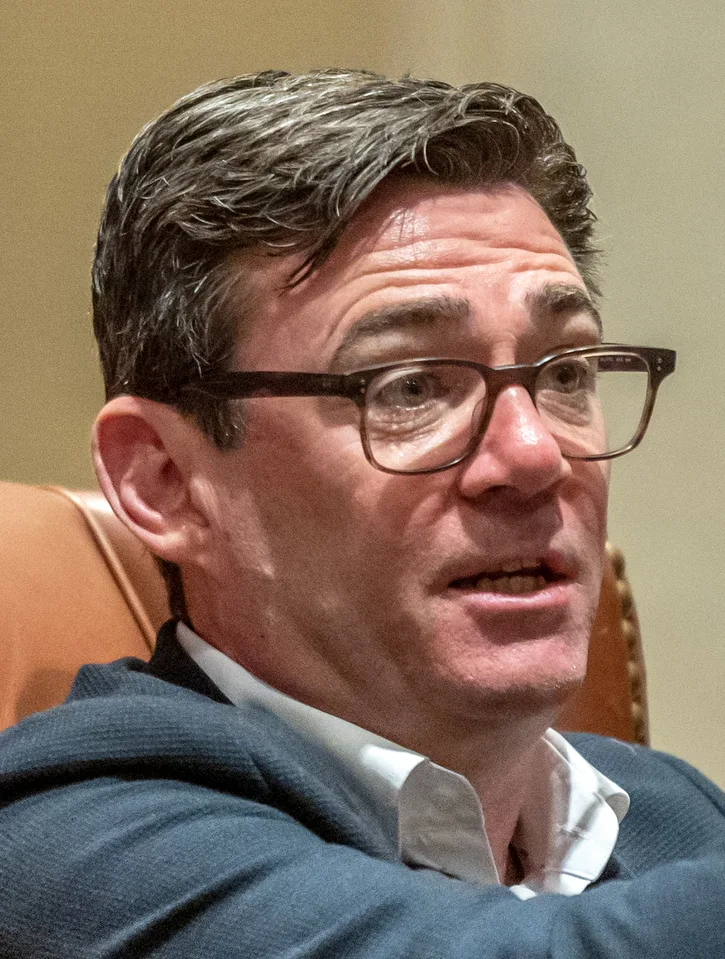
Andy Burnham was declared leader of Britain's Labour Party on Friday, making him the country's prime minister-in-waiting until Monday, when Keir Starmer formally resigns and King Charles asks Burnham to form a government. He ran unopposed. He has held no press conferences. He has given almost no interviews. And he will be the seventh person to lead the United Kingdom since 2016.
Seven Prime Ministers in Ten Years. Sure. Fine.
Let's just sit with that number for a second. Seven. Since 2016, the United Kingdom has cycled through David Cameron, Theresa May, Boris Johnson, Liz Truss, Rishi Sunak, Keir Starmer, and now Andy Burnham. That's more leaders than most democracies rack up in a generation, and Britain has managed it in the span of a single Netflix subscription.
Starmer, who led Labour to a commanding general election victory in 2024 after more than a decade of Conservative rule, lasted less than two years in office. CBS News reports that he came under mounting pressure after a disastrous round of local elections in early May, but the final push came from a political rival within his own party. He'll formally hand his resignation to King Charles III on Monday, and then the baton passes to Burnham.
The Man Who Won By Being the Only Option
Burnham's path to the top job was, to put it charitably, uncontested. According to CBS News, he secured nominations from 379 of the 403 Labour lawmakers in the House of Commons before the formal result was even announced. The leadership contest had exactly one contender. Him.
"We're going to give them hope back," Burnham said in his first speech as Labour leader. It was an emotional moment, he said, and one he was ready for. Whether voters outside of Manchester are ready for him is a genuinely open question, because most of them have barely heard of the man.
Burnham spent roughly a decade as mayor of Greater Manchester, which is Britain's fifth-largest city. He left that job to run in a local by-election in June, winning the seat in Makerfield to become a sitting MP. British party leaders are traditionally chosen from among elected lawmakers, so that win cleared his final formal hurdle. The seat itself matters beyond the procedural: Makerfield is the kind of predominantly white, working-class, post-industrial, Brexit-voting constituency that Labour has been bleeding for years. Burnham won it decisively.
What Does He Actually Believe? Great Question.
Here's the honest answer: it's complicated, and not always in a reassuring way. In his first speech as Labour leader, Burnham sketched out some broad priorities, his office saying he would have the "courage to fix the big things that politics has neglected." He talked about economic renewal, more public ownership of key sectors, and creating industrial jobs, arguing that Britain took "a series of wrong turns in the 1980s" when political power was centralized and economic power was handed to private interests. That's a fairly direct critique of Thatcherism, which is either bold political positioning or a guaranteed way to get a lot of British newspaper columnists very upset.
He also flagged social care as a priority, particularly the patchy access to support for elderly, ill, or disabled people. It's a chronic problem that has defeated multiple governments of both parties.
The problem is that on other defining issues, Burnham's positions have shifted with the wind. CBS News reports that he previously criticized some of Starmer's tougher immigration policies, then suggested he would go even further to reduce legal migration and expand detention capacity. He once expressed support for Britain eventually rejoining the European Union. He has since walked that back. A Conservative MP summed him up, perhaps uncharitably but not inaccurately, as "Keir Starmer with a Northern accent."
The Trump Problem He's Already Inherited
One of the more interesting subplots here is how Burnham will handle the transatlantic relationship, given that he has been pretty blunt about what he thinks of American politics under Trump.
"The path we're on, if we are not careful, is a path towards the politics of the United States of America," Burnham warned on the campaign trail in June, per CBS News. He described American politics as "polarized, poisonous" and said communities had stopped working together. In a separate interview with The London Economic, he said Trump was bringing "instability" to the U.S. and the world.
Starmer spent considerable energy trying to keep Trump on-side, and CBS News notes that approach produced "somewhat limited advantages." Burnham enters Downing Street with a more adversarial public posture toward Washington, which is either principled or diplomatically reckless depending on your read. Britain's relationship with the United States remains what every British prime minister describes as their most important alliance, so whatever Burnham says at campaign rallies is about to meet the cold reality of actually having to deal with the White House.
The King of the North Goes South
Burnham's whole brand is built on being an outsider to London establishment politics, which is a slightly awkward sell given that he spent 16 years as a London MP and served in Cabinet under both Tony Blair and Gordon Brown. He also tried twice before to win the Labour leadership and failed both times. So the origin story has some rough edges.
What he genuinely does have is a reputation built during the COVID pandemic, when he publicly clashed with Boris Johnson's government over financial support for Manchester. That fight made him a hero to a lot of people in northern England and gave him a platform that most regional mayors never get. His supporters call his governing philosophy "Manchesterism," a model of regional devolution and civic pride that they argue contrasts sharply with the technocratic, London-centric approach that Starmer never managed to shake.
The harder question, which CBS News raises directly, is whether Burnham can actually do anything dramatically different from Starmer without looking like he's betraying the mandate Labour won in 2024. Starmer brought the party back to power. Burnham is inheriting that mandate without winning one of his own. Making sweeping changes to policies Labour was elected on would invite the entirely fair criticism that nobody voted for this.
The Dingo Take
Seven prime ministers in ten years is not a sign of a healthy democracy working through its issues. It is a sign that something is structurally broken, and the chaos is becoming self-sustaining. Each new leader arrives with a reset narrative and a fresh set of slogans, and then runs directly into the same immovable problems: a sluggish economy, a cost-of-living crisis, public services that have been stretched past their limit, and a political right that has figured out how to weaponize every single one of those failures. Burnham is a better communicator than Starmer. He might even be a better politician. That is an extremely low bar to clear.
What's genuinely worrying is how little anyone knows about what Burnham actually plans to do. He has held no press conferences. He won his leadership contest with zero opposition. He has shifted his stated positions on immigration and Europe based on what the political moment seemed to require. That's not unusual in politics, but it is notable when the man is about to walk into Downing Street next week. "We're going to give them hope back" is a fine thing to say in a victory speech. It is not a governing platform.
The best case scenario is that Burnham's instincts about post-industrial communities, regional investment, and public ownership of key sectors translate into something coherent and executable once he's actually in office. The worst case is that Britain gets another year or two of muddling through before the next crisis, the next resignation, and the next fresh face promising to fix the big things that politics has neglected. At this point, Britain is less a country with a government than a country with a revolving door with a crown on it.




Comments