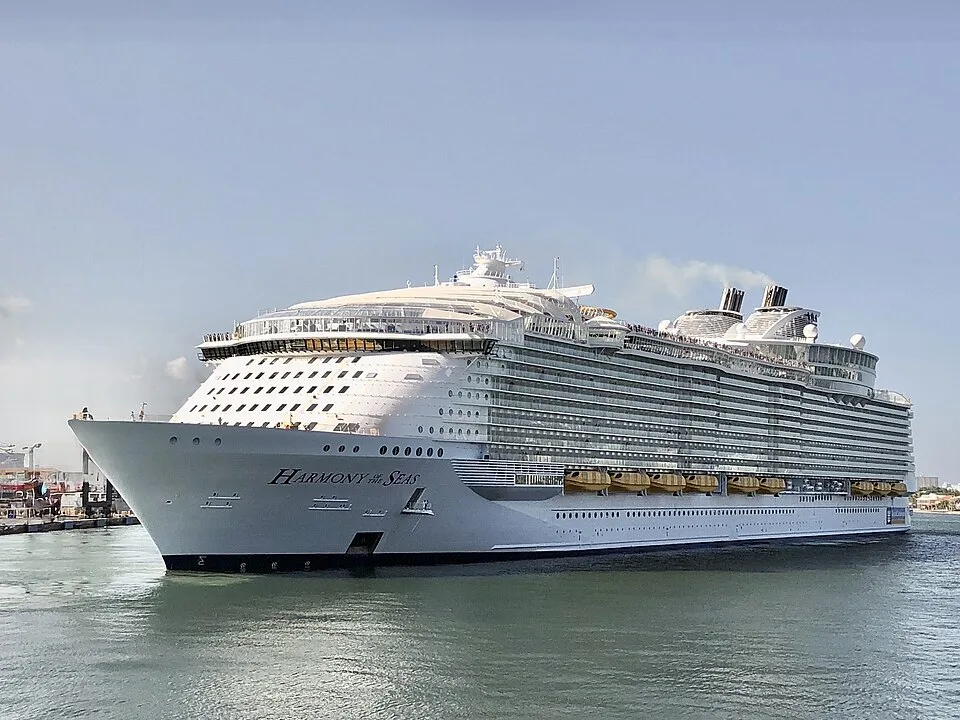
Royal Caribbean has officially punted on Haiti for another year, extending its suspension of visits to Labadee through June 2027 as the country remains trapped under a Level 4 'Do Not Travel' advisory from the US State Department. The private beach resort, famous for white-sand shores and one of the world's longest over-water ziplines, has been effectively off the map for cruise passengers since gang violence and political collapse made 'the best vacations responsibly' a phrase that doesn't fit Haiti anymore. Nobody is winning here.
What Labadee Actually Is, and Why This Hurts
Labadee sits on Haiti's northern coast, about six miles northwest of Cap-Haïtien, the country's second-largest city. Royal Caribbean has spent decades building it into a polished private resort bubble: immaculate beaches, a water park, and the Dragon's Breath Flight Line, a zipline that sends tourists screaming over open Caribbean water at speeds no one's grandparents imagined possible.
The New York Post reports the extension applies through June 2027, with Royal Caribbean telling Fox News Digital the decision was made "with the safety and well-being of our guests and crew members in mind." Which is the corporate way of saying: Haiti is in full collapse right now, and no amount of private fencing makes a zipline worth it.
Passengers booked on itineraries that included Labadee are being rerouted to Grand Cayman, Grand Turk, Cozumel, and Nassau. Perfectly fine destinations. Not Haiti. The difference matters.
Haiti's Catastrophe in Plain Numbers
The US State Department's Level 4 advisory, the highest possible warning, has been sitting over Haiti like a storm cloud with no sign of moving. Level 4 is reserved for places like active war zones. The advisory exists because armed gangs now control large portions of the country, including significant chunks of the capital Port-au-Prince. Political institutions have effectively disintegrated.
This is not background context. This is the story. A country that was already the poorest in the Western Hemisphere has been systematically dismantled by gang violence and a series of cascading political disasters going back years, accelerated by the 2021 assassination of President Jovenel Moïse, and with no credible resolution on the horizon.
Labadee exists on Haiti's northern coast, physically separated from the worst of the violence. But "physically separated" is not the same as "safe," and Royal Caribbean is not in the business of finding out the difference the hard way.
The Workers Who Actually Pay the Price
Here is the part of this story that deserves more than a press release paragraph. Labadee employs Haitian workers. Local vendors sell goods to cruise passengers. Food, crafts, services. It is one of the few remaining economic pipelines between international tourist dollars and Haitian citizens who desperately need both.
Royal Caribbean's spokesperson told Fox News Digital that the company is working to "ensure they feel informed and supported" and has "identified positions across our fleets and destinations" for displaced Labadee team members. The company also says it continues "monthly food donations" to the surrounding communities. That is something. It is not nothing.
But displaced workers relocated to cruise ship positions or other Royal Caribbean properties are not the same as a functioning local economy. Reddit users debating the suspension made this point themselves, unprompted. "It's unfortunate, because Labadee brings jobs and money to the Haitian citizens, who need both desperately," one user wrote, according to the Post. Hard to argue with that.
Passengers Are Disappointed. That's the Least of It.
On Royal Caribbean's own forums, passengers are venting disappointment about the change. "Oh darn, I'm booked to Labadee in April 2027," one wrote. "I really wanted to visit Labadee," said another. And across Reddit, people who had previously visited described it as "stunningly beautiful" and a "big highlight" of Caribbean itineraries.
This is all fine and human and understandable. Missing a planned vacation stop stings. But it's worth holding two things at once: the disappointment of tourists who won't get their zipline day is real, and also trivially small compared to the reality faced by Haitian citizens living inside a country their own government can no longer protect them in.
Royal Caribbean says its "connection to the Labadee community extends far beyond our operations there." Honestly, that is probably true. The company has invested in the region for decades. None of that makes any of this less grim.
No End Date Anyone Will Actually Commit To
The word "suspension" is doing a lot of heavy lifting here. This is now at minimum a multi-year pause, and the New York Post notes that passengers are openly asking whether Labadee will ever reopen at all. Royal Caribbean is not answering that question directly, which tells you something about what they privately believe.
Gang control of Haiti is not trending in a direction that suggests June 2027 will bring relief. International intervention efforts have moved at a pace best described as agonizing. A Kenyan-led multinational security mission has been operating in the country but has struggled with funding, logistics, and scope against gangs that have had years to entrench themselves.
When a cruise company built on selling you paradise keeps extending a pause quarter by quarter, year by year, that is the cruise company's way of saying it doesn't see the end of the tunnel either.
The Dingo Take
There is something grimly clarifying about a story where the most visible sign of Haiti's collapse for American audiences is that they can't ride a zipline over the ocean anymore. Royal Caribbean's Labadee suspension is a data point, not the story itself, and that distinction matters. Haiti has been burning for years. The gang violence didn't materialize last week. The international community has watched, issued statements, sent underfunded missions, and largely failed a population that had very few safety nets to begin with.
Royal Caribbean is making a rational business decision. Nobody should book cruises into active chaos, and nobody should expect a private company to shoulder the weight of a state that no longer functions. But the casual way this gets framed, as a vacation inconvenience with a side note about humanitarian food donations, is its own kind of telling. The workers who built their livelihoods around Labadee don't get rerouted to Grand Cayman. They stay.
If you have a passing interest in the broader Haiti situation and you've gotten this far, do yourself a favor and read something beyond the cruise news. The Miami Herald has covered the gang crisis in detail, and what's happening there is one of the most severe humanitarian disasters in the Western Hemisphere right now. The zipline is fine. The people who live six miles from where tourists used to ride it are a different matter entirely.




Comments