If Spain beats Argentina on Sunday, the Spanish football federation becomes the first in history to hold back-to-back World Cup titles on both the men's and women's sides simultaneously. That would be an extraordinary, unprecedented achievement. It would also be happening to a federation whose former president was convicted of sexually assaulting one of the players who won them the women's trophy in the first place. Sports, everybody.
What's Actually at Stake Sunday
Spain and Argentina kick off at 3pm ET in New Jersey, with a lot more than a trophy on the line. As NPR reports, the Spanish women's team won the 2023 World Cup and enters next year's tournament in Brazil as defending champions. If the men's side closes this out, Spain becomes the first football federation in history to hold men's and women's World Cup titles in back-to-back cycles.
That's not a small thing. The FIFA Women's World Cup has only ever crowned five champions since its founding in 1991: the United States, Germany, Norway, Japan and Spain. Of those five, only Germany and Spain have also won the men's tournament. Germany never managed to hold both titles simultaneously. Spain is one game away from doing exactly that.
The men's squad has been here before, technically. Spain last hoisted the men's trophy in 2010, appearing in 17 of 23 World Cups total. But this version of the team, which knocked out France 2-0 in the semifinal at Dallas Stadium last Tuesday, looks like a different beast entirely.
The Soccer Factory That Built All of This
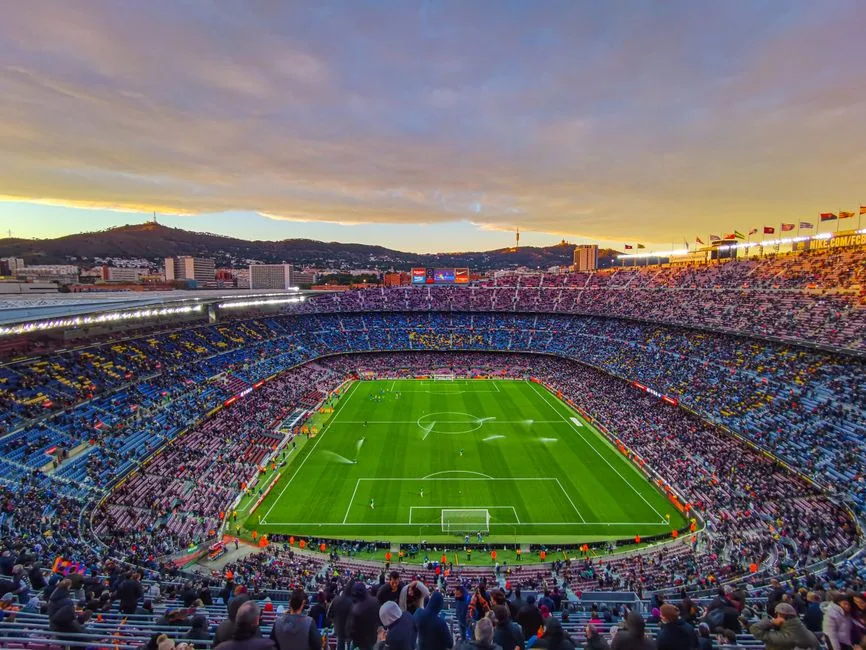
Spain doesn't produce elite soccer talent by accident. According to NPR, the country's top-tier league, La Liga, fields clubs that are consistently ranked among the best in Europe. Real Madrid, FC Barcelona, the infrastructure of a nation that treats soccer less like a sport and more like a civic religion. Barcelona's Camp Nou has reached, as NPR puts it, near-pilgrimage status for serious fans.
The men's system has worked. It has worked spectacularly and for a very long time. The women's system, by contrast, has been a cautionary tale dressed up in kit.
For decades, the Spanish women's national team operated under a coach named Ignacio Quereda, who held the job from 1988 until 2015. That is not a typo. Twenty-seven years. Long enough that players who were children when he took over had entire careers, retired, and watched their successors also suffer under his tenure. In a 2021 documentary called 'Romper el silencio,' NPR notes that players alleged Quereda sexually harassed and verbally abused them. He was removed in 2015 only after the entire Women's World Cup squad publicly demanded it.
They Won the World Cup and Then the Federation Did This
In the lead-up to the 2023 Women's World Cup win, 15 players asked not to receive national team call-ups until the federation made real changes to training and resources. The federation largely ignored them. Spain won anyway, because the players were that good despite everything working against them.
Then, in what can only be described as a choice, federation president Luis Rubiales celebrated the victory by forcibly kissing forward Jenni Hermoso on the mouth in front of a global audience. The entire Women's World Cup squad stood behind Hermoso and called for Rubiales and head coach Jorge Vilda, who publicly defended Rubiales, to be removed. Rubiales was suspended for three years by FIFA. He was then tried and, as NPR reports, found guilty of sexual assault.
The women took the goodwill of a World Cup win and turned it into an international reckoning with how female players are treated inside their own federation. That took guts. An extraordinary amount of it.
The Hug Heard Round the World Cup
Here is a detail that should not get lost in the championship noise. Borja Iglesias, a striker on the current men's squad, refused to play for the Spanish federation after Hermoso's assault until Rubiales was removed. He didn't hedge. He didn't issue a carefully worded statement through a PR agency. He said no and sat out.
After Spain beat France in the semifinal Tuesday, NPR reports that Iglesias found Hermoso on the sidelines and they hugged. It went viral immediately, and for once the internet was right to make something go viral. It was a moment. The kind that reminds you, against your better judgment, that sports can occasionally mean something.
The men's team showing up for the women players who were abused by their own federation's leadership is not a small thing. It is the thing that separates this particular back-to-back bid from being just another sports record.
Argentina Stands Between Spain and History
Of course, Argentina has their own feelings about World Cup trophies. They are the reigning men's champions, having won in Qatar in 2022, and they are not going to New Jersey to watch Spain make history without a fight.
This is the matchup: the country trying to make history against the country trying to defend its place in it. Three o'clock Eastern on Sunday. And if you have not been paying attention to this World Cup, this would be the game to start with.
Spain's path to this final has been legitimately impressive. Beating France 2-0 in a semifinal is not a gimme. France is France. The men's squad looks focused and organized in a way that suggests the chaos of the women's program's recent years has not infected the whole institution beyond repair.
The Dingo Take
Let's be honest about what we are celebrating here, or potentially celebrating, depending on Sunday's result. Spain's football federation is one game away from a historic double. The same federation that employed a coach for 27 years while players alleged he was abusing them. The same federation whose president sexually assaulted one of the women who just handed him a World Cup. The same federation that made its female players fight for basic resources while the men's side swam in La Liga money and European glory.
The women won in spite of all of it. That 2023 team did not win because the federation was good to them. They won because they were extraordinary athletes who refused to be destroyed by an institution that treated them as an afterthought at best and a target at worst. If the men win Sunday, and Spain holds both trophies simultaneously, the credit goes first to those women. The federation is just lucky enough to have them on its letterhead.
Borja Iglesias hugging Jenni Hermoso on the sideline after the France match is the part of this story worth holding onto. Not as proof that everything is fixed, because it is not fixed. Not as evidence that the federation has reformed, because the jury is still very much out on that. But as a reminder that individuals inside broken institutions can still choose to be decent. Iglesias chose it. The women chose to keep playing despite everything. Sunday, Spain gets a shot at history. Whether the institution that benefits from it deserves any of the credit is a completely separate question.




Comments