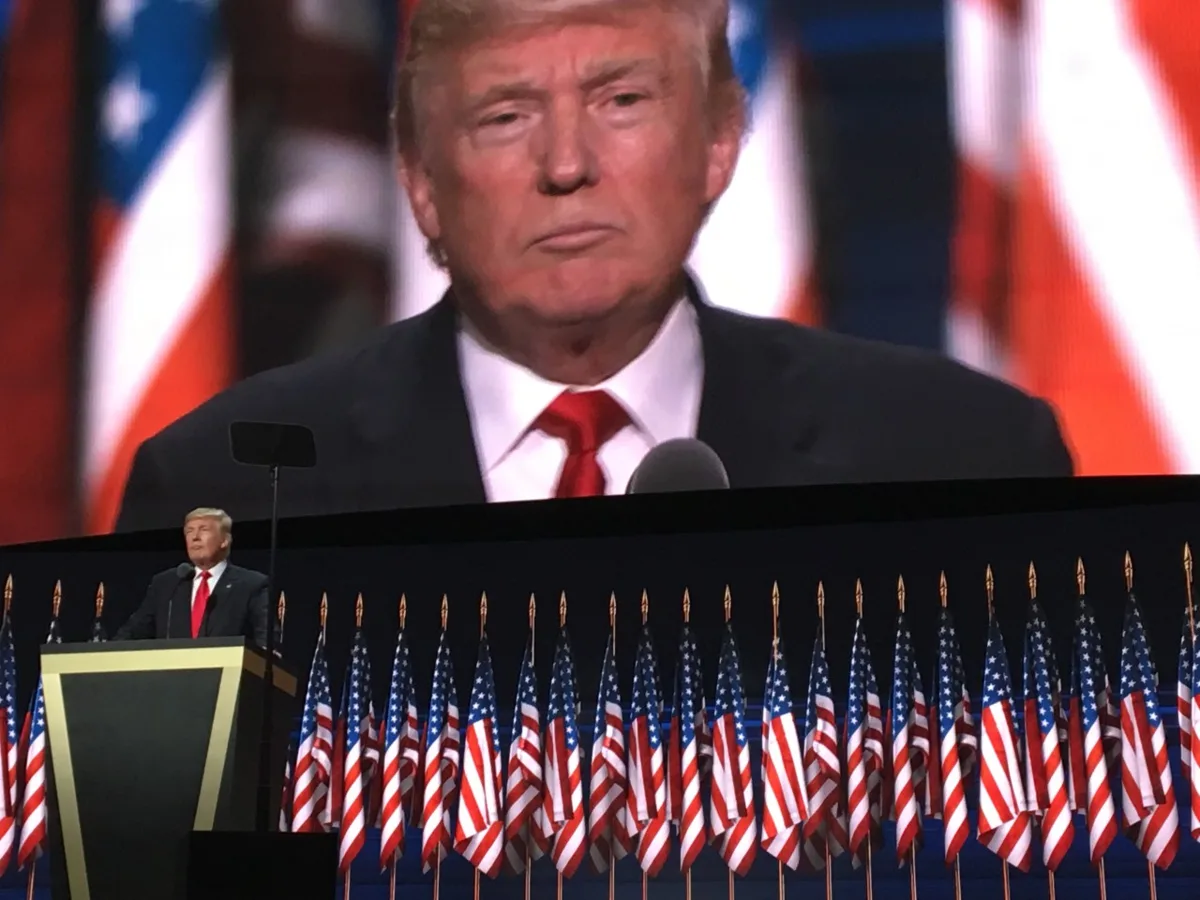
Donald Trump stood in front of the country Thursday night and told them China spent years trying to destroy his presidency, that the intelligence community knew about it, and that they deliberately kept it from him. China's response, delivered Friday with the energy of someone who has heard this before, was essentially: we made none of that up, you made all of that up. Welcome to July 2026.
What Trump Actually Said
Speaking in a primetime address from the White House on July 16, Trump cited what he described as newly released CIA documents showing that, quote, "in mid 2018, the Chinese Communist Party's policy was to leverage all domestic and foreign elements that were opposed to the U.S. president in an effort to reduce the U.S. president's votes and make him resign or prevent his reelection." According to Fox News, he read that passage directly from the alleged intelligence report.
Trump's core claim is not that China flipped votes or hacked machines. He is arguing that Beijing ran a broad influence campaign to shape American public opinion against him, and that U.S. intelligence officials knew and said nothing. That is a meaningfully different accusation than what most people will hear when they see the headline, so it is worth being precise about it.
The most explosive specific allegation involves an email Trump highlighted from an NSA analyst who allegedly wrote that officials had "deliberately massaged" a pending presidential daily brief "to avoid any direct links to the election." Trump's framing: a shadow government inside the intelligence community buried evidence of Chinese interference to protect his political opponents. That framing, predictably, is doing a lot of work.
China's Rebuttal Was Three Sentences Long
China's Foreign Ministry spokesperson Lin Jian did not exactly agonize over his response. As Fox News reports, Jian told reporters Friday that "the relevant allegations by the U.S. are entirely fabricated and aimed at vilifying China," and that "we have no interest in interfering in US elections and have never done so."
When a reporter asked whether any of this might complicate the planned September visit of President Xi Jinping to the United States, Jian's answer was even shorter. He said the U.S. should "stop making an issue of China in its elections and do something conducive to China-U.S. relations." That is diplomatic language for: knock it off.
To be clear, Beijing denying something does not make it false. Countries lie about election interference the way the rest of us lie about being five minutes away. But the denial was so blunt and so brief that it suggests China calculated the best move was to give this story as little oxygen as possible.
The Journalist Visa Thing Is Also Happening
Buried at the bottom of all this, and not getting nearly enough attention, is a separate announcement from the Trump administration on Thursday. Fox News reports the White House is cutting visas for foreign journalists in the United States to 240 days, down from what had previously been multi-year terms. For Chinese journalists specifically, the cap drops all the way to 90 days.
China's foreign ministry called that decision "discriminatory" and said it would hamper Chinese media operations on U.S. soil. Jian said China "reserves the right to take reciprocal countermeasures," which almost certainly means American journalists working in China should start reading the fine print on their own credentials.
The timing of these two announcements together is not subtle. Accuse China of election interference in the same news cycle you slash Chinese journalist visas, and you have sent a message that does not require a CIA document to decode.
The Political Play Hiding in Plain Sight
Here is the thing: Trump did not just give a speech about China because he wanted to. He gave a speech about China because the SAVE America Act is stuck in the Senate and he needs it unstuck.
The bill passed the House back in February. It died in the Senate in March when it got 53 votes, short of the 60 needed to advance. Trump used Thursday's primetime address to pressure Congress directly, urging Americans to call their senators and representatives and demand passage "without delay," according to Fox News.
So the structure here is not hard to see. Release documents suggesting foreign interference. Give a primetime speech. Frame the election bill as a national security emergency. Whether or not you believe a single word of the underlying claims, the political mechanics are textbook. The Chinese election meddling story is also, at this moment, a SAVE America Act lobbying campaign.
What We Don't Know Yet
The documents Trump cited have not been independently reviewed by the major news organizations that would normally parse them line by line. The NSA email about "massaging" a presidential brief is a genuinely significant claim if it holds up, and a genuinely damaging fabrication if it does not. Right now we are working off a primetime speech by a man who has a documented history of overstating what intelligence reports actually say.
That does not mean the underlying intelligence is false. The U.S. intelligence community has previously assessed, across multiple administrations and multiple reports, that China does engage in influence operations targeting American politics. That is not a Trumpian invention. The question is what these specific new documents say, whether they say what Trump claims they say, and whether the NSA analyst email is what it appears to be.
Those questions will take time to answer. In the meantime, both sides will keep doing what they are doing.
The Dingo Take
Let's hold two things at once, because the media generally cannot manage it. China absolutely does run influence operations. The U.S. intelligence community absolutely has, at times, kept information from presidents for reasons that were not always clean. Both of those things can be true, and neither of them automatically validates the specific version of events Trump presented Thursday night from behind a podium with the presidential seal on it.
What we know for certain is this: Trump gave a primetime address alleging a shadow government conspiracy on the same night his administration cut Chinese journalist visas, in the same week his stalled election legislation needs a rescue. The CIA documents may be real. The NSA email may say what he says it says. But the packaging of all of this, the timing, the pressure campaign on Congress, the theatrical primetime slot, that is not the behavior of a man who found some alarming documents and felt a solemn duty to inform the public. That is the behavior of a man who found a useful story.
China is not going to admit to anything, ever, under any circumstances, so their denial means roughly nothing. But "China denied it" and "Trump proved it" are not the only two options on the table. The option nobody in this story wants you to pick is "we need to actually see the documents before we decide." Funny how that keeps being the least popular choice.


Comments